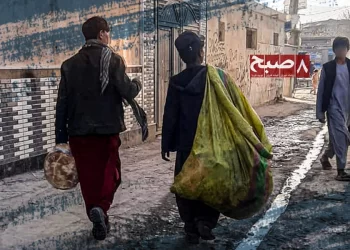
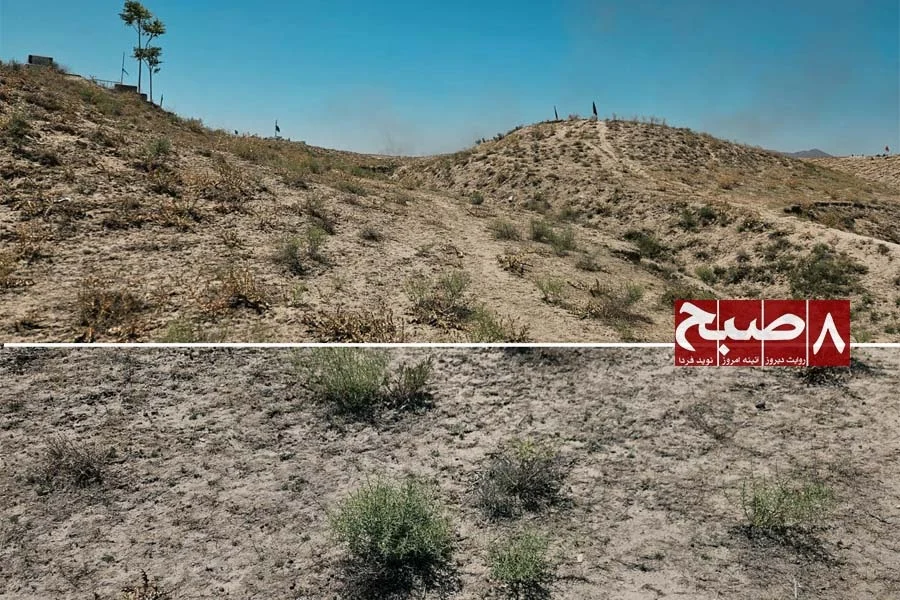
A number of residents of Ghazni province have expressed concern over the increasing uprooting of wild shrubs, trees, and thorny bushes in the plains of the province by firewood collectors. They say that due to poverty and the need for fuel, people are uprooting wild shrubs and thorny bushes, a trend that has led to a decline in the natural vegetation cover of the plains and pastures. According to these residents, the continuation of this situation could pose greater challenges to the natural resources and livestock of families who depend on natural pastures.
Meanwhile, a number of Ghazni residents who rely on wild shrubs and thorny bushes to secure firewood for winter and fuel for summer say that the vegetation cover of the plains has decreased compared to the past. They add that the lack of alternative fuel and economic hardships have forced many families to use wild shrubs to heat their homes and meet their fuel needs. According to them, for many families, wild shrubs are one of the few available sources of fuel, and their use cannot be stopped without providing an alternative. They emphasize that alongside protecting the plains and pastures, alternative fuel sources should also be provided for families in need.
Asadullah, a resident of the Say Gadwal area of Ghazni province, says that the increased use of wild shrubs and trees for fuel has significantly reduced the vegetation cover of the plains and mountains in the region. According to him, poverty and the lack of alternative fuel have driven families to turn to natural resources for firewood, with some firewood collectors uprooting wild shrubs and thorny bushes entirely.
Asadullah adds that this situation is not limited to the decline of shrubs alone, noting that a type of wild almond tree known locally as “Qarghana” has already disappeared from the region due to the use of its wood for fuel.
This Ghazni resident says: “If you look at the plains here, it was not like this in the past. The plains were greener, there were plenty of thorny bushes and shrubs, and there was also a type of wild almond known as Qarghana. Unfortunately, this almond tree disappeared due to poverty, negligence, and people’s lack of awareness. Because Qarghana wood burned well, people cut it down for their own benefit, and gradually the species was completely wiped out.”
According to Asadullah, the continuation of this trend could bring a similar fate to other natural resources. In his view, in the past, alongside greater vegetation cover, there was also the possibility of economic use of certain wild trees and plants, but the lack of attention to protecting these resources has led to their disappearance.
This Ghazni resident says: “If investment had been made in these trees and wild almonds at that time, it might have benefited people and even lifted some families out of poverty, but no one paid attention to this issue. Short-term gain caused something that could have remained for people for years to be destroyed.”
Alif Khan, another resident of the province whose father is a livestock herder, says that the decline in vegetation cover and fodder has made livestock herding difficult for his family. He adds that in the past, the mountains and pastures of the region had more vegetation cover, but now it has become harder for people to find fodder and firewood.
Alif Khan says: “About twenty years ago, I would sell ten sheep every year, but now that is not the case. Even keeping ten sheep for my own family has become difficult. Fodder has decreased and the pastures are not like before. Thirty years ago, when I went to the mountains, I would bring back four bundles of firewood in a day. Now, even with great effort, I can barely find one bundle. The mountains no longer have shrubs and plants like before. In the past, the mountains were green, there was plenty of grass, and the livestock grazed well, but now many areas have dried up. Wherever you look, it is dirt and rock. People are forced to bring firewood from the mountains because we have no other fuel, but when shrubs and plants are uprooted every year, the mountains gradually become empty as well.”
Meanwhile, some residents of Ghazni who obtain fuel for their families from the plains say that the decline in dry shrubs has made it harder for them to access firewood. According to them, shrubs usable for fuel have become scarcer near their places of residence, forcing them to travel farther to find firewood.
Bibi Susan, another resident of Ghazni, says that many families cannot afford to buy the fuel they need. She adds that for this reason, collecting dry shrubs to secure firewood has become one of the main ways families obtain fuel.
Bibi Susan says: “We have used dry shrubs for firewood for a long time, because buying other fuel is not easy for many families. But now the shrubs in the plains have become much scarcer than in the past, and people are forced to travel farther to find firewood. Some people uproot the shrubs entirely, which prevents them from growing back.”
A number of environmental experts say that the continued cutting and uprooting of shrubs and vegetation cover is causing damage to the plains and natural pastures. They say that the excessive harvesting of shrubs for fuel reduces the natural vegetation’s chance to regenerate and, in the long run, can lead to soil erosion and the degradation of pastures.
Sayed Abdul Basit Rahmani, an environmental expert, says that the decline in vegetation cover can disrupt the balance of the ecosystem and affect water resources, soil, and biodiversity. He adds that vegetation cover plays a role in retaining soil moisture and preventing soil degradation, as well as in helping rainwater infiltrate the ground and recharge underground water sources. According to him, the decline in vegetation cover, combined with insufficient rainfall, can also create the conditions for an increase in dust storms, the consequences of which gradually affect people’s lives.
This environmental expert says: “The vegetation cover and natural cover that we have on the surface of the earth is one of the great blessings that humanity has, and it is important and vital for preserving soil and biodiversity. Shrubs and any type of vegetation cover that exists play a significant role in retaining moisture and preventing soil degradation, and serve as a shield for preserving the soil structure of a region. When rainfall occurs, this vegetation is also hydrologically effective in recharging underground water sources. Various species of life live among this plant cover, which shows its importance for the ecosystem.”
Mr. Rahmani emphasizes that in order to reduce pressure on natural cover, the use of pastures should be regulated in proportion to the capacity of each region, and alternative options should be provided for families who depend on shrubs as fuel.
This environmental expert says: “When vegetation cover decreases due to human causes or other factors, and there is also a lack of rainfall at the same time, the ecosystem becomes disrupted, and water resources, soil, and other parts of the environment are affected. The dust storms that we see in parts of Afghanistan are one of the consequences of the decline and loss of vegetation cover. Overgrazing by livestock and the uprooting of shrubs also deprive them of the chance to regrow and turn green again, which can have widespread consequences in the long run.”
Previously, the United Nations, in a statement marking June 17, World Day to Combat Desertification and Drought, had warned that more than half of Afghanistan’s population has been affected by the consequences of drought and land degradation. The organization had added that the continuation of droughts has made the agricultural sector, which is the main source of income for millions of people in rural areas, increasingly vulnerable.
The United Nations has also emphasized the need to restore pastures, manage land sustainably, and protect natural resources, stating that investment in land and natural resource protection is essential to combat the spread of desertification and reduce the effects of climate change.
You can read the Persian version of this report here:
غزنی زیر فشار فقر و کمبود سوخت؛ بوتهکنی پوشش گیاهی و چراگاهها را تهدید میکند