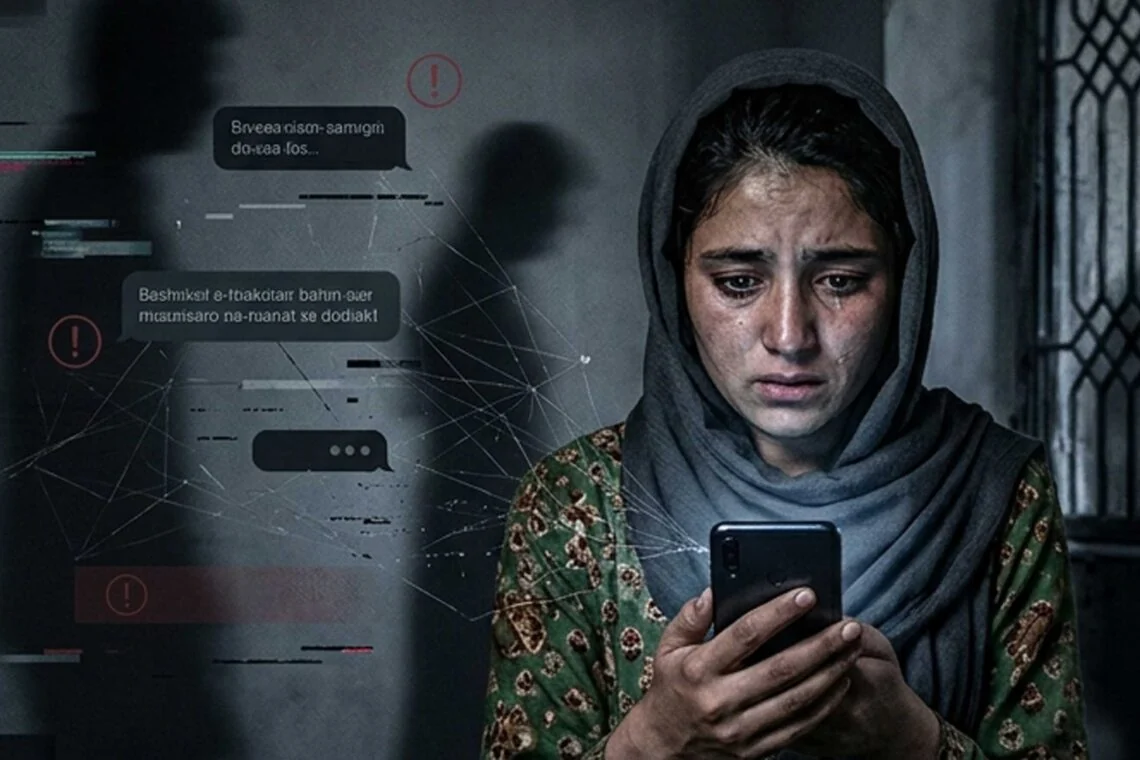
Several girls and women say online harassment on social media has damaged their mental health and left lasting emotional effects. According to them, abuse in cyberspace not only disrupts the psychological peace of girls but can also impose new restrictions on their lives. They stress that this harassment also results in their being deprived of access to mobile phones and of the ability to be active on social media.
Roya (pseudonym) says that after a classmate abused her through social media, she has been barred from using a mobile phone and being active online for nearly a year. According to her, the incident not only restricted her freedom to use social media but also left strong emotional and psychological effects on her life.
The girl says: “A former classmate of mine at university hacked my Snapchat account. At first, he pressured me using my photos and wanted me to enter a relationship with him. When I did not accept his demand, he threatened that I must either give him money or he would publish my photos. This came to my family’s attention, and my brothers beat him up. They broke his mobile phone and took mine as well. Since then, it has been nearly a year that I have not been allowed to use a mobile phone.”
Roya adds: “For several months I was in a very bad emotional state and felt depressed. I am still very upset about this situation, and it has been a long time since I lost contact with my friends. I also cannot be active on social media, and I feel very restricted and distressed because of it.”
Khadija (pseudonym) also complains of harassment on social media. She says some users leave immoral and insulting comments under girls’ posts and photos, which negatively affects their mental well-being.
She says: “A few days ago I posted a picture of myself on Instagram, but some users left very inappropriate comments under it, which upset me. Unfortunately, this kind of harassment on social media has become an entrenched behavior, while such conduct can have negative effects on the mental health of girls and leave them emotionally hurt.”
Zainab (pseudonym) says harassment in cyberspace is not limited to repeated messages and calls through social media; some people also upset and distress women and girls by sending inappropriate videos, images, and stickers.
She says: “Some time ago, someone used my name to create a fake Facebook account and posted immoral images and videos through it. My friends and relatives called me and asked why I was sharing such content and ruining my reputation. I had to explain to each of them separately that the account does not belong to me and that I have no connection to it.”
Expressing concern about the lack of effective mechanisms to prevent such behavior, Zainab adds: “Unfortunately, in Afghanistan there is no effective and deterrent response to such cases, so that those who commit such acts would fear the consequences and refrain from repeating them.”
Taqwa (pseudonym), who has also experienced harassment in cyberspace, says that after joining two WhatsApp groups created to exchange information about master’s degree scholarships, she was harassed by different people from multiple phone numbers, which caused her further distress and worry.
She says: “Some time ago, I faced cases of harassment in several WhatsApp groups. Most of the members of these groups were boys. At first, I thought these groups were created solely for discussion and exchanging information about scholarships, but gradually I encountered behavior that was unpleasant and disturbing to me.”
Taqwa adds: “Some people, without regard for the limits and principles of respect, repeatedly sent me messages and said inappropriate and irrelevant things. This led me to block a number of them in order to stop the harassment. I also raised the issue with the admin of one of the groups we were both members of and demanded serious action against the harassers, because I believed other girls might also face such behavior. After I followed up on the matter, those individuals were removed from the group.”
Nawida (pseudonym) says that in Afghanistan, many people from different segments of society, including illiterate people, use the social network Facebook. According to her, some people create fake accounts in the names of girls, join groups dedicated to girls, and send them friend requests.
She says: “When you talk to them in messages and ask directly whether they are girls, they admit that they are boys and say they like you.
The situation is the same on Telegram. If you are a member of a group or they have your phone number, they can find your Telegram account and send you messages. In the message requests section, you encounter insulting and vulgar messages, and some of them make inappropriate requests. If a girl trusts these people, enters a relationship with them, and sends her photos, those same photos are later used to threaten and pressure her.”
You can read the Persian version of this report here:
از تهدید و اخاذی تا محدودیتهای خانوادهگی؛ روایت دختران از آزار و سوءاستفاده در فضای مجازی