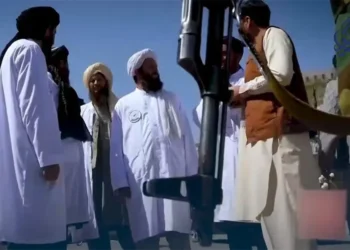
In recent years, gold mines in Badakhshan have emerged as one of the Taliban’s most significant sources of revenue, resources that, rather than contributing to economic development, have fueled the war machine, enabled social repression, and caused severe environmental destruction. The extraction of these mines, primarily located in the districts of Yaftal, Raghistan, Kuran, and Minjan, is conducted without adherence to safety standards, environmental regulations, or economic transparency.
International organizations estimate that Afghanistan’s total mineral resources exceed $3 trillion, with the mining sector potentially accounting for up to 30 percent of the country’s GDP by 2025. However, following the Taliban’s takeover in 2021, this potential was redirected into financing a war economy. To date, the Taliban have signed at least seven major mining contracts, a significant portion of which involve gold mines in Badakhshan. Estimates suggest that the group generates roughly $500 million annually from gold mining.
In Badakhshan and Takhar provinces, the Taliban receive at least 25 percent of gold mine revenues directly. This money is neither allocated to public services nor local development; instead, it is spent on weapons, ammunition, and the salaries of Taliban fighters. Analytical reports indicate that part of this revenue is transferred to transnational terrorist networks, including al-Qaeda, making these gold mines a regional security threat.
Contracts with foreign companies, particularly Chinese firms, lack transparency. Financial details remain undisclosed, and no independent environmental or social assessments have been conducted. Consequently, gold mining has largely become an unmonitored and unaccountable sector.
The Taliban claim that mining activities have created approximately 20,000 jobs. Field investigations, however, reveal that most positions are short-term, high-risk, and lack basic safety equipment. Local laborers work in unprotected tunnels without insurance or medical facilities, constantly exposed to the risk of collapse. In practice, the primary beneficiaries are the Taliban and their partners, while local populations endure illness and insecurity.
This inequality sparked widespread protests in Badakhshan and Takhar in 2025. Residents reported that their farmland had been destroyed, drinking water contaminated, and that they received no share of the mining wealth. In response, the Taliban violently suppressed the demonstrations. In January 2024, several local leaders protesting a gold mine were executed, and in July 2025, shootings at protesters left at least eight dead.
At the head of Badakhshan’s mining network is Haji Bashir Noorzi, a former drug trafficker who spent years in a U.S. prison. Released in a prisoner exchange in 2022, Noorzi leveraged his experience in illicit networks to organize the Taliban’s mining operations.
The environmental consequences of gold extraction in Badakhshan are severe and alarming. Most mines operate on a small scale and use toxic chemicals such as mercury and cyanide. Mercury enters water and soil, converting into methylmercury, which accumulates in the food chain and reaches humans, causing neurological damage, kidney disorders, memory impairments, and, in severe cases, death. Children and pregnant women are especially vulnerable.
Pollution of the Kokcha and Shiwa rivers exemplifies this silent catastrophe, threatening agriculture and the livelihoods of thousands of families. Heavy metals, including lead, copper, silver, and notably uranium, compound these risks.
Uranium: China’s Hidden Motive behind Gold Contracts
Focusing solely on gold in Badakhshan without considering uranium provides an incomplete analysis. Globally, gold and uranium often coexist in geological belts, and northeastern Afghanistan forms part of such a uranium-bearing zone. China, with limited domestic uranium reserves, relies heavily on imports to fuel its nuclear power plants. In Kazakhstan, South Africa, Australia, and Canada, China has gained access to uranium through gold mining investments. In Afghanistan, ostensibly gold-focused contracts may serve as a cover for gradual access to uranium.
In the absence of transparency and oversight, Afghanistan has become highly vulnerable to strategic resource exploitation. China’s cooperation with the Taliban aligns with Beijing’s long-term resource security strategy, while the Taliban view this partnership as a source of revenue and political legitimacy.
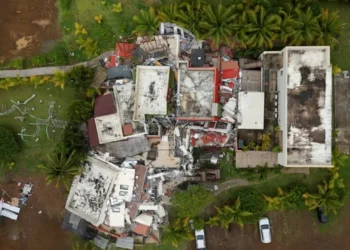
Mining-related landslides and tunnel collapses have also caused human fatalities. In recent years, dozens have died in tunnel collapses, including an incident in 2019 that claimed at least 30 lives, highlighting a stark intergenerational justice issue.
In sum, gold mines in Badakhshan, rather than promoting development, have become a symbol of organized plunder, environmental devastation, and political violence, a situation that threatens Afghanistan’s future.
Source
- World Nuclear Association – Geology of Uranium Deposits
- Wilson Center – Mining for Influence: China’s Resource Ambitions in Taliban-led Afghanistan
- UNAMA Reports on Afghanistan 2024–2025
- Visual Capitalist – Global Uranium Production by Country
- Trends Research – China’s Strategy for Critical Minerals
- Geopolitical Monitor – Taliban’s Shadow Mineral Diplomacy
You can read the Persian version of this analysis here:
غارت معادن طلا در بدخشان؛ منبع درآمد طالبان و دریچه پنهان چین به اورانیوم