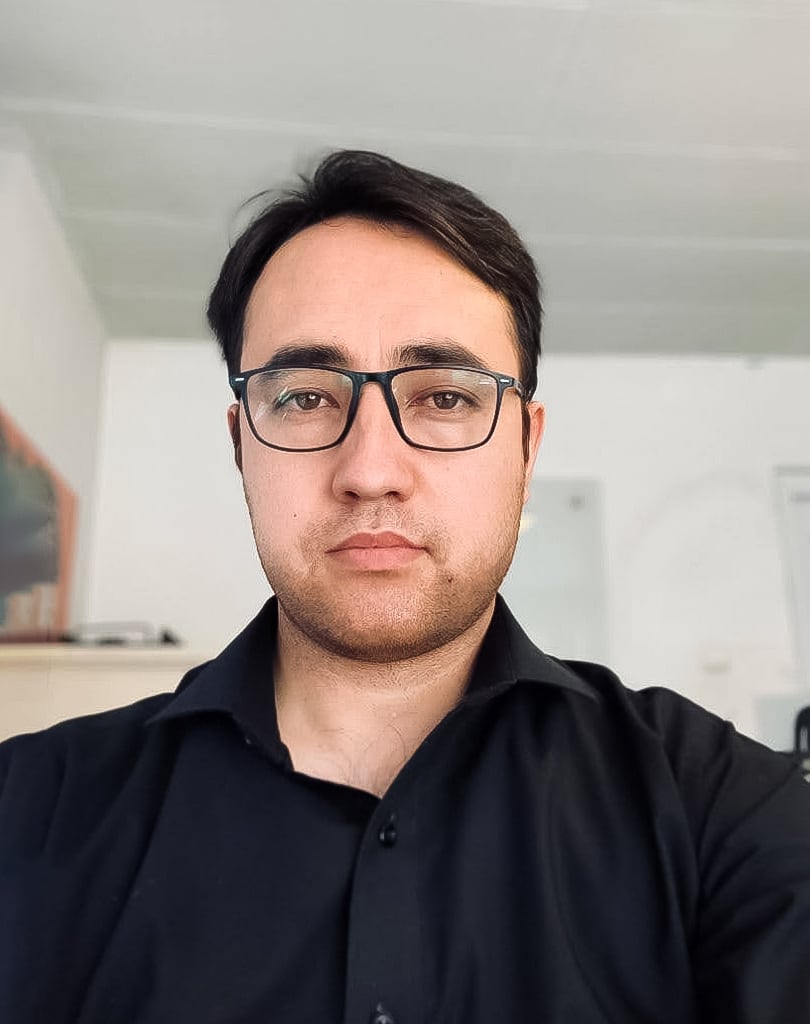

Recently, a video has been circulated on social media that indicates systematic ethnic discrimination and has triggered widespread reactions. The young man who recorded the video says that his father was discharged from an operating room bed at a hospital in Kandahar solely because he was Hazara, without undergoing surgery, and was told that “his turn has not come yet.” The man’s son, with tearful eyes, cries over the painful and distressing situation he encountered in the hospital.
Esmat Khan Amiri, a resident of Daykundi province, says that his father was hospitalized about a week ago at the Aino Mena Hospital in Kandahar due to a bone-related problem and had been waiting for surgery. According to him, despite being given an appointment, the treatment process was repeatedly delayed.
Amiri adds that they faced major difficulties in arranging the blood required for his father. After the blood was provided, the patient was taken to the operating room; however, after hours of waiting, he was sent back to the ward without undergoing surgery. According to him, this situation was the result of ethnic discrimination.
The young man told the Hasht-e Subh Daily: “We are from the Kiti district of Daykundi province. It has been 12 days since my father broke his arm, and we brought him to Kandahar for treatment, a place that is about 18 hours away. In the hospital, we had to provide all the necessary equipment ourselves; only the hospital bed was provided by the government. After a week of waiting, my father was taken to the operating room, but after six hours, he was brought out without surgery and told that there was no time for you.” He adds that after this experience, his father left the hospital in despair, and they were forced to travel to Kabul for further treatment.
Amiri says, “When my father was brought out without surgery, there was no hope left. He himself said let us leave here. We were also forced to come to Kabul. I also published a video on social media to show this situation.”
The young man adds that there are no standard healthcare facilities in Daykundi province, and residents of this province are forced to transfer their patients to other provinces for treatment. According to him, his father is now undergoing treatment in Kabul.
Meanwhile, a doctor who worked at Kabul Central Polyclinic during the first Taliban rule says he was also detained for what he describes as “distributing blood to Hazara patients.” The doctor, who did not want his name mentioned in the report, adds that he was later dismissed from his job and his documents were also destroyed.
The doctor says, “During the first Taliban rule, I was working in the blood bank. I was imprisoned for 20 days on the accusation that I was mostly attending to Hazara patients. I was beaten and tortured in prison, and they even gave me electric shocks. As a result of that torture, I developed a spinal disc problem. After my release, they warned me that I could no longer work. Since then, I left Kabul. Discrimination really exists, and the situation in hospitals is worrying.”
The video of Esmat Khan Amiri has been widely shared on social media. Several political and civil activists, as well as social media users, have described it as a bitter and shameful reality of Afghanistan in which patients are treated based on ethnicity.
Hamshat Radfar, a political activist, wrote: “The structure of discrimination and oppression has neither horns nor a tail. A few kilometers away from this hospital, Mullah Hibatullah, in a dark basement, shouts the claim of leading the world’s Muslims. Meanwhile, groups of educated and worldly people are busy 24 hours a day whitewashing the Taliban and stripping them of ethnicity-based labeling.”
Arif Rahmani, a former member of parliament, wrote: “The account of Esmat Khan Amiri, a young man from Daykundi province, is no longer a simple personal complaint. It is living evidence of human apartheid at the 350-bed Aino Mena Hospital in Kandahar, where a broken bone of an elderly father is crushed under the gears of ethnic prejudice and discrimination.”
Sharif Sangin, a social media user, wrote: “This narrative reflects structural discrimination in access to healthcare services and the use of public resources, where public rights are reduced to ethnic privilege. When public resources are distributed based on ethnic identity instead of citizenship criteria, the principle of equality is fundamentally violated.”
This comes as Volker Türk, the United Nations High Commissioner for Human Rights (OHCHR), previously warned at a session of the Human Rights Council that Afghanistan has turned into a “graveyard” of human rights. According to him, since the Taliban’s return to power, numerous decrees and regulations have had extensive and negative impacts on the lives of citizens and have restricted their civil, political, social, and economic rights.
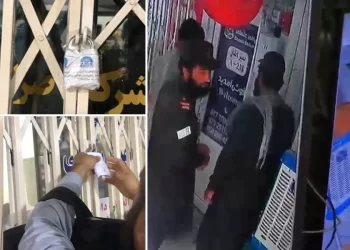
Previously, the Taliban suspended the activities of several healthcare centers in parts of Daykundi province that were earlier supported by an international organization. Following this decision, these centers have faced serious problems.
Residents of the districts of Ashtarlay, Khadir, Kiti, and Shahristan in Daykundi say that access to healthcare services has become more difficult for them, and this situation has increased concerns.
You can read the Persian version of this report here:
روایت تلخ تبعیض قومی؛ امیری: پدرم بهدلیل هزاره بودن از اتاق عملیات بیرون رانده شد