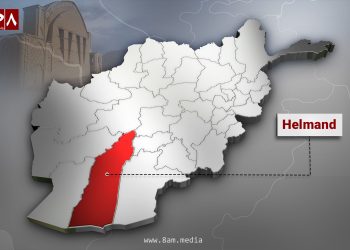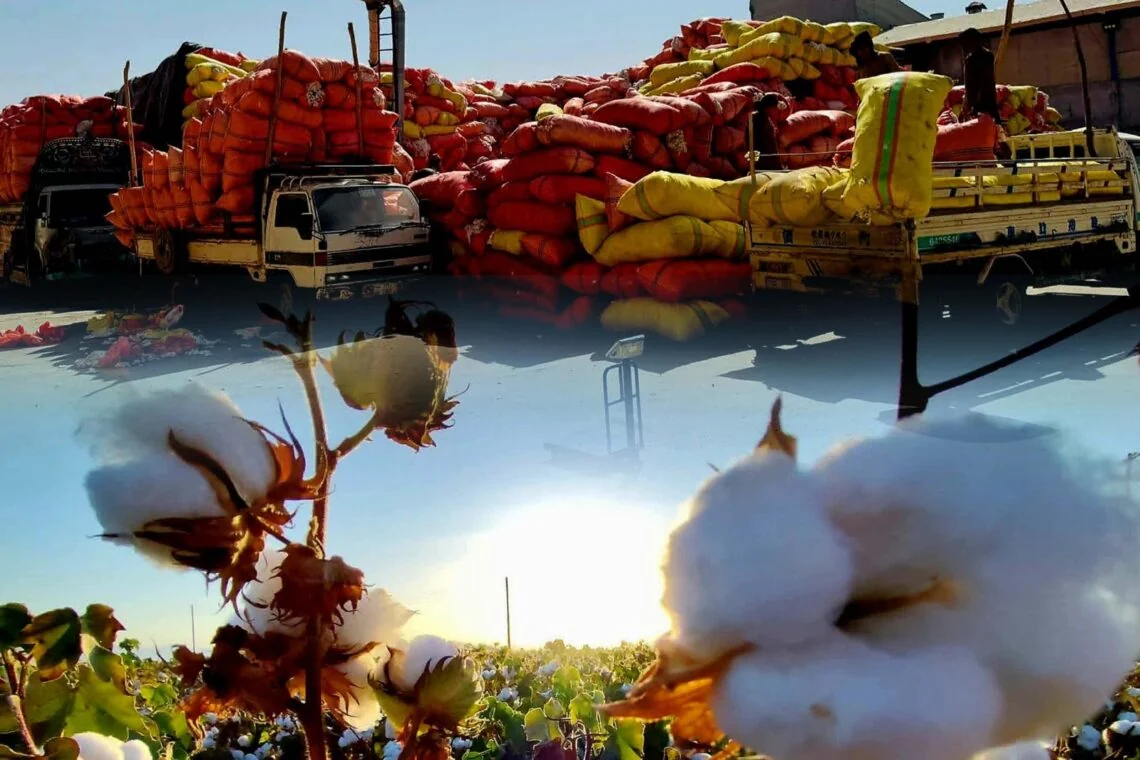
Farmers in Helmand province say that with the closure of Afghanistan’s trade routes with Pakistan, prices for their crops, including cotton, which previously had a good market, have dropped sharply, and growers cannot recover the costs they spent on planting and harvesting.
Gul Mohammad, a farmer, says that rising prices for chemical fertilizer, agricultural pesticides and other necessary supplies, along with their poor quality, are among the problems that have increased the cost of farming. According to him, in previous years, when the trade routes between Afghanistan and Pakistan were open, they made some profit from selling cotton. This year, however, with the routes closed, all the harvested cotton remains in their homes and no buyer can be found.
The farmer adds: “This year the cotton market has become very bad. In the past, when the trade routes with Pakistan were open, we made some profit from selling cotton. Now the routes are closed, our crops are left in our homes, and no buyer can be found. The prices of chemical fertilizer, pesticides and other essential supplies have also gone up, so we cannot recover our costs.”
Jan Agha, another farmer, says the current situation has become very difficult for them, and they do not know how to sell the produce from their land at a fair price. He adds: “The current situation is very hard for us farmers. We pay a great deal to prepare the land and to buy fertilizer, pesticides and other farming supplies, but when we harvest our crops, they do not fetch a good price in the market. We do not know how to sell our crops or how to cover the expenses of a whole year.”
Haji Ahmadshah, a cotton trader in Helmand’s trade market, says that as the cotton harvest season gets underway, the price of the crop in the market has fallen sharply. According to him, in addition to this year’s harvest, part of last year’s cotton is still sitting in warehouses in Helmand province, and they do not know which market to send it to for sale.
The trader says: “During the cotton harvest season, prices in the market have fallen to an unprecedented level. In the past, the price of one maund of cotton reached between 250 and 350 Afghanis. Now, because of the decrease in buyers and the closure of the trade routes, prices have dropped sharply. Part of last year’s cotton is also still in our warehouses, and we do not know in which market to sell it.”
Officials at the Helmand Chamber of Commerce say that the closure of trade and transit routes with Pakistan has caused a drop in the prices of agricultural products in the province.
Atta Mohammad Akhlaqi, deputy head of the Helmand Chamber of Commerce, says that rising fuel prices are also among the factors that have negatively affected the price of Helmand cotton. He adds that they are trying to enable the transfer of Helmand cotton to markets in China, Iran, Turkey, Uzbekistan, and several other countries by finding alternative export routes.
Akhlaqi says: “The closure of highways and restrictions on trade relations with foreign countries have negatively affected Helmand’s agricultural products. The rise in fuel prices has also driven up transportation costs, and as a result, the pressure on the cotton market has increased. We are trying to find alternative export markets for Helmand cotton through China, Iran, Turkey, Uzbekistan, and several other countries, so that traders can transfer their products to foreign markets.”
You can read the Persian version of this report here:
بستهشدن راههای تجارتی با پاکستان؛ بهای پنبه در هلمند ۶۰ درصد کاهش یافته است