With the fall of the previous government and the return of the Taliban group to power, the pace of holding international conferences on Afghanistan has accelerated. These conferences have aimed to attempt better engagement with the Taliban. If the world did not intend to engage with the Taliban, it would not have devoted all its efforts to holding conferences that have mostly been fruitless. Many of these conferences have been regional, with regional countries and Afghanistan’s neighbors participating, discussing the transition from a purely Taliban regime to a mixed system. Some conferences have been international, with major world powers from the East and West, including the United Nations, coming together to negotiate a way out of the current impasse in Afghanistan. Representatives from Afghanistan, sometimes from the Taliban and sometimes from anti-Taliban forces, have attended these conferences. However, some conferences have been held in the absence of both sides.
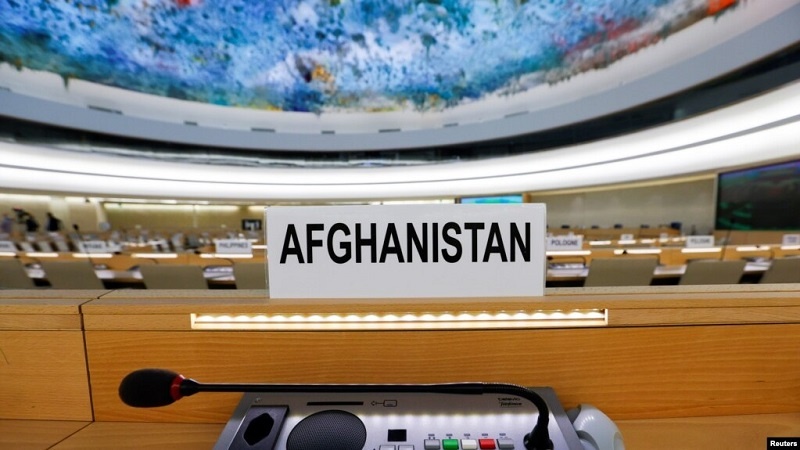
The conferences organized by the United Nations on Afghanistan have seemingly been significant but have not yielded tangible and clear results. The organization has held high-profile conferences in Doha, the capital of Qatar, twice during the months of Thor and Delu of the current solar year, yet the deadlock remains unbroken. The United Nations Security Council, the most authoritative global body, has also held special sessions on Afghanistan under Taliban rule several times. Still, like other conferences, it has not increased hopes for resolving the existing crisis. The relatively effective and hopeful step taken by the Security Council was the issuance of a resolution to appoint a special representative for the United Nations in Afghanistan, a resolution that has not yet been implemented due to Russia and China’s refusal to consent to it. However, Taliban resistance has also been effective in undermining efforts to comply with the resolution’s provisions.
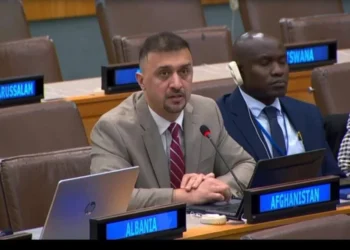
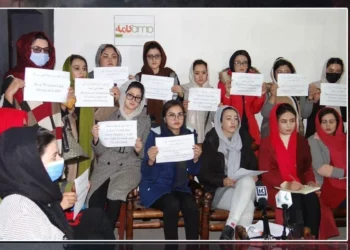
Conferences and meetings held to address Afghanistan’s current situation are largely ineffective for two main reasons: first, the organizers of these conferences or influential regional and international powers lack unity of opinion due to the turbulent international order. The darkening relationship between Russia and the United States over the Ukraine crisis, as well as verbal tensions between Washington and Beijing over Taiwan, have prevented consensus on the Afghan crisis. The second round of the Doha conference and Russia’s representative’s refusal to meet with Afghan civil society and women’s groups indicate a lack of unity among major powers. Another example is the special session of the Security Council held behind closed doors this past week. When a meeting is held behind closed doors and away from the media’s eyes, it appears significant. In that session, even Nasir Ahmad Faqir, the acting permanent representative of Afghanistan to the United Nations, was not invited. Media reports suggest that, like other conferences, this one did not produce any specific results. It is said that Russia and China have been in one camp, while France, Britain, and America have been in another. Moscow and Beijing have emphasized expanding relations of any kind with the Taliban, but Paris, London, and Washington have stated that there is no rush and caution should be exercised. This difference of opinion has led to the most important Security Council session ending without issuing a joint statement. However, at the end of the session, the eleven permanent and non-permanent members of the Council issued a joint statement calling on the Taliban to adhere to human rights, but Russia and China disagreed with its provisions.
The holding of that session behind closed doors has also sparked criticism. For example, the Head of the Women’s Rights Monitoring Section, Hedra Bar, reminded through a post on her page X that it is important for the people of Afghanistan, especially women, and girls, to know what topics are being discussed in these sessions: “Afghans, especially women and girls targeted by the Taliban, have the right to know what is being discussed and decided in these sessions.” It is not clear what factors led to Nasir Ahmad Faqir’s non-invitation. Perhaps the special nature of the session and its off-the-media-grid occurrence could be factors. Nevertheless, it has brought satisfaction to the Taliban group.
Secondly, international conferences, held with the intention of greater engagement with the Taliban, have not had a significant impact. The constant emphasis on engaging with the Taliban and ignoring non-Taliban forces has led the group to disregard the resolutions of international conferences. The approach the world has chosen to tame the Taliban is flawed because two decades of engagement have made it clear that this group is not amenable. Contrary to the world’s goodwill, the Taliban have strongly exploited it. When the uproar over the second round of the Doha conference arose, the Taliban expedited the detention of women and young girls under the pretext of what they call a lack of hijab observance, an authoritative act that provoked only verbal reactions from the world. The Taliban aimed to impose their demands on the United Nations and other countries.
The Taliban have indeed found the Achilles’ heel of the world’s sleep. To be recognized, they do not acquiesce to the world’s demands but rather violate them more ruthlessly than ever before. For example, media reports have stated that the Taliban asked for the Afghan Embassy in Vienna to be handed over to this group or be shut down as part of the exchange for the release of Herbert Fritz, an Austrian researcher, a request that has not been fulfilled. The Taliban believe that hostage-taking of foreign citizens targeted killing of former government military personnel, widespread violations of human rights, especially women’s rights, unrestrained suppression of free media, and more pave the way for the formal recognition of their regime, not necessarily compliance with the world’s demands for upholding higher values.
The Doha conference not only failed to bring the Taliban closer to fulfilling the world’s expectations but also further incited and encouraged this group to create more terror and horror. Nowadays, the Taliban have once again accelerated the process of public executions. Within a week, they executed three individuals in sports stadiums in the provinces of Ghazni and Jowzjan in front of spectators’ eyes; places that were once filled with citizens’ happiness. Additionally, they have imposed new and frustrating restrictions against women and girls. The academic year is starting, but there is no news of reopening school gates and universities. In the province of Khost, serious warnings have been issued to local media not to engage in any visual or audio programs involving women and girls, or else face consequences. Women’s salons have been warned again that they have a month to completely cease their operations, or they will face suppression. The Taliban have even sought help from local elders, transit lawyers, and council heads in this regard. This week, a verbal order from Mullah Hibatullah Akhundzada, the leader of the Taliban, was issued to prohibit the group’s officials from participating in visual media interviews. While no one is particularly fond of seeing Taliban officials on screen, this in itself is the harshest restriction against the media.
All of this is happening after the Doha conference; a conference that was expected to compel the Taliban to meet the world’s demands. Zabihullah Mujahid, the Taliban spokesman, explicitly stated in response to the holding of a special Security Council session: “Any decision made in regional and international conferences against the interests of the Taliban will never be implemented.” It is clear that Mujahid’s aim with “the interests of the Taliban” is the survival of this group with its current form and nature. The use of the word “never” is also a warning to the world that the Taliban will not submit to the resolutions and provisions of conferences and United Nations resolutions.
Why does the Taliban disregard the world’s demands in this manner? The reason is clear: major world powers have conflicting views on the Afghanistan issue, and the world has not yet realized that exerting pressure on the Taliban is effective, and non-Taliban fronts have not become a reliable alternative force.