By Amanda Haydar, L’Orient Today-L’orient le Jour (Lebanon)
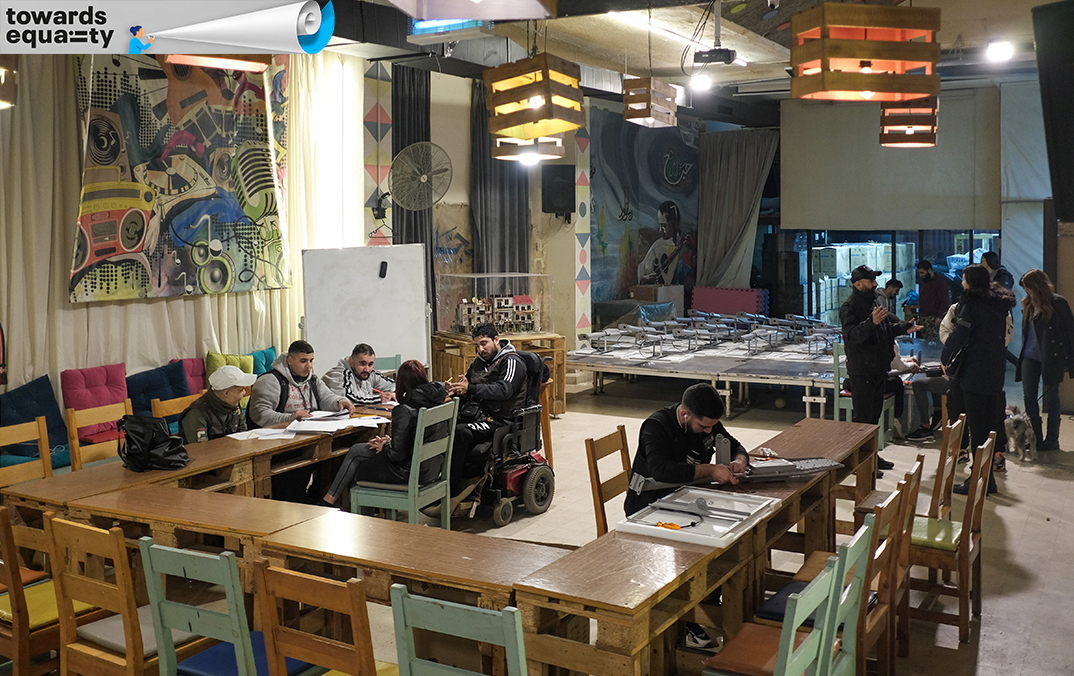
It is a winter day in Tripoli, Lebanon’s second-largest city, and near the end of Syria Street, youth sit gathered in a cafe. They laugh and chat over coffee, as the rain rhythmically raps the outside pavement and clears the thick city air.
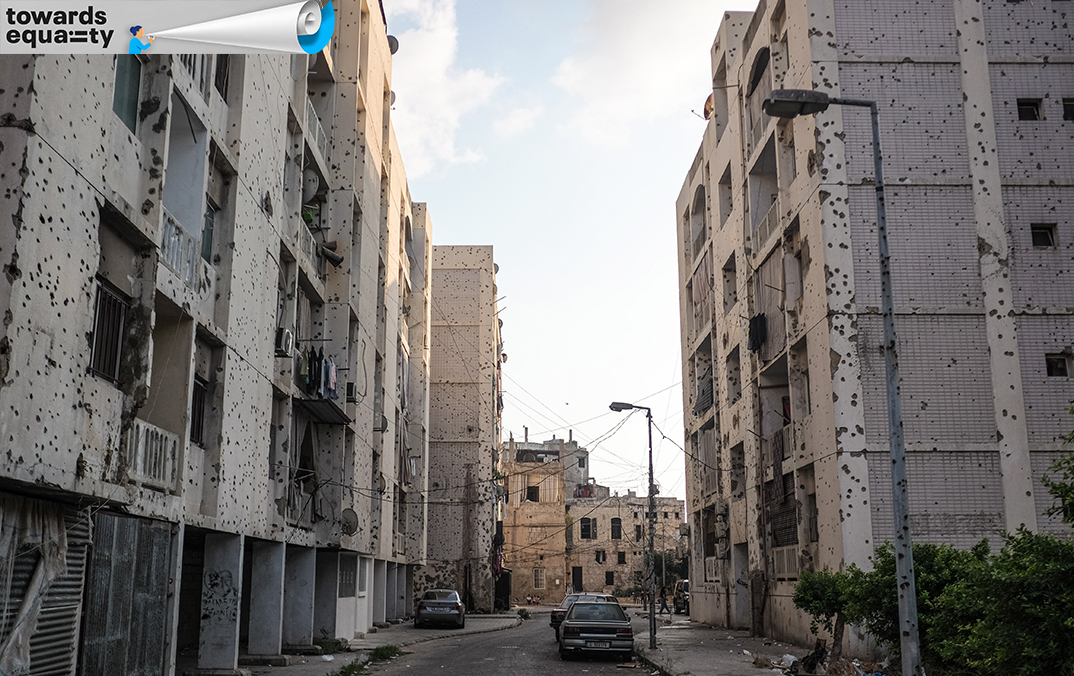
Such a scene would have been impossible not long ago. Kahwetna, “Our Cafe” in Arabic, is located at the exact meeting point between Tripoli’s Jabal Mohsen and Bab al-Tabbeneh neighborhoods, where sectarian clashes between the two communities ravaged the lives of inhabitants for years.
But Kahwetna is a safe space. It has two separate entrances — one for each neighborhood.
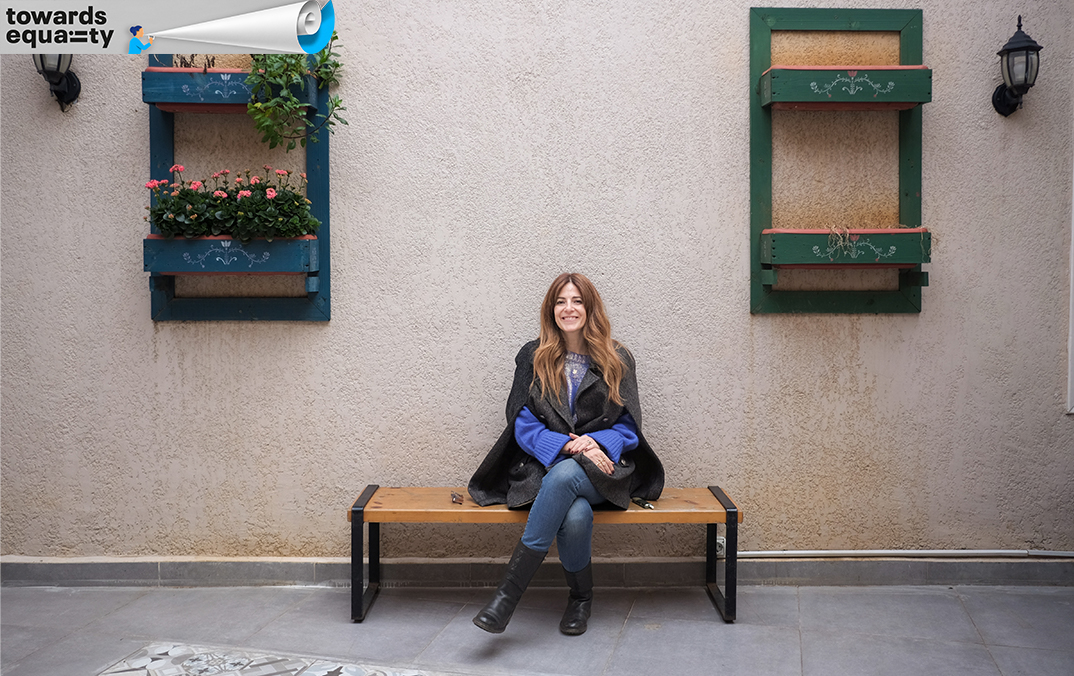
Behind the initiative is Lea Baroudi, co-founder and coordinator of MARCH Lebanon, a Lebanese NGO working to promote social cohesion through peace-building and sectarian conflict resolution in Lebanon. Kahwetna, which opened its doors in 2016, is one of MARCH’s various initiatives.
Baroudi grew up during the Lebanese Civil War, and long after it ended, she was shocked to see “even people her age were divided along sectarian political lines.”
She became a certified mediator and helped organize youth initiatives with a group of friends on the side of her work as a business consultant. Her side passion eventually took center stage and evolved into MARCH in 2011.
‘Love and war on the rooftop’
Where it all truly began was theater. Baroudi had a particular interest in using art as a medium for peacebuilding and got the idea to organize a play between warring factions in Tripoli. It was 2015, and continuous clashes between Jabal Mohsen and Bab al-Tabbaneh had recently ended with the Lebanese Army’s deployment to the area.
Baroudi, who lives in Beirut, started by visiting Tripoli on the weekends and talking to people until eventually, a few combatants agreed to help her gather youth for theater auditions.
It was not an easy feat.
“We thought that as soon as we were put in a room together a fight was bound to happen. I rejected the idea of the play, I didn’t participate at first,” recalls Ali, a combatant turned community leader.
“I watched the play, but I was against my friend joining it,” says Zapher, another ex-combatant who also works with MARCH.
“But then my friend told me, ‘I’m not actually going to participate. I’m going to see their faces so that we can shoot them later.’ But throughout the practice, they started to get to know and like each other,” Zapher continues.
“I was planning something to hurt them too,” says Ali, “but then we backed out when we saw that a lot of our men were involved too. And that they would also be hurt. We didn’t want to hurt them.”
Baroudi recalls that many came to rehearsals armed.
“I remember instead of searching for phones we searched for weapons … razor blades under the tongue or guns in the pockets or socks … or knives.”
The play was to be inspired by the lives of youth from both neighborhoods, so participants had to share their stories. There was no script.
“When they shared each other’s stories they started to realize that they were more alike than they thought. And this is how things started,” recalls Baroudi.
“We started to see that we experience the same pain. The same poverty. That we had the same needs,” Ali says.
That’s how “Love and war on the rooftop” came to life, and toured across Lebanon.
“They told us here everything would happen on the rooftops during the wars: from snipers shooting at each other, to friends playing cards, to secret lovers,” explains Baroudi.
She believes the cornerstone of peace is human connection and says there’s nothing “magical” about it. It’s intuitive.
“When you’re working in peacebuilding initiatives, it’s not about the activities you do, it’s about the emotions these activities generate. How does this make people feel? The inner experience.”
Prison as the only meeting place
Ali finally participated in MARCH activities in 2019, after serving five years in the notoriously underserviced Roumieh prison.
“I could have done so much in those five years.”
“We didn’t have any opportunities or places to meet before then,” says Ali.
Besides prison, that is.
Baroudi recalls asking participants if they had any friends from “the other side” one day during rehearsals. Only one person responded that they did.
“I asked, ‘Where did you meet him?’ He told me ‘in prison.’”
“‘You literally live a few meters apart. You had to go to prison to meet him?’” she responded.
“When Kahwetna opened they were scared. They were telling me, ‘We’re going to get bombed. They’re gonna explode the place … we’ve already been called traitors. Because we sit with the other side.’”
And yet, eight years on, Kahwetna is teeming with activity. Through one backdoor, in a multi-purpose space, people are huddled around language classes while in another corner, others assemble solar-powered street lights.
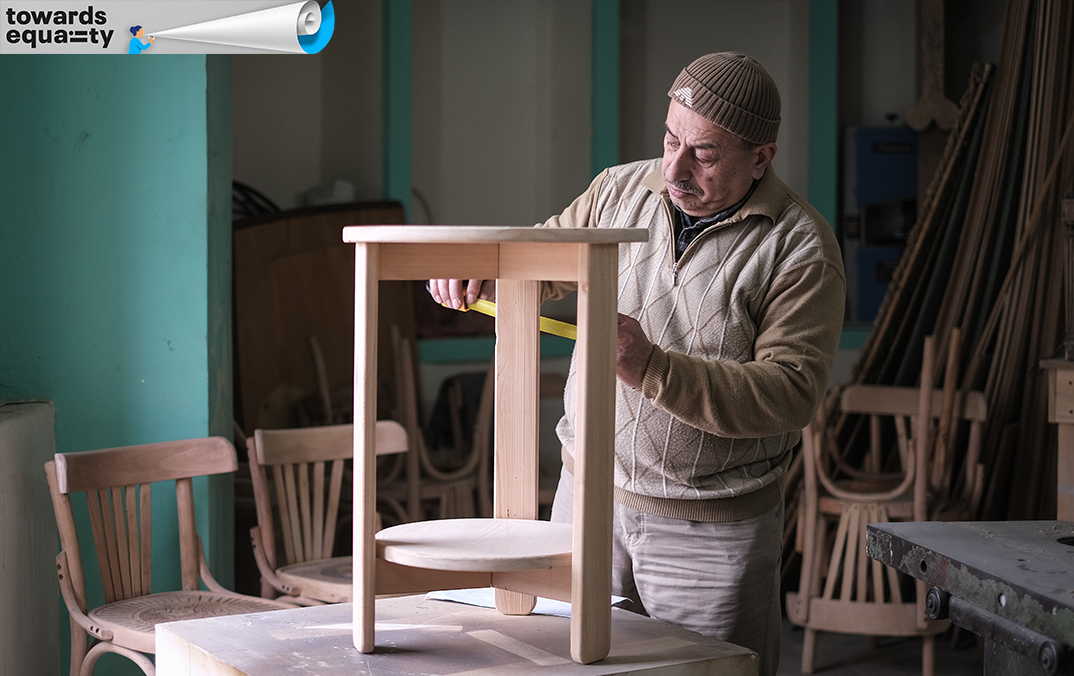
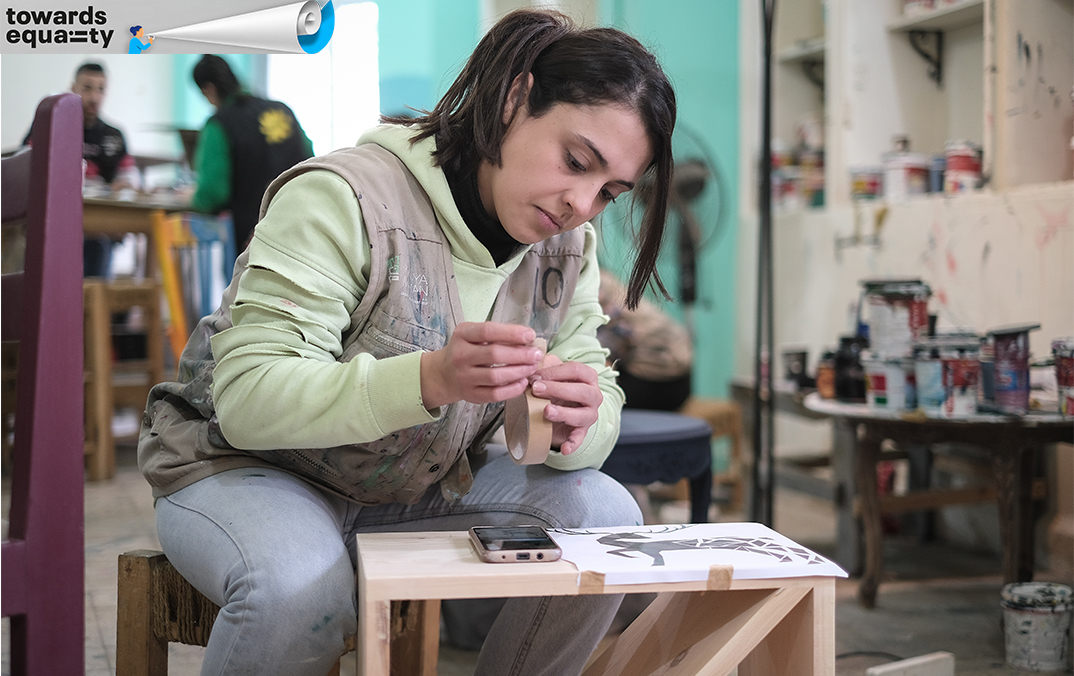
Up a flight of stairs, there is an open courtyard lined with many doors, each leading to a different clinic, workroom or atelier: these include dental and psychology clinics, a culinary space, various design and craft studios and a carpentry workshop.
Community rehabilitation
After the initial success of the play and the cafe, Baroudi wanted “to create a reason for more people to join.” That’s when she got the idea to run a community rehabilitation program.
It was 2016 and the clashes had badly damaged the shops of the area.
So MARCH recruited youth from both sides, taught them construction and design skills, and together they rehabilitated the shops they had previously contributed to destroying.
Soon, things developed further.
When the economic collapse took Lebanon by storm in 2019, Baroudi knew she had to do something.
“Even those with PhDs were without jobs.”
MARCH soon developed various vocational training programs, full-time psycho-social support and legal services.
“We wanted to start sustainable initiatives that help these youth continue working.”
Baroudi says she avoids the approach of “hardened activism” because it creates polarization. “When one facet of a person’s identity feels threatened, it overtakes all the other identities. This is how radicalization happens,” she says.
“I don’t believe in the idea of hardened activism because it hasn’t reached anywhere with anyone.”
Instead, she believes peacebuilding is about building bridges. “If you are in peacebuilding or mediation you have to be the bridge. As a peacebuilder, you must let things flow through you, you cannot take a position.”
In 2014, Jabal Mohsen and Bab al-Tabbaneh became a security zone after a series of deadly clashes, and the Lebanese Army entered.
“If you look at the Army, they’re not used to dealing with civilians. Their approach is mostly hard security and counter-terrorism.” Clashes between the Army and locals ensued. Baroudi instantly recognized a need for peacebuilding.
MARCH responded with a program bringing together the community and the Lebanese Army. It started with football tournaments of teams mixed between Army personnel and former fighters.
The tournaments drew the excitement and anticipation of the entire community and were such a hit that MARCH took things further and initiated a program to build an Army base. It united people who were incarcerated on terrorism charges, and who had fought in Syria, Iraq, Afghanistan and in Lebanon, with the Army.
“They were having lunch together, they were constructing together, they were talking in psycho-social support groups together, they were having team building activities together, over the course of five months,” Baroudi details.
“Most conflicts dehumanize the other. The first thing you need to do is humanize the person.”
When being a woman is an advantage
When Baroudi initially decided to pursue her theater project in Tripoli, she was greatly discouraged by everybody. “Experts, family, friends. Everybody.”
She was told she was too young, too naïve, and that she would fail or get herself killed. She even faced the classic “not even a man can do the job.” But she persisted.
“Women on the ground are much more effective in this field. They [men] don’t perceive you as a rival, there is no ego or rivalry involved. You’re perceived as more neutral.”
“They show their weaknesses to women more. They accept things from women more.”
Despite the crucial role women play in building peaceful societies, they represented six percent of mediators in major international peace processes between 1992 and 2019..
MARCH is almost entirely women-led, but “it’s not on purpose.”
The head of programs in Tripoli and Beirut, most of the trainers and the head of psycho-social programs are women. But there are more male participants, “because we’re working in conflict.”
Forward movement
Things are not always easy, but Baroudi and the MARCH community continue to move forward.
“Two years ago we had a Molotov bomb thrown at us. Today, to the extremist groups, we are even worse as an enemy because we’ve made an impact,” she says.
One thing that makes her feel safe now is the “constant collaboration with the community… It’s the youth themselves,” she says. “They have ownership of this place. Many were hardened fighters. This community grew around them.”
Zapher, a former fighter, put down his gun for good in 2014, when he joined MARCH. Today, Zapher leads MARCH’s Tripoli city tour.
“I went from someone uneducated and fighting in the clashes to someone who helps rehabilitate and introduces people to the area,” he says.