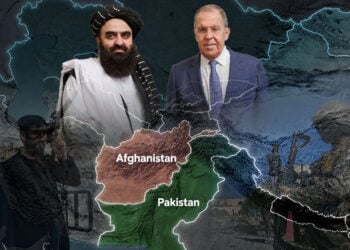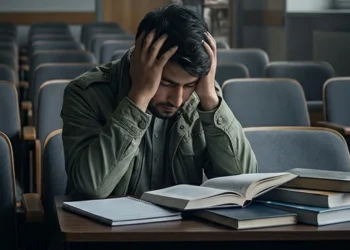

Over two and half years have passed since the issuance of the Taliban decree banning education for women beyond the sixth grade. Just a few months have passed since the closing of university gates to women. At that time, the Taliban claimed that the closure of university and school gates for girls was temporary and that girls would return to education when the “ground is prepared,” reminiscent of the promises made during the first Taliban regime. The people of Afghanistan, including women, know the Taliban. Perhaps in some cases, people’s perception of the Taliban exceeds that of the group itself. They are deluded about themselves, while people’s understanding of them is more realistic. Therefore, from the outset, people did not trust the Taliban’s promise to reopen schools and universities to girls, especially women who knew that in Afghanistan’s patriarchal society, there is a group that pulls the strings behind every ruler and opposes its identity in enmity with symbols of civilization and progress.
These Taliban’s decisions have eliminated a large portion of Afghan women from education and academic environments. However, another part continues to strive for learning and circumvents Taliban’s restrictions. To bypass these constraints, some women have turned to online education. Afghans living abroad and even reputable universities worldwide have launched several online schools dedicated to Afghan girls. Last week, we saw and read two pieces of news about special online education programs for Afghans in the media: the US Embassy program for Afghanistan and the program of Arizona State University in collaboration with some Canadian women. The former program is for both boys and girls, while the latter is specifically for Afghan girls. Schools like Herat School, Daricheh School, Women’s Online University, Kaj School, and several other schools and universities have provided these opportunities for women. English language classes are also held, mostly free of charge for Afghan students. Women in Afghanistan can access these teachings using smartphones/computers and the internet. Additionally, many universities worldwide offer online education as a form of lifelong learning, which can also be utilized from this opportunity.
The imposition of Taliban restrictions on women and the closure of educational avenues for them reflect the Taliban’s policy to keep women illiterate. The Taliban fear educated women. Today, women’s protest movements are one of the major concerns of the Taliban. These movements and educated women have been able to challenge the Taliban in international forums. Understanding this situation, the Taliban fear the education of women and actively prevent it. This is the Taliban’s policy, but it is not the desire of the people of Afghanistan. People, especially women, can choose not to comply with the Taliban’s policies. The harsh living conditions in Afghanistan are evident to all. The fact that many families cannot afford their daily bread is undeniable. The deprivation of education is simultaneously a result of political and economic coercion. However, many families can afford smartphones and internet access. Women finding ways to educate themselves against the orders and policies of the Taliban is indeed a serious struggle against the Taliban regime.
On the other hand, parts of the country are not connected to the power grid and internet services. Therefore, online education is practically impossible in those areas. The challenges facing women’s online education in Afghanistan are not limited to one or two. At least in cities and some villages, there are internet and electricity services. Even in areas where government electricity distribution has not been reached, families use solar panels to provide some electricity for household lighting. Charging mobile phones and laptops can also be done with these facilities. Online education is an opportunity that can bypass the Taliban’s restrictions and effectively undermine the decree of Mullah Hibatullah’s cabinet.
Today, the internet has provided unparalleled opportunities for humanity. A significant portion of business and commerce is conducted online. Online markets attract more customers every day. Just as free media in Afghanistan did not give up when they lost the opportunity to work under the Taliban’s rule, instead they closed their offices and started working online. Taliban’s access to the internet is limited compared to television, radio, and newspapers. Despite their efforts to suppress the circulation of these media outlets in Afghanistan, they have practically failed in this field. In the realm of education, some women have chosen a similar path, but this is not yet widespread. The girls who have taken the initiative for online education are a small fraction of those who have access to the internet and smartphones. Similarly, the use of the Internet for business and online work is very limited among Afghan women.
The fact that the Taliban do not want women to receive education and work is one aspect of the issue. For now, the hands of Afghan men and women are short in changing this situation. The Taliban does not change, and it is not possible to overthrow the Taliban regime in the short term. Therefore, as long as this group holds power over the country, restrictions on women’s education and work are unlikely to be lifted. Even if outwardly these restrictions are lifted, the patriarchal and anti-women thinking of this group is a thick wall that will not be easily crossed in the path of women’s education, work, and politics. Therefore, instead of sitting and waiting for the end of Taliban rule to return to educational institutions, markets, and politics, women should at least use the opportunity of online work and education now. This can include men and boys as well.
Education for women in Afghanistan has never been universal and equal at any stage. Even during the administrations of Mr. Karzai and Mr. Ghani, which are considered the best period for women’s education, educational opportunities were not equal across the country. In areas where the Taliban had access, girls were practically deprived of education. This deprivation did not prevent a spectrum of girls and women from seeking education and work. It is disappointing and regrettable that some girls could not receive education and consequently could not enter the political, economic, and cultural arenas. However, urban women and those living in villages under the control of the Republic were able to make considerable use of educational and employment opportunities.
If the people of Afghanistan cannot overthrow the Taliban in the short term, they should at least prepare themselves for the post-Taliban time. Both men and women need to acquire skills to enhance their capabilities. In the post-Taliban rule, Afghanistan needs skilled and educated men and women. Surrendering to the decisions of the Taliban only exacerbates the suffering of the people and delays development. If the Taliban closes the doors of universities and schools to women and some women do not have access to the internet and phones, those who do have access to such facilities should not miss the opportunity. Online education is now part of the global education process, especially after the spread of COVID-19 in 2019. This type of education is flexible in terms of time and place and provides more options for students. A student in Afghanistan who wants to receive quality education at a foreign university can access it from Afghanistan using the internet. It does not matter whether they are women or men. The Taliban cannot prevent such education from happening.
Learning is a form of resistance and resistance against the Taliban. The Taliban have a longstanding enmity with modern education in general and education for women in particular, which is synonymous with their existence. The Taliban is a reactionary extremist movement that harbors irreconcilable hostility towards the trappings of civilization. If it were up to this group, universities would cease to exist, and instead, they would build jihadist schools to produce more suicide bombers and groom them for martyrdom. Anything that represents civilization and development, if it does not assist their rule, is their enemy. The Taliban’s enmity towards women’s education and work is a characteristic aspect of this group. Women and girls who have set up underground schools to circumvent Taliban restrictions, those attending language schools, or those involved in online businesses or underground salons, are essentially resisting Talibanization. They are striving to carve out at least part of their destiny. This kind of resistance does not come at a high cost for women and girls and does not put their lives in danger. At least those who engage in online education are not facing the risk of their lives from the Taliban.
Women’s education contradicts the Taliban’s orders and opposes the ideology and policies of this group. Women’s participation in online educational programs is a low-cost but very important and effective struggle against Talibanization. In the Taliban’s situation, illiterate, unemployed, and powerless women merely fulfill the sexual desires of men, bear children, and serve the men of the family. In contrast, some educated and empowered Afghan women have strong and steadfast wills and are working to challenge the Taliban and their policies. This is an anti-Taliban situation that can be confronted without risking their lives.