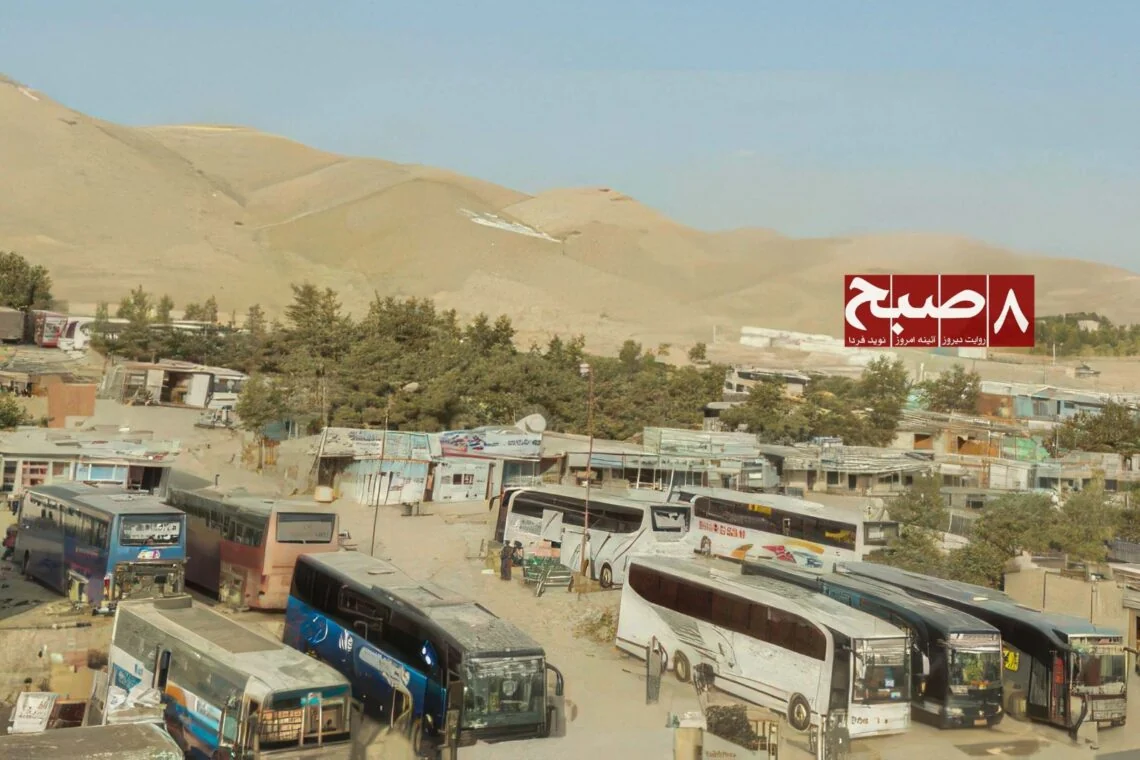
A number of passenger vehicle owners on the Kabul-Herat route are complaining about rising transport costs and the collection of exorbitant sums by the Taliban’s Ministry of Transport and private passenger transport companies. They say that, in addition to the high cost of the transport slip and the road toll, passenger transport companies also take about 20,000 afghanis as commission on every round trip. According to these vehicle owners, their total payments on each round trip between Kabul and Herat come to nearly 40,000 afghanis. They say that, given the rise in fuel prices and other vehicle maintenance costs, this amount swallows a large part of their income and leaves them with no profit. The owners accuse the private companies of collecting commissions beyond the official rates and of exploiting the current situation, and they say there is no specific authority to address their complaints. The owners are demanding lower transport costs, transparency in the collection of commissions, and a regulated system for setting fares and managing vehicle traffic.
The owners of passenger vehicles express deep concern over what they describe as widespread corruption in the Taliban’s Ministry of Transport and the private passenger transport companies. They say they have been left helpless between the Taliban and the said companies, and are forced to pay sums beyond the established rates and rules to Taliban-controlled government institutions and private companies. They say there is a striking gap between the official regulations and what is actually collected from vehicle owners, and that despite repeated complaints, no authority listens to their voices.
The owners say the private companies in which their vehicles are registered charge them large sums as additional fees.
The owner of a 580 vehicle says: “Under the previous government, the transport slip fee for each vehicle was 1,600 afghanis on the Kabul-Herat route and 1,800 afghanis on the Herat-Kabul route. But now they charge 8,000 afghanis for each route, and each company separately takes 10,000 afghanis in commission.” According to him, these costs are being collected from passenger vehicle owners at a time when fuel prices are rising day by day, and the economic pressure on them is growing.
The man, who does not want his name mentioned in the report, adds: “Now they take 8,000 afghanis for the trip there and 8,000 afghanis for the return. The private companies also have dealings with the transport department, and we are forced to pay 36,000 afghanis from a single vehicle on every round trip between Kabul and Herat, not including the road toll. Given the rise in fuel prices and other costs, nothing is left in profit for anyone who wants to make a living this way.”
Another owner says: “Most passenger transport companies charge vehicle owners large additional fees and also have dealings with the transport department. For example, a passenger transport company collects 1,500 afghanis in fare from each passenger, but pays only 500 to 700 afghanis of it to the vehicle owner.” According to him, there is no authority to address the complaints of vehicle owners or to provide accountability in this regard, and the officials of the companies and related institutions are pursuing their own personal interests instead of addressing people’s problems.
The owner of another 580 vehicle also says: “The transport department charges 8,000 afghanis for each 580 vehicle on the Kabul-Herat route, and 2,500 afghanis more as a road toll. On the return route from Herat to Kabul, 8,000 afghanis in transport fees and 2,400 afghanis in road toll are also collected. In addition, each company takes 10,000 afghanis for every trip.” According to him, on each round trip the owners of passenger vehicles are forced to pay a total of 16,000 afghanis to the Taliban’s transport department, 4,900 afghanis in road tolls, and 20,000 afghanis to the passenger transport companies.
The owner of one of the vehicles registered with the passenger transport companies says: “The company waybill states that a private company must collect two percent of passengers’ fares as commission. But these companies take 10,000 afghanis from us, and there is no authority to monitor or address this issue. If we do not pay this amount to the company, they remove our vehicle from their list.”
The owner of this vehicle says: “When you want to travel from one province to another, the Taliban’s Ministry of Transport issues a slip called the transport slip, which costs 8,000 afghanis from Kabul to Herat. A road toll of 1,200 afghanis is also collected on the Ghazni highway, and we have to pay another 1,200 afghanis in the Girishk area of Helmand. In addition to these costs, the passenger transport company also takes 10,000 afghanis from us. The companies’ commission is very high, and no one hears our voice.”
According to him, two days ago representatives of the vehicle owners gathered at the Ahmad Shah Baba company and called for a regulated system to set fixed fares for vehicles and to prevent passenger transport companies from collecting additional fees. But according to him, the private companies oppose the proposal and do not allow such a system to be implemented.
Despite the Taliban’s claims of reducing corruption and nepotism, numerous reports by international organizations show that Afghanistan under the group’s rule remains among the countries with the highest levels of administrative corruption in the world. The latest edition of the Corruption Perceptions Index, published in 2026 and reviewing the situation in 2025, shows that Afghanistan scored 16 out of 100 and ranked 169th among 182 countries.
Likewise, a study by the George W. Bush Institute titled “Corruption and the Plundering of State Resources in Afghanistan under Taliban Rule,” published in 2024, shows that after the Taliban took control of Afghanistan, the lack of transparency in the awarding of government contracts, the sale of properties, and the issuance of licenses and concessions has created conditions for the abuse of official powers.
You can read the Persian version of this report here:
طالبان و شرکتهای مسافربری؛ موترداران کابل – هرات تاوان کدام باجگیری را میپردازند؟