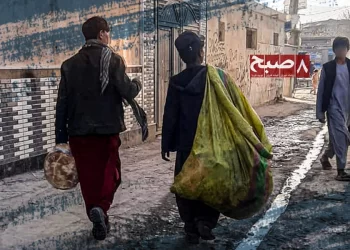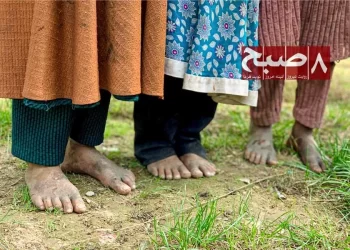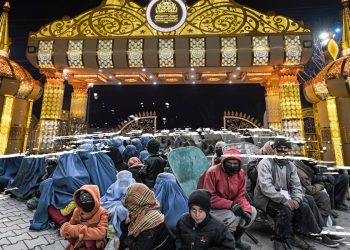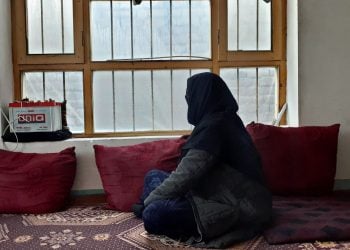

Several private car drivers in Kabul have raised complaints about the growing number of child beggars on the city’s streets and intersections. They say these children beg in groups at busy spots around the city and harass drivers during traffic jams. According to them, these children forcibly clean car windshields and then demand money from drivers, refusing to leave until they are paid. The drivers also claim that most of these children are organized by specific individuals or networks who systematically exploit the children’s poverty.
Speaking to the Hasht-e Subh Daily, these drivers say that the widespread presence of children at intersections continues without any fear, and that the children sometimes display aggressive behavior. Some drivers find the situation alarming and are calling on the Taliban to round up these children and address their living conditions.
These days, children can be seen across various parts of Kabul waiting at busy intersections with windshield wipers, targeting high-end vehicles. Others approach these cars carrying small containers of wild rue and persistently demand money from drivers. Most of these children try to appeal to people’s emotions by using phrases about not having food to eat, their family’s hardships, or the death of their father, to solicit money.
Ahmad Wahidi, a driver in Kabul, says the increasing number of child beggars on the city’s streets and intersections is concerning. He adds that the Taliban have no specific plan to address the situation of these children, and that certain individuals are exploiting them in an organized manner. According to him, only a small number of these children have genuinely turned to the streets due to poverty.
The driver says, “These days, the harassment by street children has become very widespread. In my view, this situation has several root causes. Many of these children are being used in an organized way by people who operate within the system. They force these children to approach people and collect money from them. The Taliban also have no program for these children, even though they had promised to identify children in need through registration and an aid delivery system, but that never materialized. Unfortunately, poverty is rampant in our society.”
Shirshah, another private car driver, says he frequently encounters these children during traffic jams and that their harassment has become a source of distress and frustration for him. He adds that these children cling to car windows, clean them, and then forcibly demand money from drivers, and in many cases refuse to move away from the car until they are paid.
The driver says: “This situation is very dangerous, because sometimes a driver does not notice, and a child’s foot could go under the car, and in that case the driver would be blamed. No one would say the child approached the car on his own. They put pressure on drivers through persistent demands and various phrases to get money. This is very distressing, and sometimes the sound of their voices genuinely wears on a person’s nerves. On one hand, you feel sorry for these children who are being exploited, but on the other hand, their behavior is a nuisance to people.”
Shekab (pseudonym), another driver who travels to various parts of Kabul daily, says the number of child beggars on the streets and at intersections has increased. He adds that these children are brought to the streets in groups and according to a plan organized by specific individuals. According to him, the daily earnings of these children are considerable, and most people are unaware of this level of organization.
The driver says, “Most of the children you see either have no guardian or work in groups. I travel to different parts of Kabul, and this situation is visible almost everywhere. It has become a kind of business. These children can earn up to 150 Afghani in a single day, and they hand over around 100 Afghani of that to their handlers at night. Some of these children also have families, and their families hand them over to these groups to work.”
This driver, expressing concern over the growing number of these children, claims that some individuals deliberately maim the children’s bodies in an organized way to attract public sympathy. He adds, “Many of these children have been so conditioned that even if their circumstances improve, they would continue doing this. This is very alarming.”
Afghanistan, following decades of war, widespread poverty, political instability, and the absence of an effective support system, is among the countries where a large number of children are compelled to work under difficult conditions.
According to a report by the Taliban’s beggary collection commission, more than 74,000 people have been collected across the country so far, and eligible individuals receive 2,000 Afghani per month. Despite this, a large number of children, among whom young girls of varying ages can also be seen, continue to beg on the streets and in busy areas of Kabul.
The use of children in begging is not only contrary to law and human rights declarations, but also constitutes human trafficking under Article 510 of the former Afghanistan Penal Code. Under Article 512 of the same code, parents who force their children to beg are subject to lengthy prison sentences.
You can read the Persian version of this report here: