• 8AM.MEDIA
  • ویب‌سایت فارسی
  • پښتو ویب‌پاڼه
  • اۉزبېکچه ویب‌سایت
  • Podcast
Monday, October 5, 2026
Hasht-e Subh
  • Home
  • News
    • Afghanistan News
    • World News
  • Opinion
    • Editorial
    • Analysis
  • Reports
    • Daily Reports
    • Investigative Reports
  • Society
    • The story of people
  • Women’s Word
  • Columns
    • Three Years After Afghanistan’s Fall: The Taliban’s Resurgence
    • Towards Equality
    • The Resurgence of the Taliban: Two Years Since Afghanistan’s Fall
    • Hebatullah Report Special Edition
    • Resistance for Education Special Edition
    • Special Column on Taliban’s Education Curriculum
    • Nawroz
  • Interviews
  • Contact Us
    • About Us
    • 8AM MEDIA Annual Awards
    • Submit an Article to Hasht-e-Subh
  • 8am.mediaBack
Subscribe
No Result
View All Result
  • Home
  • News
    • Afghanistan News
    • World News
  • Opinion
    • Editorial
    • Analysis
  • Reports
    • Daily Reports
    • Investigative Reports
  • Society
    • The story of people
  • Women’s Word
  • Columns
    • Three Years After Afghanistan’s Fall: The Taliban’s Resurgence
    • Towards Equality
    • The Resurgence of the Taliban: Two Years Since Afghanistan’s Fall
    • Hebatullah Report Special Edition
    • Resistance for Education Special Edition
    • Special Column on Taliban’s Education Curriculum
    • Nawroz
  • Interviews
  • Contact Us
    • About Us
    • 8AM MEDIA Annual Awards
    • Submit an Article to Hasht-e-Subh
  • 8am.mediaBack
No Result
View All Result
Hasht-e Subh
No Result
View All Result

Kabul During Ramadan: Streets Become a Stage for Women and Children Begging

Translated by Farhad Farhaad | Originally reported in Persian by Ilya

Mohammad Farhaad Mohammad Farhaad
9 March 2026 - Solar Hijri Date: 1404/12/18 [t_time:1773064217]
A woman in a burqa sits on a cold Kabul street with a young child, a scene that has become increasingly common as poverty and Taliban restrictions on women's education and employment push vulnerable families to beg for survival during Ramadan. (Photo Credit: Social Media)

Social Media

Several Kabul residents have expressed concern over the growing number of beggars on the streets and intersections of the city, particularly during the holy month of Ramadan. They say that women and children make up the largest portion of beggars across the city. According to them, rising unemployment, restrictions on women’s right to work, and economic hardship are among the main factors driving the surge in begging in Kabul. Some of these beggars do not merely ask for money but also harass and disturb passersby.

Some of these residents, speaking to the Hasht-e Subh Daily, say that the Taliban have been unable to manage the presence of beggars across the city. They add that these individuals approach people even at the doors of their homes daily, and that although the Taliban give some of them around 2,000 afghanis, the amount is insufficient, and the beggars return to the streets.

These residents further note that among the beggars, there are some professional and organized individuals whose presence has eroded public trust in giving assistance to those genuinely in need. In the view of Kabul residents, the wailing and crying of these beggars, used to solicit help, is distressing and hurts people’s morale.

These days, women can be seen in various corners of Kabul begging in different ways. Many of these women use children and heart-wrenching cries and wails to attract attention and sympathy, calling out phrases such as “My child, it is Friday night, I have orphans, I have no breadwinner,” and “We have nothing for iftar,” in their attempts to receive assistance.

Sitara, one of the residents of Kabul, expressed concern over the increasing number of beggars, particularly women and children, across the city. She believes that the Taliban’s restrictions on women’s education and employment have left them with no choice but to beg. She stressed that if women were permitted to pursue education and work, the number of beggars on the streets would decrease, and that to prevent the spread of begging, the Taliban must reopen schools and provide women with employment opportunities.

Sitara added, “These days, in various corners of Kabul, especially in the evening hours, women and even young and elderly men are resorting to begging for help from others. Women often sit near bakeries and beg. Is it right that instead of studying and working, women should be looking into the pockets of others? How can the Taliban have any sense of honor when a woman is forced to beg, yet if she wants to study or work, that is considered provocative?”

Saber Saberi, another Kabul resident, described the growing trend of begging in the city as alarming. He said that poverty, unemployment, and rising food prices, coinciding with the arrival of the month of Ramadan, have caused the number of beggars across the city to increase. He added, “Under the current circumstances, the number of beggars has risen. On one hand, poverty is widespread, and on the other, many women who previously worked in key ministries and government offices are now confined to their homes and unemployed. Rights must be restored to their rightful owners, and the conditions for women to work must be created.”

Amarullah, another Kabul resident, said the Taliban have failed in managing beggars. He added that some time ago, efforts were made to round up beggars so they would not be present on the streets, but each person was paid only 2,000 afghanis, which was not enough for them, and they returned to the streets.

This Kabul resident added: “A while back, they were rounding up beggars, but now no attention is paid to this matter at all. The Taliban give these individuals only two thousand afghanis, regardless of how many family members they have, and does not employ them. For this reason, many return to the streets again. Even some of those the Taliban take home are told that they have a home and should work, yet they receive no salary or support whatsoever. This itself leads people, having no income to support their families, to turn to begging.”

Meanwhile, several other Kabul residents say that begging across the city has had negative psychological effects on people. They add that some beggars forcibly take money from citizens, which is itself a form of harassment.

Amin, another Kabul resident, said the increase in begging during the holy month of Ramadan has had negative psychological effects on people. He added that when individuals are unable to help, it causes them psychological pressure and negatively affects their morale. According to him, children who participate in begging are also a cause for concern, as their thoughts largely revolve around collecting money, keeping them away from education, learning, and proper social behavior.

Amin said: “Beggars have become very numerous these days, especially during Ramadan. Even people with hand carts come to the streets to ask for help. This situation puts a great deal of psychological pressure on people because when they see that they cannot help, their mind becomes preoccupied with the issue. Furthermore, when people see that begging goes unchecked, they are naturally encouraged to engage in such behavior themselves, which is a form of negative influence on society.”

Several economic analysts also believe that the rise in begging has had damaging effects on people’s mental well-being and social activities. They emphasize that no effective solution for managing begging has been found to date, and that the measures taken so far have been largely short-term.

Qutbuddin Yaqubi, an economic analyst, said: “Given the current conditions in Afghanistan and factors such as the absence of economic infrastructure, war, corruption, floods, climatic conditions, crop blights, and displacement, the scope of poverty has expanded. As a result, many people have lost their breadwinners of their families and have no employment opportunities available to them. This situation has forced large numbers of women and children to beg, and their numbers grow with each passing day. Children and women are bearing the greatest burden of this situation.”

According to a report by the Taliban’s beggars collection commission, more than 74,000 people have been rounded up across the country to date, and eligible individuals receive 2,000 afghanis per month. Nevertheless, a large number of women and men continue to beg on the streets and in busy areas of Kabul, and many of the women seated along the streets and roads use their children to do so.

The use of children in begging is not only contrary to law and human rights declarations, but also, under Article 510 of the penal code of the previous Afghan government, constitutes human trafficking, and parents who force their children to beg are subject to lengthy imprisonment under Article 512 of the penal code.

In Kabul, despite these laws, children participating in begging are seen in abundance, and their situation has come to appear normal to society. It seems that the Taliban and child welfare organizations have yet to put forward any fundamental plan to resolve this problem.

You can read the Persian version of this report here:
کابل در ماه رمضان؛ خیابان‌ها صحنه گدایی زنان و کودکان

ShareTweetSendSendShare

Related Posts

An illustrated portrait of a young girl in a green headscarf and gold necklace accompanies the report on the Shukria Tabassum case in Zabul province. (Photo credit: Social Media)
Opinion

Shukria Tabassum Case: 11 Years On, Taliban Rub Salt Into a Bloody Wound

4 October 2026 [t_time:1791139265]
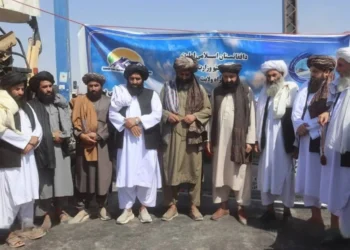
The inauguration ceremony marks the start of paving work on the Farah-Farah Rud road in Farah Province. (Photo credit: @bnadari1)
Afghanistan News

Taliban Begin Paving Farah-Farah Rud Road at a Cost of 982 Million Afghanis

4 October 2026 [t_time:1791138754]
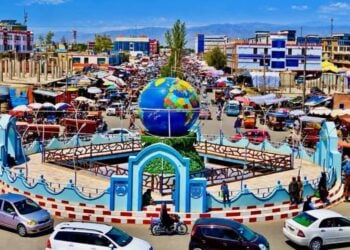
A view of a square in the center of Lashkar Gah, the capital of Helmand province, where several explosions were reported. (Photo credit: Exclusive)
Afghanistan News

Sources: Several Explosions Heard in Lashkar Gah

4 October 2026 [t_time:1791138595]

Latest

Loading latest news...

Popular stories

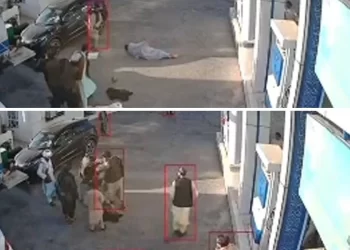
  • Surveillance footage shows Taliban fighters surrounding and shooting a bound man in Herat. (Photo credit: Social Media)

    Taliban Shoot Young Man from Herat After Torturing Him with Hands Tied

    Share
    Share Tweet
  • UN Report Reveals Shifts in Family Attitudes and Rise in Domestic Violence in Afghanistan

    Share
    Share Tweet
  • Al-Qaeda Releases Hamza bin Laden Message on 9/11 Anniversary

    Share
    Share Tweet
  • Afghanistan Journalists Center: Taliban Have Detained Around 300 Journalists and Media Workers

    Share
    Share Tweet
  • The Silencing of Afghanistan

    Share
    Share Tweet

Podcast

Insights
Insights

Join Lynne O’Donnell for 8AM’s podcast series, Insights.
Lynne talks with generals, diplomats, soldiers, journalists, politicians, activists, people who have front row seats for conflicts around the world, and citizens with a story to tell, happy or sad. For this first series, Afghanistan is the focus. Lynne and her guests talk about the collapse of the republic in August, 2021, and the impact since — for the people of Afghanistan, for the security of the region, for the safety of the world. It’s important, interesting and insightful.

Insights/22: Controlling the Narrative with Mina Sharif
byinsights8am

Controlling the Narrative

Lynne O’Donnell talks with Mina Sharif, author, activist, women’s rights campaigner, educator and mentor. They discuss who controls the narrative and who speaks for Afghanistan’s people when the Taliban appear to have seized control not only of the country but of the message, too.

Have a listen

Insights/22: Controlling the Narrative with Mina Sharif
Episode play icon
Insights/22: Controlling the Narrative with Mina Sharif
Episode Description
Episode play icon
Insights/21: Media Meltdown with Zahra Joya
Episode Description
Episode play icon
Insights/20: Terror Inc with Scott Richards
Episode Description
Episode play icon
Insights/19: Busting Stereotypes with Bushra Gohar
Episode Description
Episode play icon
Insights/18: Media Matters with Waliullah Rahmani
Episode Description
Episode play icon
Insights/17: What Goes Around Comes Around with Sima Samar
Episode Description
Search Results placeholder
Hasht-e Subh

8AM Media, also known as Hasht-e-Subh Daily, stands as Afghanistan's premier independent and non-profit newspaper, resonating as a beacon of journalistic integrity since its establishment in June 2007 by esteemed Afghan journalists and human rights advocates. With a steadfast commitment to citizen journalism and civic education, Hasht-e-Subh Daily has earned its place as the most esteemed publication in the nation.

Publisher: Sanjar Sohail
Email: [email protected]
Executive Director: Parwiz Kawa
Email: [email protected]

Read More

Everyone Fears AI, So Why Is No One Backing Off?

Shukria Tabassum Case: 11 Years On, Taliban Rub Salt Into a Bloody Wound

Taliban Begin Paving Farah-Farah Rud Road at a Cost of 982 Million Afghanis

Sources: Several Explosions Heard in Lashkar Gah

“Rumi: A Global Voice for Peace” Conference Unveils Plans to Honor and Expand Molana’s Legacy in America

Editor’s Choice

Every Saturday morning, 8AM MEDIA English Services Department will guide you through the week’s biggest stories from Afghanistan and the international community.

Subscribe

© 2026 - ©Hasht-e Subh Daily

No Result
View All Result
8am.Media
پښتو ویب‌پاڼه
ویب‌سایت فارسی
اۉزبېکچه ویب‌سایت
  • Home
  • News
    • Afghanistan News
    • World News
  • Opinion
    • Editorial
    • Analysis
  • Reports
    • Daily Reports
    • Investigative Reports
  • Society
    • The story of people
  • Women’s Word
  • Columns
    • Three Years After Afghanistan’s Fall: The Taliban’s Resurgence
    • Towards Equality
    • The Resurgence of the Taliban: Two Years Since Afghanistan’s Fall
    • Hebatullah Report Special Edition
    • Resistance for Education Special Edition
    • Special Column on Taliban’s Education Curriculum
    • Nawroz
  • Interviews
  • Contact Us
    • About Us
    • 8AM MEDIA Annual Awards
    • Submit an Article to Hasht-e-Subh
  • 8am.media

© 2026 - ©Hasht-e Subh Daily