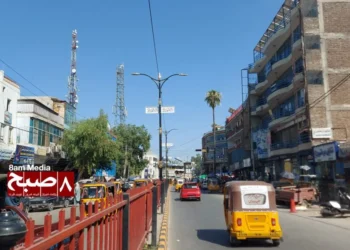

Several Kabul residents have raised complaints about shopkeepers and street vendors blocking the city’s sidewalks. They say many vendors, with no regard for pedestrian rights, display their goods and merchandise on sidewalks, obstructing public walkways. According to these residents, the problem has not only caused congestion and hampered mobility but has also created opportunities for pickpocketing and other petty crimes. In some parts of the city, they say, routes that would normally take just a few minutes to walk can now take several times longer because of crowding and obstacles on sidewalks.
While acknowledging the economic hardships street vendors face, these residents say occupying sidewalks is not an acceptable solution. Spreading goods across pedestrian pathways, they argue, has disrupted the movement of citizens and undermined urban order. They are urging officials at the Taliban-controlled Kabul Municipality to take concrete steps to clear sidewalks, crack down on unauthorized use of walkways, and designate proper locations where street vendors can operate.
Ainullah, a Kabul resident, says the placement of shopkeepers’ goods and equipment on sidewalks and public roads has become a pervasive problem across the city, creating serious obstacles for pedestrians. Some shopkeepers, commercial companies, and technical workshops, he adds, go as far as digging holes in public pathways while blocking sidewalks, putting the safety and comfort of passersby at risk, particularly women and children. Without proper oversight and regulation, he believes, many pedestrians have been left with no choice but to walk on the road instead of the sidewalk.
“Unfortunately, shopkeepers leaving their goods, workshop equipment, and company materials on sidewalks and public roads has become a serious problem in Kabul,” he says. “In many parts of the city, sidewalks have essentially been taken over by shopkeepers, leaving pedestrians to struggle through. On top of that, holes dug in public pathways, and abandoned iron rods, glass, and other construction debris alongside roads pose real dangers to citizens, especially women and children. This situation demands urgent attention from the responsible authorities.”
Mahdi, another Kabul resident, says a number of shopkeepers place their goods on sidewalks and block pedestrian pathways despite having sufficient space inside their shops. The blockage, he adds, has not only made it harder for citizens to get around but has also fueled congestion and given pickpockets and thieves more room to operate.
“Unfortunately, some shopkeepers display their goods on sidewalks to catch customers’ attention, even though they have plenty of room inside their shops,” he says. “When you ask them why they have taken over the sidewalk, they usually say they want people to get a better look at their products. But the truth is, if someone needs something, they will walk into the shop. This practice hurts the shopkeepers themselves, since their goods end up covered in dust and baked by the sun, and it creates real problems for the public as well.”
Faisal Omar, another Kabul resident, says that in some of the city’s most congested areas, particularly along the stretch from Pul-e Bagh-e Umumi to Shah-e-Do Shamshira in central Kabul, street vendors and shopkeepers have taken over sidewalks and parts of the road. The blockages, he adds, have slowed pedestrian traffic considerably, forcing people to spend far more time covering short distances.
“Along the route from Pul-e Bagh-e Umumi to Shah-e-Do Shamshira, street vendors and shopkeepers have occupied sidewalks and even sections of the road,” he says. “A walk that should take no more than five minutes under normal conditions can sometimes stretch to around twenty minutes. The reason is the sheer volume of obstacles and crowding on the sidewalks. It might seem trivial to some, but in practice, it eats into people’s time and turns their daily commute into an ordeal.”
Salim, another Kabul resident, describes the sidewalk blockages as deeply troubling. Some sellers, he says, put their goods outside their shops to attract customers and boost sales, paying little attention to the problems this causes for pedestrians. Without effective oversight from the Taliban-controlled Kabul Municipality, he argues, the occupation of sidewalks has become a chronic issue across different parts of the city.
“Across much of the city, shopkeepers have filled sidewalks with their merchandise, leaving barely any room for people to pass,” he says. “Some of them set their goods out front for marketing purposes, thinking only about their own profit. If the municipality exercised serious oversight, this situation could largely be brought under control. But right now, the problem is widespread and has made getting around the city a real struggle for ordinary people.”
These concerns arise at a time when the blockage of sidewalks by shopkeepers and street vendors has grown into one of Kabul’s most pressing urban challenges in recent years. Across many of the city’s busy roads and markets, large sections of sidewalks have been turned into makeshift retail spaces, forcing pedestrians onto vehicle lanes.
The Kabul Municipality has repeatedly announced plans in recent years to clear street vendors and prevent goods from being placed on sidewalks. Citizens, however, say these efforts have been largely short-lived and have failed to produce any lasting solution.
You can read the Persian version of this report here:
اشغال پیادهروهای کابل توسط دکانداران و دستفروشان؛ عابران ناگزیر به استفاده از سرک میشوند