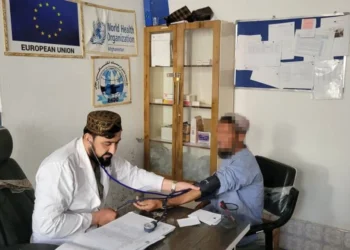
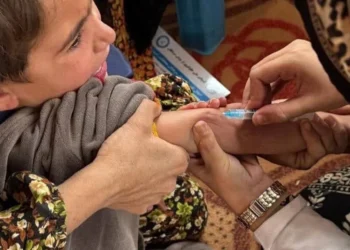
Two days after the earthquake in Kunar, rescue teams have still not reached some of the affected areas, and many people remain trapped under the rubble. The victims say they lack access to adequate health services, drinking water, and shelter, and the shortage of female doctors has made addressing their needs difficult. According to them, at least six pregnant women have died due to the shortage of female health workers and the lack of medical facilities in the hospitals of this province.
The deadly earthquake in eastern Afghanistan has left thousands of families homeless. The victims say that despite extensive commitments for aid delivery, emergency assistance has not yet reached some of the earthquake-affected areas, and people are struggling with numerous problems.
Nowroz Hakimi (pseudonym), one of the earthquake victims in Kunar, says the aid is insufficient because the number of victims is increasing and some people are still trapped under the rubble; even the bodies of some victims have not yet been recovered from under the debris. He adds that earthquake victims need food, medicine, shelter, and urgent health assistance, but the number of health workers is insufficient due to the widespread increase in victims.
He continues: “The number of health workers and rescue teams is so limited. Health assistance is virtually zero. Most of the casualties and injured are children and women, among whom pregnant women are also seen. Due to the continuous increase in the number of victims, no accurate statistics are available.”
Hakimi says: “Special teams of female doctors should be formed at the zonal level in Nangarhar and dispatched to the affected areas so they can attend to women, especially pregnant women.” According to him, the small number of female doctors who have reached the area so far are unable to respond to all needs due to the high number of victims, and there are still serious shortages and problems in women’s health services.
Omar Khan, one of the residents of Dara-e Noor district in Nangarhar province, says he lost two family members in the recent earthquake, and two others were severely injured. He explains that in this incident, his 11-year-old daughter and 13-year-old son died, and his brother and sister-in-law were severely wounded.
This Dara-e Noor resident adds: “In this earthquake, one of my brothers and his wife were injured, and two of my nephews, unfortunately, became martyrs and perished under the soil. My house was destroyed, and alongside it, we also lost about 20 cows and several goats.”
Omar says that more than two thousand families live in their village, but there is no government clinic or hospital near them, and there is a great distance to the district center and the nearest medical center. He asks relief organizations to address this problem as soon as possible.
Zabih Akakhel (pseudonym), another witness to the incident in Kunar, says: “As you know, four or five districts have been affected by this earthquake, and the number of victims continues to increase. We urgently need assistance in medicine and treatment so we don’t lose the injured.”
Zabih states: “Following the earthquake, many children have become orphans and homeless, having lost their parents. Some of these children are now receiving treatment in hospitals, and others have taken shelter in relatives’ homes. These children must be identified and separated, and urgent measures should be taken to provide shelter and food for them.”
Meanwhile, Save the Children Canada has announced that approximately 15,000 children have been affected following the deadly earthquakes in Kunar and Nangarhar provinces. At the same time, Zabihullah Mujahid, the Taliban spokesperson, has announced the latest casualty figures from the earthquake in Kunar as 1,411 people. This incident has also claimed the lives of 10 people in Nangarhar and left more than 20 injured.
Lack of access to health services, drinking water, food, and shelter are among the problems of earthquake victims who say that despite extensive commitments, emergency aid has not yet reached the affected areas, and people are facing numerous difficulties.
On the other hand, Richard Bennett, the UN Human Rights Council’s Special Rapporteur on Afghanistan, has emphasized the vital role of women in the relief process for victims.
While concerns about the shortage of female doctors and female health workers in the relief process for earthquake victims have increased, the Taliban have closed all universities, institutes, and health education centers, including midwifery, nursing, and medical technology programs, to girls and women for the fourth consecutive year; a decision that has put the lives of hundreds of women and girls at risk of death and destruction.
While earthquake victims suffer from a shortage of female doctors and health workers, the Taliban spokesperson has described the issue of women’s education as “minor.”
You can read the Persian version of this report here:
کنر پس از زلزله؛ کمبود خدمات صحی زندهگی زنان زخمی را تهدید میکند