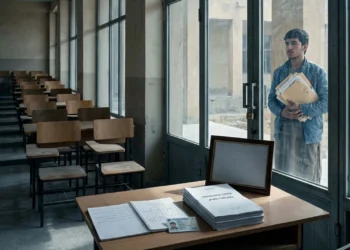
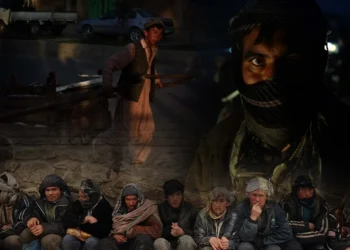
Some residents of the Giava Valley in the Nijrab District of Kapisa Province say that they have no access to healthcare services in the area. They add that there is only one medical center for over 300 families, but it lacks medical equipment, specialist doctors, and medicines. According to these residents, the absence of female doctors at this medical center has also created numerous problems for the local population, particularly women.
Some residents of the Giava Valley in Kapisa Province, in interviews with the Hasht-e Subh Daily, say that due to the lack of healthcare services, women are forced to give birth at home using traditional methods. They add that the shortage of medical facilities, the absence of female doctors, and poor economic conditions have compelled people to resort to informal treatments, including turning to traditional birth attendants. According to them, the area is far from the provincial center, and in many cases, patients die en route to medical facilities.
Amir (pseudonym), one of the residents of Giava Valley, says that the absence of healthcare services in the area has posed serious challenges for the population. He adds that due to the lack of doctors and medicines, they are forced to transfer their patients to the provincial center, a process that is very difficult and time-consuming.
Mr. Amir emphasizes: “We have a clinic, but there are no medicines at all. We have to travel about an hour by car to reach Nijrab District Center. The road is also rough. If someone gets injured, transporting them on this road is extremely difficult. Their chance of survival is very low. Only those who are lucky reach the district center.”
The Giava resident continues: “We have no demands from the Taliban because they do not have the capacity to address our problems, and since most of the population belongs to the Pashai ethnic group and were part of the previous government, they are neglected.”
Hassan, another resident of the valley, says that there is only one medical center across the area, which cannot meet the needs of the population. According to him, the absence of female doctors and a shortage of medicines are among the center’s main problems. He adds, “In our area, there is only one medical center for over 300 families. At this center, there is only one woman distributing medicines, but the obstetrics and maternity ward is inactive, and we do not have a female doctor.”
Sahel, a resident of the same valley, believes that the absence of female doctors has forced women to give birth with traditional birth attendants, which is extremely dangerous. He says that in many cases, the attendants do not come at night to assist with childbirth, and there are no vehicles available in the area to transfer patients. He explains: “If a woman needs to give birth, the Giava Valley clinic cannot handle it, and we are forced to travel about an hour by car to the district center clinic. Sometimes, we cannot even find a car, and women are forced to deliver at home.”
Sahel adds: “Once, your newspaper, the Hasht-e Subh Daily, reported that the Taliban killed four people for resisting them; one of them was injured, and due to the lack of a vehicle, we had to transfer him on a stretcher. He died on the way. We face many such problems; I don’t know which one to mention first.” According to him, families usually keep medicines like Paracetamol and Brufen at home to use in case of illness.
Meanwhile, some doctors say that the population’s lack of access to healthcare services has led to the spread of various diseases, especially among young boys and girls. They warn that if this trend continues in Giava Valley, it could result in a serious humanitarian disaster in the area.
Abdullah Ahmadi, a doctor, says: “Most people in remote parts of the country do not have access to healthcare services. If the population of Nijrab District is around 30,000, there is a need to build a fully equipped hospital there. The number of beds should be determined based on the population, and midwives, doctors, and basic medical services must be provided. Mothers and girls, in particular, require more healthcare, and the absence of these services leads to various illnesses among them.”
At the same time, several obstetricians and gynecologists warn that women giving birth at home can have dangerous consequences. They believe that the lack of specialized medical care during childbirth increases the risk of maternal or infant death and serious postnatal complications.
These doctors urge humanitarian organizations to focus their aid on remote areas instead of just the provincial centers. They also call on the Taliban to reopen educational opportunities for girls in Afghanistan so that, in the next ten years, the population in remote areas does not face a healthcare disaster.
Samira Shahir Rahimi, a doctor, says: “Giving birth at home is extremely dangerous, especially when assisted by untrained traditional birth attendants. This can endanger the mother’s life in the very first minutes of delivery, as not all births are normal and uncomplicated. Pregnant women should be examined by a doctor at least four times during pregnancy so that any risk factors can be identified and addressed. Unfortunately, many women in remote areas do not have access to such care.”
Najm al-Sama Shafaju, an obstetrician, adds: “Having female doctors in every area is essential because many women, for cultural reasons, cannot visit male doctors. Consequently, maternal mortality rates have increased, and more mothers and children are losing their lives every day.”
Lamia Amini, a doctor, says: “We advise pregnant women to visit medical centers. If they cannot access them, they should follow hygiene practices, use clean materials, and ensure a clean environment. However, this method is very risky.”
According to statistics from the UN Office for the Coordination of Humanitarian Affairs (OCHA), out of every 100,000 births in Afghanistan, approximately 600 women die—a figure three times the global maternal mortality average.
Furthermore, after the Taliban takeover of Afghanistan, girls have been deprived of education, even in medical fields, raising serious concerns about the future of women’s health.
Human rights activists say that the current situation in Kapisa and the population’s lack of access to basic life services constitute a clear violation of human rights.
Abdullah Ahmadi, a human rights activist, says: “What we see in Kapisa is a violation of human rights. When people struggle day and night merely to survive, not to live, searching for a piece of bread or some medicine, that is not real living; it is merely a struggle to stay alive.”
Giava Valley is located 10 kilometers from the center of Nijrab District, surrounded by high mountains, and its population is entirely composed of the country’s Pashai ethnic group.
Previously, the NGO Emergency stated that over 70 percent of Afghanistan’s citizens lack access to free or affordable healthcare. According to the organization, in maternal and child health services, 76 percent of women must travel to other provinces or even abroad to receive the necessary care.
The Taliban’s Ministry of Public Health, however, claimed at a press conference that 72 percent of people in Afghanistan’s villages lack access to primary and secondary healthcare. Under Taliban control, the ministry added that out of the country’s 400 districts, hospitals exist in only 93 districts.
You can read the Persian version of this report here:
نبود خدمات درمانی در دره گیاوه؛ زنان برای زایمان نزد دایهها میروند