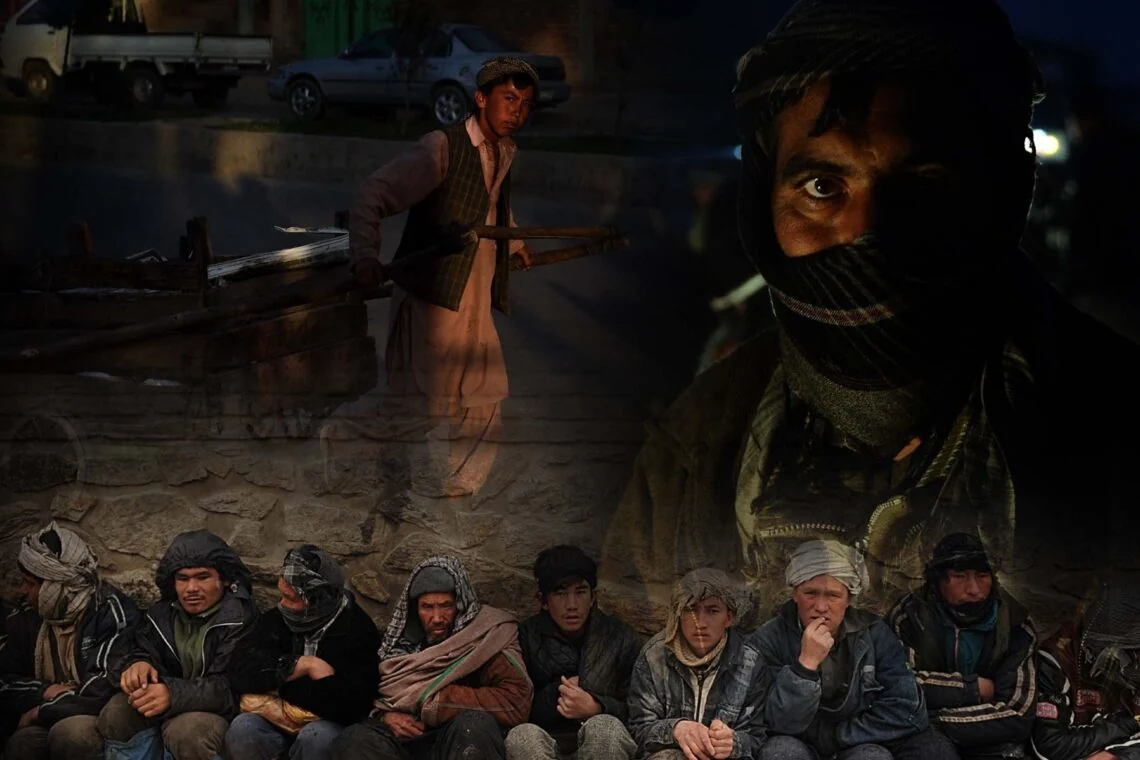
A number of the country’s citizens are expressing deep concern over the growing pressure the Taliban are exerting in various areas. They say that while poverty and unemployment are rampant and people are unable to meet their basic needs, the Taliban collect taxes and ushr from them under various pretexts, yet provide no services to citizens in return. According to them, media outlets under Taliban control are also unable to reflect the real situation of the people. Citizens also continue to complain that the Taliban do not pay employees’ salaries on time. They say the Taliban do not pay salaries on time, and that repeated delays have increased employees’ debts and economic hardships. These citizens also stress that Taliban officials extort money from bolani sellers, in effect, even by eating several bolanis for free. According to them, no one in the city or the bazaar is safe from the extortion and bribe-taking of Taliban officials.
Citizens of the country have consistently complained about rising poverty and unemployment and an inability to meet basic needs under Taliban rule. They stress that while many families face serious difficulties in obtaining bread and drinking water and in paying for medical treatment, financial pressure and the demand for taxes and ushr by the Taliban continue. According to these citizens, poverty and destitution have spread to such an extent that many families cannot even take their sick to health centers or pay for their treatment, and have been forced to turn to traditional methods of treatment.
Ahmadullah, a citizen of the country, says: “People have no bread, no water, and not even the money to go to the hospital, yet taxes and zakat are collected from people from every direction. People are under severe economic pressure. The people’s pain is great, but their voices are not heard. The Taliban have clung to the people and are feeding on their blood.”
This citizen of the country says: “When you go to government offices, they interrogate you as if you have committed a crime, but when it comes time to get your work done, there is no sign of attention. Wherever you go, you encounter poor and helpless people. The economic situation of the people is getting worse day by day.”
These citizens also stress that, in addition to forcibly collecting taxes and ushr from the people, the Taliban also extort bribes from them, and refuse to issue their tariff forms in return for receiving bribes. According to them, Taliban officials extort money even from roadside handcart vendors who barely earn 100 Afghanis a day.
Abdul Ghafoor, a resident of Kabul, says: “We have a lot of grievances, but we cannot speak. God is my witness, what they [the Taliban] say is as far from their actions as the earth is from the sky. They lie a great deal. They take bribes from a bolani seller, they eat several bolanis for free from a poor man, and still they present themselves as pure. They also take the chips from the chips seller. No one is safe from them.”
At the same time, several other citizens who work in government institutions under Taliban control complain about the late payment of employees’ salaries. They say it rarely happens that their monthly salary is paid regularly and at a set time so that they can prioritize their living needs accordingly. According to them, repeated delays in salary payments have forced employees to constantly borrow money from shopkeepers and wealthy friends to meet their daily needs, leaving them facing growing debt and economic hardship.
Mohammad Zaman, a government employee, says: “An employee works for a month and should be paid his salary at a set time so that he can provide for his family’s needs. It is now November 7, but half of the employees have still not received their salary for the month of Mizan (September 23 to October 22). No employee knows whether he will receive his salary after a month of work or not.”
Soudaba (pseudonym), a female teacher who teaches girls below grade six, says: “I received my salary on November 6, which means my salary was paid after a 45-day delay. When I received the salary, I gave all of it to my creditors and was left empty-handed. They do not pay salaries at a fixed time so that we can plan our finances accordingly. They pay whenever they feel like it. We have even lost credibility with shopkeepers. They lend to us with great difficulty and say You do not repay your debts on time.”
These concerns are being raised as various agencies of the United Nations (UN) have previously exposed, in numerous reports, the dire economic and livelihood situation of the people of Afghanistan. In a report published in May 2026, the United Nations Development Programme (UNDP) said that about 28 million people, equal to three-quarters of Afghanistan’s population, were unable to meet their basic needs in 2025. According to the report, more than 80 percent of households in Afghanistan are in debt, and nearly three-quarters of households resort to negative coping strategies, including reducing food consumption, to deal with economic hardship.
The World Food Programme (WFP) and the Food and Agriculture Organization of the United Nations (FAO) warned in October 2026 that about 19.2 million people in Afghanistan, equal to 38 percent of the country’s population, will face acute food insecurity in the coming winter. These agencies cited unemployment, rising living costs, a shortage of job opportunities, and reduced humanitarian aid as factors aggravating the crisis.
Earlier, videos had also been published on social media showing that some families, because of poverty and hunger, had put their children up for sale. They had said they were doing this out of necessity to keep their other children and family members alive.
You can read the Persian version of this report here:
اشکهای پنهان و نالههای خاموش؛ روایت واقعی مردم از زندهگی زیر سلطه طالبان