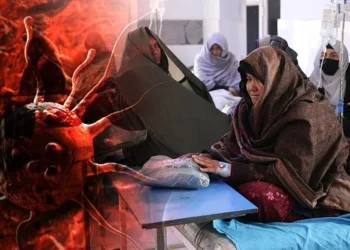
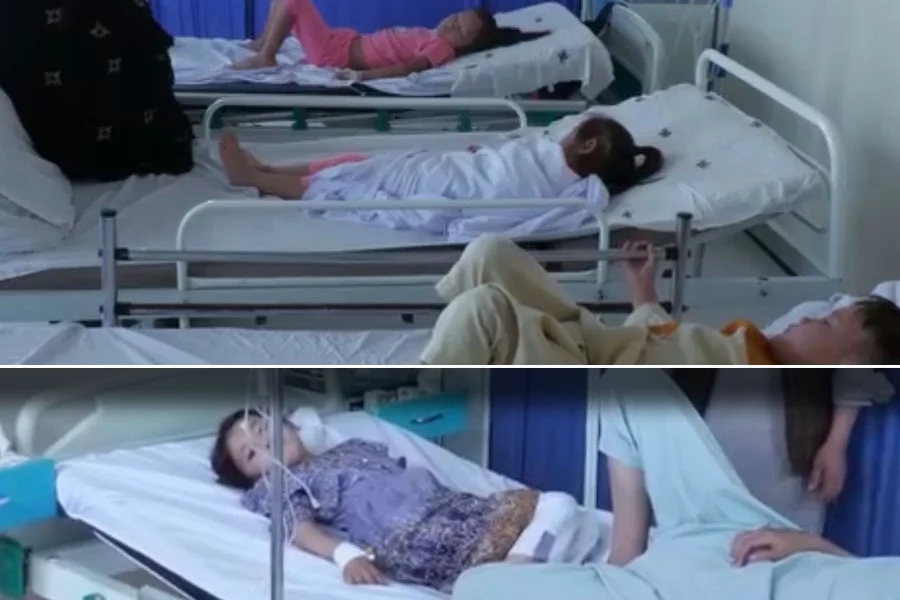
Several residents of Qala-e-Naw and Wali Asr Township in Kabul’s Dasht-e-Barchi area are expressing concern over the increasing spread of a disease with symptoms such as headache, fever, vomiting, and severe diarrhea. According to them, most of those affected are children and adults, and despite repeated visits to hospitals, the condition of a number of patients has not improved. They say patients suffer from severe pain, and after two or three days, their diarrhea becomes bloody, and their bodies lose water severely. Meanwhile, several doctors consider water contamination to be one of the main causes of this disease among the residents of Barchi.
Hassan (pseudonym), a resident of Qala-e-Naw in Kabul’s 13th district, says the disease has spread across parts of Qala-e-Naw, with about four to five people falling ill in every household. He says: “People have fallen ill throughout this entire area. In every household, four to five people are sick, but the cause is not clear. In the hospitals where we have taken the patients, doctors say the disease may be caused by contaminated water. Yesterday as well, several vehicles transported patients to the hospital.”
This Barchi resident adds: “The symptoms of this disease include headache, fever, stomachache, diarrhea and vomiting. After two or three days, patients’ diarrhea becomes bloody, and their bodies lose water severely.”
Hassan calls on doctors and health centers to identify the cause of this disease as soon as possible and to take the necessary measures to prevent its spread. He says: “This disease is seen more in Qala-e-Naw and Wali Asr Township. The Ministry of Public Health [Taliban] should follow up on this issue so that the cause of the disease is identified and a treatment is found. Right now it is mostly limited to these areas; its spread to other parts of Kabul city must be prevented.”
Ali (pseudonym), a resident of Qala-e-Naw in Kabul’s 13th district, says three of his children have contracted this disease, and despite taking them to the hospital several times, their condition has not improved. He says: “My three children are sick and are now on IV fluids at home. I took them to the hospital three times, but they did not get better. They have fever and diarrhea, and after two days, their diarrhea became bloody.”
Reza (pseudonym), a resident of Dasht-e-Barchi in Kabul, says that despite using various medications, his patient’s condition has not improved. He says: “No matter what medication we used, the stomachache, vomiting, and diarrhea of my patient did not improve. Most of the children who have contracted this disease have bloody diarrhea, and their bodies lose water very quickly.”
This man adds: “We do not know which virus is causing this disease. Some say it is due to contaminated water, while others suspect it may be caused by toxic substances in fruits. So far, the cause has not been identified. Doctors have advised me to take my patient to the French hospital for diagnosis and treatment, but we have not yet managed to transfer him there.”
Meanwhile, Omid (pseudonym), a pediatric internal medicine specialist, considers water contamination to be one of the main causes of this disease among residents. He says: “The main cause of this disease could be water contamination. Some residents may be consuming municipal water without boiling it. To prevent this, water should be boiled before drinking. Fruits and vegetables should also be washed in salt water for at least half an hour before consumption to prevent contracting such diseases.”
This comes as residents of Kabul in various parts of the city are complaining about water shortages, and the lack of water has become one of the serious, daily challenges facing the people.
The United Nations Human Settlements Programme (UN-Habitat) had previously announced that millions of people in Afghanistan still lack sustainable access to safe drinking water.
The organization had said that access to safe drinking water is one of the serious challenges in Afghanistan, and that millions of people are facing a shortage of this vital resource.
You can read the Persian version of this report here:
نگرانی از شیوع بیماری در دشتبرچی؛ کودکان و بزرگسالان در صدر مبتلایان