Over the past three years, government and private health institutes have served as the last hope for educating women and girls in Afghanistan. After the Taliban banned girls from attending school beyond the sixth grade, these institutes allowed women to study medical fields, provided they complied with the Taliban’s restrictions. However, in a new decree, Taliban Supreme Leader Hibatullah Akhundzada has closed all higher and mid-level medical institutes to women and girls. On Monday, the Taliban Ministry of Public Health informed the administrators of these institutes that women and girls could no longer study at these centers. This decision has devastated many women and girls pursuing medical sciences or teaching at these institutions. They expressed their grief, saying the decree shattered their dreams of a dignified life and turned their lives into a nightmare. Students and professors alike described the decision as reopening old wounds and erasing women’s presence from society.
In their ongoing campaign to suppress women, the Taliban have now banned female students from medical institutes nationwide. Hibatullah Akhundzada ordered the closure of all public and private health institutes to women and girls in a new decree. On Monday, December 3, the Taliban Ministry of Public Health summoned administrators of medical institutes in Kabul to convey this decision. The decree stated that starting Saturday, December 3, these institutions must not admit women and girls. The Taliban warned that any institution found in violation would be shut down, and its administrators punished.
The head of a health institute in Kabul informed his female students that the Taliban’s Minister of Public Health had personally communicated Hibatullah’s decree. He explained that until further notice, all public and private institutes and training courses are closed to girls. He warned students not to visit these centers, as Taliban intelligence would interrogate them. According to him, any violation would lead to the closure of the institute and severe consequences for the students and staff.
Sources from various institutes reported that after universities were closed to women, many girls turned to health institutes to study fields like midwifery, pharmacy, laboratory sciences, X-ray technology, physiotherapy, nursing, and dental prosthetics. Sofia, a student at one such institute in Kabul, shared her heartbreak with Hasht-e Subh Daily. She said this was the third time her education had been disrupted. As a nursing student, she had pinned her hopes on a better future, but now those dreams have been extinguished. She described the sorrowful scene at her institute, where girls cried in despair, overwhelmed by the Taliban’s latest decree. Despite their efforts to continue studying, Sofia said, the Taliban had condemned their futures to darkness.
Sofia recounted: “The girls were heartbroken and cried endlessly. Our professors cried too. When we entered the classroom, our principal advised us to leave quietly because if the Taliban arrived, they would forcibly remove us, making the situation worse. We were told to leave for our safety. I feel like my life is being wasted, with no opportunities to study or work. I have no hope for my future. I wish for a time when we can resume our studies.”
She added: “I was doing an internship at a hospital with one of my classmates. When we went to the institute in the morning, we sat in a corner. I told her, ‘Do you remember when universities were closed, and they told us it was winter vacation? We still haven’t seen the gates of Kabul University.’ Tears began to flow, and we both cried. Other classmates who saw us also broke down in tears.”
Afshid (pseudonym), another student, recounted her anguish. Previously, as a third-year student at Badakhshan University, she had been barred from continuing her education. Determined to keep learning, she enrolled at Ghazanfar Institute, but that too has now been closed to her. Tearfully, she said: “I don’t know what this savage, terrorist group wants from us. What crime have we committed? They are against progress, knowledge, and light. They are an ignorant, uneducated, terrorist group.”
With a choked voice, she added: “When I heard the news last night, I thought it was just a rumor. But when I went to class in the morning, I saw everyone crying. After being denied a university education, I enrolled in the midwifery program. I was in my third semester when I was once again deprived of my right to study. Everyone was crying. (Crying). I can’t express the grief and pain.”
Farhada Jalal, another student in Kabul, shared a similar experience. She had been a law and criminal justice student in her fifth semester when the Taliban interrupted her exams and barred her from continuing. Undeterred, she enrolled in a midwifery program and was in her final semester when the institutes were shut down again. Jalal warned that if the Taliban’s regime persists, Afghanistan could face a future without female doctors or nurses. She pointed out that the current generation of female healthcare professionals would retire in the next 20 years, leaving a significant gap in the country’s healthcare system.
Many students have taken to social media to express their grief and anger. One student wrote: “My heart is so broken, there is no place left for it to ache.” Another wrote: “They sit and think of ways to torment women’s hearts and souls [to burn them in hot oil].” Videos of farewell moments and sorrow among female students have gone viral. In one video, female students at the Ghazanfar Institute of Health Sciences in Badakhshan Province cry together while singing the poignant song, Come, Sky, Cry with Me. In another video from a Kabul classroom, girls sit with their heads down on desks, sobbing.
The mother of a medical institute student shared her distress, saying her daughter was a second-year student whose education was abruptly halted. As a teacher, she recalled the heartache of seeing her sixth-grade students dismissed under similar circumstances. She said: “On their last day, they organized a small graduation ceremony, crying as they said, ‘This is our final year.’ We plead with the authorities to keep at least the medical institutes open for women.”
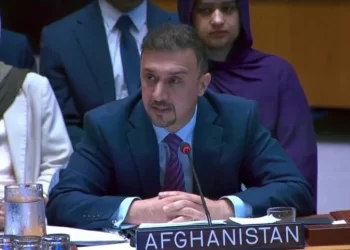
In this context, Naseer Ahmad Faiq, Acting Permanent Representative of Afghanistan to the United Nations, criticized domestic and foreign supporters of the Taliban, questioning how they justify the ban on women’s education at health institutes. He emphasized that the Taliban’s policies over the past four years have consistently opposed the interests of Afghanistan and its people, particularly women.
This latest deprivation coincides with a statement from Karim Khan, the prosecutor of the International Criminal Court, who announced plans to request arrest warrants for Taliban officials. Khan confirmed that investigations into human rights violations, especially against Afghan women, are ongoing.
You can read the Persian version of this daily report here:
زخم نو و درد نو؛ طالبان آخرین پناهگاه آموزشی زنان را نیز بستند | روزنامه ۸صبح