
• 8AM.MEDIA
  • ویب‌سایت فارسی
  • پښتو ویب‌پاڼه
  • اۉزبېکچه ویب‌سایت
  • Podcast
Monday, October 26, 2026
Hasht-e Subh
  • Home
  • News
    • Afghanistan News
    • World News
  • Opinion
    • Editorial
    • Analysis
  • Reports
    • Daily Reports
    • Investigative Reports
  • Society
    • The story of people
  • Women’s Word
  • Columns
    • Three Years After Afghanistan’s Fall: The Taliban’s Resurgence
    • Towards Equality
    • The Resurgence of the Taliban: Two Years Since Afghanistan’s Fall
    • Hebatullah Report Special Edition
    • Resistance for Education Special Edition
    • Special Column on Taliban’s Education Curriculum
    • Nawroz
  • Interviews
  • Contact Us
    • About Us
    • 8AM MEDIA Annual Awards
    • Submit an Article to Hasht-e-Subh
  • 8am.mediaBack
Subscribe
No Result
View All Result
  • Home
  • News
    • Afghanistan News
    • World News
  • Opinion
    • Editorial
    • Analysis
  • Reports
    • Daily Reports
    • Investigative Reports
  • Society
    • The story of people
  • Women’s Word
  • Columns
    • Three Years After Afghanistan’s Fall: The Taliban’s Resurgence
    • Towards Equality
    • The Resurgence of the Taliban: Two Years Since Afghanistan’s Fall
    • Hebatullah Report Special Edition
    • Resistance for Education Special Edition
    • Special Column on Taliban’s Education Curriculum
    • Nawroz
  • Interviews
  • Contact Us
    • About Us
    • 8AM MEDIA Annual Awards
    • Submit an Article to Hasht-e-Subh
  • 8am.mediaBack
No Result
View All Result
Hasht-e Subh
No Result
View All Result

“Once Upon a Time”: Stories Slowly Fading Away

Hasht-E Subh Hasht-E Subh
26 June 2025 - Solar Hijri Date: 1404/04/05 [t_time:1750939710]
An elder shares a traditional story with attentive children in a warm, intimate setting. (Photo Credit: AFP)

AFP

“Once upon a time” was the opening line of many bedtime stories that elders in the household shared with children. Eagerly, children listened to these tales, their minds anticipating the story’s end, sometimes drifting off to sleep before the conclusion. However, in today’s busy and digital world, this ancient tradition is at risk of being forgotten.

Several families note that with the spread of technology and the prevalence of digital devices in daily life, traditional methods of educating and raising children, including storytelling, have been sidelined. They emphasize that this shift has, to some extent, weakened the emotional bond between parents and children. According to these families, while the loving voice of grandmothers and their instructive, sometimes mythical, bedtime stories were once an integral part of childhood, the cold, blue screens of smartphones have now taken their place.

Some families, in conversations with the Hasht-e Subh Daily, say that despite the demands of daily life, they strive to keep storytelling alive, preserving it as part of their family culture. Their experiences show that even a few minutes of storytelling at night can create a safer and more intimate environment for children.

Fereshta, a 54-year-old woman, says she learned storytelling from her mother and has always tried to keep this tradition alive in her home. She believes that stories can both entertain children and gently convey moral and human values to them in an effective way.

Fereshta says: “I especially taught my daughters many things through storytelling, like stories that carried moral lessons and life teachings. When I was young, my mother would tell a story about a girl who didn’t help with household chores. When she got married, she went to her mother complaining, ‘Oh mother, come, my salt jar is empty; oh mother, come, my dough bowl is empty; oh mother, come, my door won’t close,’ because this girl had swept the dirt behind the door, taken salt with wet hands, and neglected her dough bowl. Those words stayed with us.”

Sotuda, a mother of two, says her childhood memories are tied to the stories told by her grandmother and older sister—nights when she eagerly listened to tales and immersed herself in a world of imagination. However, she notes that many families, due to economic pressures and lack of time, no longer have the opportunity to tell stories to their children, leaving kids to turn to digital devices. While digital tools are entertaining, she believes they pose risks such as dependency, reduced focus, and harm to communication skills.

Sotuda continues: “During my childhood, especially on winter nights, my grandmother would tell us stories. But now, I neither have enough time for storytelling nor do my children show much interest. They spend most of their time on their phones, which has harmed their eyes and increased their aggression.”

Although many families have lost the opportunity for storytelling due to changing lifestyles, lack of time, or children’s preference for digital devices, personal accounts from some young people show that the impact of these stories extends beyond childhood. For some, the tales they heard at bedtime have, over time, become a source of inspiration, a guide for thought, and sometimes a refuge in difficult moments.

Hayat, a young man, says the stories he heard as a child have helped him in adulthood during certain situations. He adds, “When I was a child, listening to stories gave me such a great feeling. I would enter an imaginary world that took shape with the start of the story. Among them all, the story of Banu and Kajkul still lingers in my mind, and I can’t forget it.”

Some children’s authors say that while storytelling may seem limited to moments in childhood, its profound effects on a child’s mind and psyche can last into adulthood. From their perspective, the stories heard in the early years of life not only shape a child’s imagination but also contribute to forming their attitudes, behaviors, and even decision-making in various life situations.

Shiba Guhaiz, a children’s story writer, believes that storytelling in the culture of the people of Afghanistan is not only a means of passing down knowledge and experiences across generations but also helps foster a better understanding of cultural identity and strengthens a sense of belonging to the community. She warns that as the tradition of storytelling fades, a significant part of Afghan cultural identity is at risk of being forgotten.

This children’s author adds: “The stories told in the past by grandmothers, grandfathers, and parents were like treasure chests, containing the mother tongue, ethnic culture, ways of life, proverbs, religious beliefs, historical experiences, and local narratives. When parents no longer wish to share these stories with their children, our roots, cultural distinctions, and part of our history are consigned to oblivion.”

Lima Wadan, another children’s story writer, believes that traditional storytelling is more impactful than reading books or watching animations because children can see the storyteller, connect with them, and better understand the concepts.

She adds: “I ask parents to take storytelling seriously, to read books and listen to videos where stories are told for children. Storytelling is highly beneficial for nurturing imagination, strengthening character, and helping children better understand the world around them. It also helps parents better understand their children.”

Meanwhile, Shakiba Naderi, another children’s writer, says that in Afghanistan, the value of traditional storytelling is declining. According to her, amidst the animations and cartoons children watch daily, writers face greater challenges in creating stories that are simple, engaging, and vivid.

Naderi, a children’s writer, speaks about the challenges writers face in the digital world: “When a child watches animations or cartoons on a phone, it becomes harder for them to create mental images. For example, in one of my stories, I wrote in the language of animals to convey the message of respect for family to children, but transmitting this concept to children who already have ready-made images in their minds is much more difficult.”

In a noisy world, amidst glowing phone screens and the fast-paced lives of today, perhaps returning to the tradition of storytelling offers an opportunity to revive more human moments—moments that not only transport children to a world of imagination but also reconnect adults with their inner child.

You can read the Persian version of this report here:
«یکی بود، یکی نبود»؛ قصه‌هایی که آرام‌آرام خاموش می‌شوند 

ShareTweetSendSendShare

Related Posts

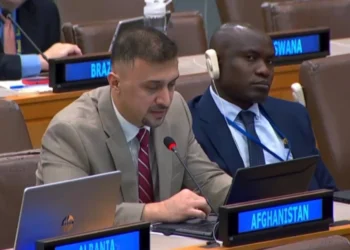
Naseer Ahmad Faiq, Acting Permanent Representative of Afghanistan to the United Nations, speaks during a UN session about Taliban restrictions on cultural identity and diversity. (Photo credit: @faiq_naseer)
Afghanistan News

Faiq: Taliban Restrictions Threaten Afghanistan’s Cultural Identity and Diversity

21 October 2026 [t_time:1792604848]
Participants in traditional Hazara attire line up on stage during the Hazara Culture Day ceremony held in Calgary, Canada. (Photo Credit: Exclusive)
Afghanistan News

Hazara Culture Day Celebrated in Canada, with Calls to Preserve Identity and Strengthen Community Bonds

2 June 2026 [t_time:1780410269]
A young woman sits quietly at a desk, writing beside a stack of books and a sunlit window, carrying the quiet determination that defines countless Afghan women who fight for knowledge and dignity in silence. (Photo Credit: Pinterest)
No category

I Protest: Our Writing Is Never Pointless

10 March 2026 [t_time:1773132382]

Latest

Loading latest news...

Popular stories

  • Hossein Mohabbi - Spokesperson for Iran's Islamic Revolutionary Guard Corps (IRGC) (Photo: Tasnim)

    Iran’s Revolutionary Guards Say They Are Preparing to Unveil “Father of All Bombs”

    Share
    Share Tweet
  • Trump Calls Iran’s Hope of War Lasting Beyond US Midterm Elections a “Dream”

    Share
    Share Tweet
  • UN Report Reveals Shifts in Family Attitudes and Rise in Domestic Violence in Afghanistan

    Share
    Share Tweet
  • Beyond Victimhood: How the Women of Afghanistan Became Actors of Civil Resistance Against Gender Apartheid

    Share
    Share Tweet
  • Afghanistan Freedom Front: One Taliban Intelligence Member Killed and Three Others Wounded in Takhar

    Share
    Share Tweet

Podcast

Insights
Insights

Join Lynne O’Donnell for 8AM’s podcast series, Insights.
Lynne talks with generals, diplomats, soldiers, journalists, politicians, activists, people who have front row seats for conflicts around the world, and citizens with a story to tell, happy or sad. For this first series, Afghanistan is the focus. Lynne and her guests talk about the collapse of the republic in August, 2021, and the impact since — for the people of Afghanistan, for the security of the region, for the safety of the world. It’s important, interesting and insightful.

Insights/22: Controlling the Narrative with Mina Sharif
byinsights8am

Controlling the Narrative

Lynne O’Donnell talks with Mina Sharif, author, activist, women’s rights campaigner, educator and mentor. They discuss who controls the narrative and who speaks for Afghanistan’s people when the Taliban appear to have seized control not only of the country but of the message, too.

Have a listen

Insights/22: Controlling the Narrative with Mina Sharif
Episode play icon
Insights/22: Controlling the Narrative with Mina Sharif
Episode Description
Episode play icon
Insights/21: Media Meltdown with Zahra Joya
Episode Description
Episode play icon
Insights/20: Terror Inc with Scott Richards
Episode Description
Episode play icon
Insights/19: Busting Stereotypes with Bushra Gohar
Episode Description
Episode play icon
Insights/18: Media Matters with Waliullah Rahmani
Episode Description
Episode play icon
Insights/17: What Goes Around Comes Around with Sima Samar
Episode Description
Search Results placeholder
Hasht-e Subh

8AM Media, also known as Hasht-e-Subh Daily, stands as Afghanistan's premier independent and non-profit newspaper, resonating as a beacon of journalistic integrity since its establishment in June 2007 by esteemed Afghan journalists and human rights advocates. With a steadfast commitment to citizen journalism and civic education, Hasht-e-Subh Daily has earned its place as the most esteemed publication in the nation.

Publisher: Sanjar Sohail
Email: [email protected]
Executive Director: Parwiz Kawa
Email: [email protected]

Read More

Afghanistan Traders’ Investments Face Pakistan Auction: Who Will Pay the Price of Taliban Policies?

Taliban Draw Closer to Russia as Rift With Pakistan Widens

Tehran’s Diplomatic Rush: Opening for a Deal or Prelude to Another War?

BBC: Pakistan Auctions Hundreds of Containers Carrying Goods Belonging to Traders from Afghanistan

From Student Despair to Expert Warnings: Why Are Young Men in Afghanistan Turning Away from University?

Editor’s Choice

Every Saturday morning, 8AM MEDIA English Services Department will guide you through the week’s biggest stories from Afghanistan and the international community.

Subscribe

© 2026 - ©Hasht-e Subh Daily

No Result
View All Result
8am.Media
پښتو ویب‌پاڼه
ویب‌سایت فارسی
اۉزبېکچه ویب‌سایت
  • Home
  • News
    • Afghanistan News
    • World News
  • Opinion
    • Editorial
    • Analysis
  • Reports
    • Daily Reports
    • Investigative Reports
  • Society
    • The story of people
  • Women’s Word
  • Columns
    • Three Years After Afghanistan’s Fall: The Taliban’s Resurgence
    • Towards Equality
    • The Resurgence of the Taliban: Two Years Since Afghanistan’s Fall
    • Hebatullah Report Special Edition
    • Resistance for Education Special Edition
    • Special Column on Taliban’s Education Curriculum
    • Nawroz
  • Interviews
  • Contact Us
    • About Us
    • 8AM MEDIA Annual Awards
    • Submit an Article to Hasht-e-Subh
  • 8am.media

© 2026 - ©Hasht-e Subh Daily