• 8AM.MEDIA
  • ویب‌سایت فارسی
  • پښتو ویب‌پاڼه
  • اۉزبېکچه ویب‌سایت
  • Podcast
Friday, October 9, 2026
Hasht-e Subh
  • Home
  • News
    • Afghanistan News
    • World News
  • Opinion
    • Editorial
    • Analysis
  • Reports
    • Daily Reports
    • Investigative Reports
  • Society
    • The story of people
  • Women’s Word
  • Columns
    • Three Years After Afghanistan’s Fall: The Taliban’s Resurgence
    • Towards Equality
    • The Resurgence of the Taliban: Two Years Since Afghanistan’s Fall
    • Hebatullah Report Special Edition
    • Resistance for Education Special Edition
    • Special Column on Taliban’s Education Curriculum
    • Nawroz
  • Interviews
  • Contact Us
    • About Us
    • 8AM MEDIA Annual Awards
    • Submit an Article to Hasht-e-Subh
  • 8am.mediaBack
Subscribe
No Result
View All Result
  • Home
  • News
    • Afghanistan News
    • World News
  • Opinion
    • Editorial
    • Analysis
  • Reports
    • Daily Reports
    • Investigative Reports
  • Society
    • The story of people
  • Women’s Word
  • Columns
    • Three Years After Afghanistan’s Fall: The Taliban’s Resurgence
    • Towards Equality
    • The Resurgence of the Taliban: Two Years Since Afghanistan’s Fall
    • Hebatullah Report Special Edition
    • Resistance for Education Special Edition
    • Special Column on Taliban’s Education Curriculum
    • Nawroz
  • Interviews
  • Contact Us
    • About Us
    • 8AM MEDIA Annual Awards
    • Submit an Article to Hasht-e-Subh
  • 8am.mediaBack
No Result
View All Result
Hasht-e Subh
No Result
View All Result

Pakistan and the Taliban in Istanbul: This Time, the Haqqanis Are Not Absent

Shujauddin Amini Shujauddin Amini
27 October 2025 - Solar Hijri Date: 1404/08/05 [t_time:1761580764]
Key Taliban figures involved in negotiations with Pakistan over recent tensions and the TTP issue. The Haqqani network, led by Interior Minister Sirajuddin Haqqani, now plays a central role in the Istanbul talks after being absent from initial Doha discussions. (Photo Credit: Social Media)

Social Media

During the first round of talks between Pakistan and the Taliban in Doha, the capital of Qatar, the Haqqani network was notably absent. That round was dominated by Mullah Mohammad Yaqoob Mujahid, the Taliban’s defense minister, someone who appeared to lead the brief confrontation with Pakistan and, more importantly, has shown a clear inclination toward India, a stance he does not deny. For instance, in his interview with Al Jazeera during the Doha talks, Yaqoob openly stated that the Taliban’s relations with India would remain intact, arguing that this does not necessarily place the group in opposition to Islamabad.

The Haqqanis, often viewed as one of the most powerful and militarily capable factions within the Taliban, have so far maintained a meaningful silence regarding the recent tensions and skirmishes with Pakistan. Other Taliban officials aligned with the Kandahar leadership have issued sharp warnings to Islamabad in recent weeks, but the Haqqanis have remained conspicuously quiet. Even Mohammad Nabi Omari, the Taliban’s deputy interior minister, publicly criticized Pakistan. Yet his superior, Sirajuddin Haqqani, the interior minister, did not. During the height of the Taliban-Pakistan conflict, Sirajuddin traveled to Khost province, where, instead of addressing the ongoing hostilities, he delivered a speech laced with veiled criticism widely interpreted as a rebuke of the behavior of the Taliban’s top leadership circle. The silence of such a prominent and seemingly reformist faction within the Taliban at such a critical moment carries particular significance. Especially given that the Haqqanis were excluded from the first round of talks, their quiet stance has appeared all the more enigmatic.

This time, however, the situation has changed. The Haqqanis are not only present in the Taliban delegation attending the Istanbul negotiations, but they appear to be leading it. The delegation is headed by Rahmatullah Najib, deputy to Interior Minister Sirajuddin Haqqani. It remains unclear, however, whether Najib ultimately answers to the Taliban’s supreme leader or to the Haqqani network itself. Given his official position, his subordination to Haqqani is, by structure, unavoidable.

More significantly, Anas Haqqani, a member of the Haqqani family known for his substantial influence within the Taliban regime despite holding no formal position, has also joined the delegation. The inclusion of Suhail Shaheen, the Taliban’s representative in Qatar, and Abdul Qahar Balkhi, spokesperson for the Taliban’s Foreign Ministry, appears largely symbolic; both are fluent in English and can more easily communicate with the Pakistani side and international mediators. In reality, the key decision-makers in this second round of talks appear to be Rahmatullah Najib and Anas Haqqani, at least within the Istanbul setting. Whether the Taliban’s leadership in Kabul and Kandahar will immediately endorse whatever outcomes these two negotiate, however, remains uncertain.

The composition of the second Taliban delegation appears to be both deliberate and carefully calculated. In the first round of talks in Doha, the discussions were led by the Taliban’s Ministry of Defense; this time, the Istanbul negotiations are being overseen by the Ministry of Interior, led by the Haqqani network. This shift suggests that the Haqqanis were dissatisfied with their exclusion from the first round and have now ensured that their perspectives are included in the agenda. When the Taliban find themselves at odds with a foreign country, it is natural for them to make every effort at any cost to maintain internal unity. Otherwise, internal divisions could prove far more destructive than any external threat. Given that the Taliban are currently walking a precarious line, with the constant risk of sliding into a full-scale war with Pakistan, their leadership appears intent on temporarily setting aside internal frictions and factional grievances to preserve cohesion.

From the current composition of the delegation, it is evident that the Taliban’s primary objective is to “manage tensions” with Pakistan. In this regard, the Haqqanis, who have long favored maintaining close ties with Islamabad over cultivating relations with New Delhi, are better positioned to handle the Istanbul negotiations and steer both sides away from the current state of confrontation. So far, it has become clear that the Kandahar faction prioritizes friendship with India. Indeed, that very tilt toward New Delhi has sharpened Pakistan’s hostility and contributed to its decision to launch strikes inside Afghan territory. In contrast, the Haqqanis have not expressed any overt affinity for India, nor have Indian officials engaged with members of their network. Because of this, the Haqqanis are less inclined to value India’s role in Afghanistan and are unlikely to see direct confrontation with Pakistan as beneficial. For that reason, the Istanbul talks may yield tangible results even if they do not fully resolve a challenge as complex as Tehrik-e-Taliban Pakistan (TTP).

Moreover, the Haqqanis, despite their affinity for Pakistan, retain a degree of influence over the TTP. The regions where TTP fighters are reportedly active largely fall within Haqqani-controlled territory. It appears that sources outside the Haqqani network guide the TTP’s operations against Pakistan, as pro-Pakistan Haqqanis would be reluctant to allow anti-Pakistan activities within their zones of control. Notably, the temporary one-month ceasefire between Pakistan and the TTP, which occurred about four years ago, was brokered through Haqqani mediation. Thus, even if the Haqqanis do not actively support the TTP, they are at least interested in securing a ceasefire between Pakistan and the Pakistani Taliban or in curbing TTP activities, albeit in a manner that prevents the group from aligning itself with ISIS or other transnational terrorist organizations.


You can read the Persian version of this analysis here:
پاکستان و طالبان در استانبول؛ این بار حقانی‌ها غایب نیستند

ShareTweetSendSendShare

Related Posts

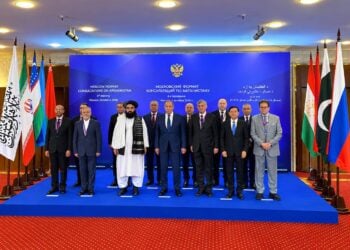
Representatives from countries posing for a group picture in the ‘Moscow Format’ meeting (Photo: @PakinRussia)
Afghanistan News

Mohammad Sadiq at Moscow Meeting: Pakistan’s Operations in Afghanistan Are ‘Defensive’ in Nature

5 October 2026 [t_time:1791216341]
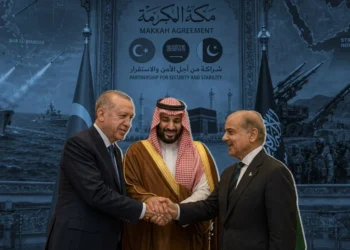
Three leaders shake hands in front of a Makkah Agreement backdrop bearing the emblems of Turkey, Saudi Arabia and Pakistan. (Photo credit: Khaberni.com)
Analysis

Mecca Agreement vs. the Taliban, India and Israel: Is a New Regional Alignment Taking Shape?

4 October 2026 [t_time:1791121476]
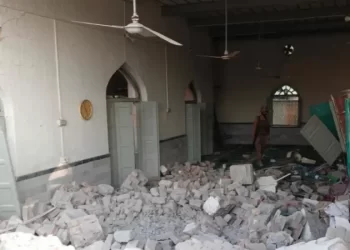
A mosque in Kohat, Pakistan, was damaged in a blast, with rubble covering the floor and parts of the building’s interior (Photo: AFP)
World News

Sharp Rise in Casualties in Pakistan; More Than 1,000 Killed in Three Months

3 October 2026 [t_time:1791026774]

Latest

Loading latest news...

Popular stories

  • An Afghan woman gazes out of her home, reflecting the isolation and challenges faced by women in Afghanistan under Taliban rule. (Photo Credit: 8am.media)

    UN Report Reveals Shifts in Family Attitudes and Rise in Domestic Violence in Afghanistan

    Share
    Share Tweet
  • Taliban Shoot Young Man from Herat After Torturing Him with Hands Tied

    Share
    Share Tweet
  • Taliban Intelligence Deputy in Faizabad Killed with Two Guards

    Share
    Share Tweet
  • Al-Qaeda Releases Hamza bin Laden Message on 9/11 Anniversary

    Share
    Share Tweet
  • Iraq Reports Export of Two Million Barrels of Crude Oil Through Strait of Hormuz

    Share
    Share Tweet

Podcast

Insights
Insights

Join Lynne O’Donnell for 8AM’s podcast series, Insights.
Lynne talks with generals, diplomats, soldiers, journalists, politicians, activists, people who have front row seats for conflicts around the world, and citizens with a story to tell, happy or sad. For this first series, Afghanistan is the focus. Lynne and her guests talk about the collapse of the republic in August, 2021, and the impact since — for the people of Afghanistan, for the security of the region, for the safety of the world. It’s important, interesting and insightful.

Insights/22: Controlling the Narrative with Mina Sharif
byinsights8am

Controlling the Narrative

Lynne O’Donnell talks with Mina Sharif, author, activist, women’s rights campaigner, educator and mentor. They discuss who controls the narrative and who speaks for Afghanistan’s people when the Taliban appear to have seized control not only of the country but of the message, too.

Have a listen

Insights/22: Controlling the Narrative with Mina Sharif
Episode play icon
Insights/22: Controlling the Narrative with Mina Sharif
Episode Description
Episode play icon
Insights/21: Media Meltdown with Zahra Joya
Episode Description
Episode play icon
Insights/20: Terror Inc with Scott Richards
Episode Description
Episode play icon
Insights/19: Busting Stereotypes with Bushra Gohar
Episode Description
Episode play icon
Insights/18: Media Matters with Waliullah Rahmani
Episode Description
Episode play icon
Insights/17: What Goes Around Comes Around with Sima Samar
Episode Description
Search Results placeholder
Hasht-e Subh

8AM Media, also known as Hasht-e-Subh Daily, stands as Afghanistan's premier independent and non-profit newspaper, resonating as a beacon of journalistic integrity since its establishment in June 2007 by esteemed Afghan journalists and human rights advocates. With a steadfast commitment to citizen journalism and civic education, Hasht-e-Subh Daily has earned its place as the most esteemed publication in the nation.

Publisher: Sanjar Sohail
Email: [email protected]
Executive Director: Parwiz Kawa
Email: [email protected]

Read More

Barred from School, Now Teaching: The Story of Behdukht Online Academy on Teacher’s Day

When Colonialism Redesigned Religion

UNICEF Announces Expanded Primary Healthcare Services for Children and Mothers in Afghanistan

Residents Fund Construction of Health Center in Ghazni

Faiq at UN Calls for End to Arbitrary Detentions, Torture and Killings in Afghanistan

Editor’s Choice

Every Saturday morning, 8AM MEDIA English Services Department will guide you through the week’s biggest stories from Afghanistan and the international community.

Subscribe

© 2026 - ©Hasht-e Subh Daily

No Result
View All Result
8am.Media
پښتو ویب‌پاڼه
ویب‌سایت فارسی
اۉزبېکچه ویب‌سایت
  • Home
  • News
    • Afghanistan News
    • World News
  • Opinion
    • Editorial
    • Analysis
  • Reports
    • Daily Reports
    • Investigative Reports
  • Society
    • The story of people
  • Women’s Word
  • Columns
    • Three Years After Afghanistan’s Fall: The Taliban’s Resurgence
    • Towards Equality
    • The Resurgence of the Taliban: Two Years Since Afghanistan’s Fall
    • Hebatullah Report Special Edition
    • Resistance for Education Special Edition
    • Special Column on Taliban’s Education Curriculum
    • Nawroz
  • Interviews
  • Contact Us
    • About Us
    • 8AM MEDIA Annual Awards
    • Submit an Article to Hasht-e-Subh
  • 8am.media

© 2026 - ©Hasht-e Subh Daily