• 8AM.MEDIA
  • ویب‌سایت فارسی
  • پښتو ویب‌پاڼه
  • اۉزبېکچه ویب‌سایت
  • Podcast
Monday, September 14, 2026
Hasht-e Subh
  • Home
  • News
    • Afghanistan News
    • World News
  • Opinion
    • Editorial
    • Analysis
  • Reports
    • Daily Reports
    • Investigative Reports
  • Society
    • The story of people
  • Women’s Word
  • Columns
    • Three Years After Afghanistan’s Fall: The Taliban’s Resurgence
    • Towards Equality
    • The Resurgence of the Taliban: Two Years Since Afghanistan’s Fall
    • Hebatullah Report Special Edition
    • Resistance for Education Special Edition
    • Special Column on Taliban’s Education Curriculum
    • Nawroz
  • Interviews
  • Contact Us
    • About Us
    • 8AM MEDIA Annual Awards
    • Submit an Article to Hasht-e-Subh
  • 8am.mediaBack
Subscribe
No Result
View All Result
  • Home
  • News
    • Afghanistan News
    • World News
  • Opinion
    • Editorial
    • Analysis
  • Reports
    • Daily Reports
    • Investigative Reports
  • Society
    • The story of people
  • Women’s Word
  • Columns
    • Three Years After Afghanistan’s Fall: The Taliban’s Resurgence
    • Towards Equality
    • The Resurgence of the Taliban: Two Years Since Afghanistan’s Fall
    • Hebatullah Report Special Edition
    • Resistance for Education Special Edition
    • Special Column on Taliban’s Education Curriculum
    • Nawroz
  • Interviews
  • Contact Us
    • About Us
    • 8AM MEDIA Annual Awards
    • Submit an Article to Hasht-e-Subh
  • 8am.mediaBack
No Result
View All Result
Hasht-e Subh
No Result
View All Result

Pakistan’s Strike on Kunar: Why Is Islamabad Refusing to Back Down?

Kiomars Samadi Kiomars Samadi
29 April 2026 - Solar Hijri Date: 1405/02/09 [t_time:1777489510]
Graphical map of Afghanistan showing airstrikes, jets, smoke zones, and affected locations. Photo Credit: Exclusive

Exclusive

According to media reports, following Pakistan’s airstrike on the city of Asadabad, the capital of Kunar province, and the Sarkano district of the province, dozens of people, including women and children, have been killed and injured. It has also been reported that mortar shells fired by Pakistan struck areas around Sayyid Jamaluddin University, causing fear and panic among students. This attack comes at a time when the Taliban and Pakistan recently met in Urumqi, China, and their talks were described as optimistic. That optimism has now been undermined by the attack on Kunar. In addition, Taliban officials in recent weeks have reduced their rhetoric against Pakistan and appear to be trying to end the conflict with the country without addressing its root cause: controlling the Tehrik-i-Taliban Pakistan (TTP) and expelling the group’s fighters from Afghan territory. For instance, just two days ago, Amir Khan Muttaqi, the Taliban’s Foreign Minister, told members of the group’s administration in Kabul to avoid informal remarks driven by personal grievances against Pakistan and instead speak responsibly and carefully. Muttaqi urged Taliban officials not to involve immature thinking and personal grievances in major issues, which, in his view, would harm the country. Habibullah Agha, the Taliban’s Minister of Education, also acknowledged that Afghanistan cannot be defended with a “yellow barrel” and a “Kalashnikov” and that the use of modern technology is a necessity. Agha’s remarks also relate to the conflict between Pakistan and the Taliban and the group’s inability to confront that country. If one compares these recent statements with earlier positions, it becomes clear that the Taliban do not intend to continue confrontation with Pakistan, whether due to their weak offensive and defensive capabilities or other factors. In contrast, Pakistan does not appear willing to back down, at least for now, unless it receives significant concessions from the Taliban.

The question arises: why is Pakistan not backing down?

  1. Pakistan enjoys the support of the United States, a support that already existed but has increased in recent times, especially after Islamabad hosted talks between Tehran and Washington. When Pakistan has the backing of the world’s only global power and its opponent is a group like the Taliban, it naturally becomes more aggressive in targeting the group’s interests and Afghan territory. In conflicts between two states or between a state and a group, major powers typically intervene to prevent prolonged wars. However, in the Pakistan Taliban conflict, the United States, as the only global power, is not only unwilling to mediate but is instead standing with Islamabad against the ruling regime in Afghanistan. Similarly, China also appears to be more attentive to Pakistan’s concerns. It cannot be denied that most local, regional, and international conflicts are rooted in competing interests between major powers or between major and smaller actors.
  2. None of Pakistan’s attacks on Afghanistan has faced international condemnation. Only India has condemned them, and even that appears to stem from its long-standing rivalry with Pakistan rather than a belief that the attacks are inherently illegitimate or deserving of condemnation. Even the United Nations and its Security Council, the highest international authority, have remained silent and, at best, limited their response to calls for restraint from all sides. If even a few states were to condemn Pakistan’s actions, the country would likely reconsider its approach. The world’s silence is not necessarily the result of Pakistan’s strong diplomacy, but rather the lack of legitimacy of the Taliban at both national and international levels.
  3. Ongoing crises across the world have also provided Pakistan with an opportunity to treat Afghanistan as a theater of operations. The war in Ukraine remains intense and exhausting for Russia, the United States, and Europe. The conflict involving Iran has not ended and continues to contribute to a global energy crisis, forcing many Western countries to abandon previous priorities and focus on stabilizing energy markets. The war in Lebanon is also ongoing and expected to intensify further. In such circumstances, it is natural that the Afghanistan crisis is pushed into neglect, a situation that benefits Pakistan and allows it to carry out attacks on Afghanistan with little concern for international reaction. Interestingly, the Taliban also appear content with the creation of crises in other countries, as it allows them to exercise control more freely over women and men in the absence of international oversight.
  4. The weakness of the Taliban in defending Afghanistan’s territorial integrity has further emboldened Pakistan. The reality is that the Taliban, just as they have demonstrated incompetence in other areas, also lack any effective military capability that could deter external aggression. Habibullah Agha’s admission that a “yellow barrel” and a Kalashnikov are insufficient for defense confirms the argument that victory against a powerful aggressor cannot be achieved through slogans and fiery speeches alone. Since the Taliban possess no effective deterrent capability, each confrontation with Pakistan exposes their weaknesses further, enabling Islamabad to identify and exploit those vulnerabilities and intensify its attacks.
  5. The alignment of certain anti Taliban groups with Pakistan is another influential factor. It is no secret that any weakening of the Taliban through any means is welcomed by their opponents, even if it requires military action against Afghanistan. However, these opponents generally speak cautiously on the matter, both due to its sensitivity and the widespread perception that Afghanistan’s current situation is solely the result of Pakistan’s continued interference. As Pakistan becomes aware of the Taliban’s isolation and divisions within Afghanistan’s political forces, it perceives attacks on the country as low-cost. More importantly, the growing alienation of the population from the Taliban has further increased Islamabad’s appetite. It is a reality that people are largely disillusioned with the Taliban, and their current silence has underlying reasons that require separate analysis. So far, citizens have not shown significant reactions to Pakistan’s attacks, including those in the southern and southeastern regions often considered Taliban strongholds. This indicates that the Taliban have performed so poorly that even external attacks on Afghanistan cannot rally the population around the group’s flag. If Pakistan were to face a legitimate, strong government that emerged from the people’s vote, it would certainly exercise greater restraint.

You can read the Persian version of this analysis here:
حمله پاکستان بر ولایت کنر؛ چرا اسلام‌آباد کوتاه نمی‌آید؟ 

ShareTweetSendSendShare

Related Posts

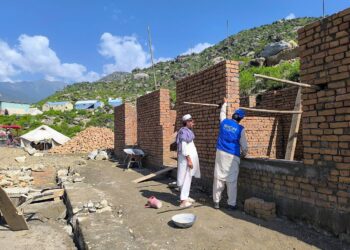
An IOM worker and a local resident take part in rebuilding homes for families affected by the earthquake in Kunar. (Photo credit: IOM)
Afghanistan News

IOM Supports 98 Earthquake-Affected Families in Kunar

27 August 2026 [t_time:1787850816]
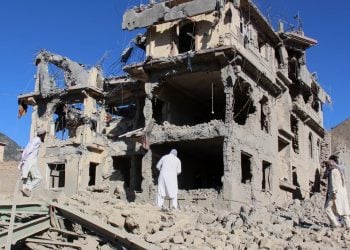
Residents inspect the ruins of a bombed multi-story home in Kunar province following border clashes between the Taliban and Pakistan. (Photo credit: AP)
Daily Reports

UNAMA: Hundreds of Civilians in Afghanistan Killed or Wounded in Taliban-Pakistan Border Clashes

28 July 2026 [t_time:1785259824]
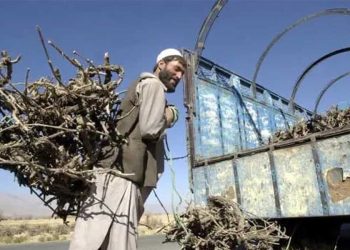
A man carries a bundle of cut branches to a truck in Afghanistan amid growing concerns over deforestation and its environmental toll. (Photo credit: Getty Images)
Daily Reports

Deforestation on the Rise in Afghanistan: Experts Warn of Environmental Consequences

23 July 2026 [t_time:1784828517]

Latest

Loading latest news...

Popular stories

  • Hamza bin Laden - the son of Osama bin Laden (Photo: Social Media)

    Al-Qaeda Releases Hamza bin Laden Message on 9/11 Anniversary

    Share
    Share Tweet
  • Sajjad Haider Khan: Those with Valid Visas Will Continue Their Studies in Pakistan

    Share
    Share Tweet
  • UN Women: Ban on Women’s Entry to UN Offices in Afghanistan Enters Second Year

    Share
    Share Tweet
  • Taliban Shoot Young Man from Herat After Torturing Him with Hands Tied

    Share
    Share Tweet
  • Scholarship to Deportation: Pakistan Orders Mass Expulsion of Afghanistan Citizen Medical Students

    Share
    Share Tweet

Podcast

Insights
Insights

Join Lynne O’Donnell for 8AM’s podcast series, Insights.
Lynne talks with generals, diplomats, soldiers, journalists, politicians, activists, people who have front row seats for conflicts around the world, and citizens with a story to tell, happy or sad. For this first series, Afghanistan is the focus. Lynne and her guests talk about the collapse of the republic in August, 2021, and the impact since — for the people of Afghanistan, for the security of the region, for the safety of the world. It’s important, interesting and insightful.

Insights/22: Controlling the Narrative with Mina Sharif
byinsights8am

Controlling the Narrative

Lynne O’Donnell talks with Mina Sharif, author, activist, women’s rights campaigner, educator and mentor. They discuss who controls the narrative and who speaks for Afghanistan’s people when the Taliban appear to have seized control not only of the country but of the message, too.

Have a listen

Insights/22: Controlling the Narrative with Mina Sharif
Episode play icon
Insights/22: Controlling the Narrative with Mina Sharif
Episode Description
Episode play icon
Insights/21: Media Meltdown with Zahra Joya
Episode Description
Episode play icon
Insights/20: Terror Inc with Scott Richards
Episode Description
Episode play icon
Insights/19: Busting Stereotypes with Bushra Gohar
Episode Description
Episode play icon
Insights/18: Media Matters with Waliullah Rahmani
Episode Description
Episode play icon
Insights/17: What Goes Around Comes Around with Sima Samar
Episode Description
Search Results placeholder
Hasht-e Subh

8AM Media, also known as Hasht-e-Subh Daily, stands as Afghanistan's premier independent and non-profit newspaper, resonating as a beacon of journalistic integrity since its establishment in June 2007 by esteemed Afghan journalists and human rights advocates. With a steadfast commitment to citizen journalism and civic education, Hasht-e-Subh Daily has earned its place as the most esteemed publication in the nation.

Publisher: Sanjar Sohail
Email: [email protected]
Executive Director: Parwiz Kawa
Email: [email protected]

Read More

Money Market Control or Ethnic Discrimination? Why the Taliban Are Relocating Kefayat Market’s Money Changers

Prunes Give Qala-e-Naw Women Income, But No Market Security

Patients Say Treatment Costs at Government Hospitals Barely Differ from Private Clinics

UNICEF: More Than Six Million People in Afghanistan Receive Essential Health Services

Man’s Body Found at Provincial Hospital in Takhar Province

Editor’s Choice

Every Saturday morning, 8AM MEDIA English Services Department will guide you through the week’s biggest stories from Afghanistan and the international community.

Subscribe

© 2026 - ©Hasht-e Subh Daily

No Result
View All Result
8am.Media
پښتو ویب‌پاڼه
ویب‌سایت فارسی
اۉزبېکچه ویب‌سایت
  • Home
  • News
    • Afghanistan News
    • World News
  • Opinion
    • Editorial
    • Analysis
  • Reports
    • Daily Reports
    • Investigative Reports
  • Society
    • The story of people
  • Women’s Word
  • Columns
    • Three Years After Afghanistan’s Fall: The Taliban’s Resurgence
    • Towards Equality
    • The Resurgence of the Taliban: Two Years Since Afghanistan’s Fall
    • Hebatullah Report Special Edition
    • Resistance for Education Special Edition
    • Special Column on Taliban’s Education Curriculum
    • Nawroz
  • Interviews
  • Contact Us
    • About Us
    • 8AM MEDIA Annual Awards
    • Submit an Article to Hasht-e-Subh
  • 8am.media

© 2026 - ©Hasht-e Subh Daily