Introduction
Although rural life is full of challenges, hardship, trouble, and limitations, it also has its goodness, charm, tenderness, and enchantment. Perhaps it is these very contrasts that have made village life enjoyable, rich in memories, exciting, and beautiful. The essence of the matter is surely felt by those who have lived those beautiful moments, understood them with every fibre of their being, and carry thousands of memories in their minds. Now that many of those traditions and village customs have gathered dust and many people have forgotten them, a review of the Aghil and the tradition of seasonal migration in Panjshir is both important and appealing. For my generation and earlier ones, this piece is a mirror that will reflect the memories of the past. For the new generation, it can be a body of knowledge that acquaints them with the lifestyle and culture of their forebears. This article attempts to address the customs and practices of living in the Aghil and of the Aghil migration in Panjshir. First, we will introduce the Aghil, or Ilaq. Then we will turn to the lifestyle and structure of the Aghil. At the end of this article, we will address the festival of the Aghil migration.
Going to the Aghil or Ilaq
The Aghil lies at the head of the high valley,
My gazelle of fancy has fallen into the snare;
I have fallen for a girl gleaning ears of grain,
My affairs are tied to the edge of the village. (1)
Asi
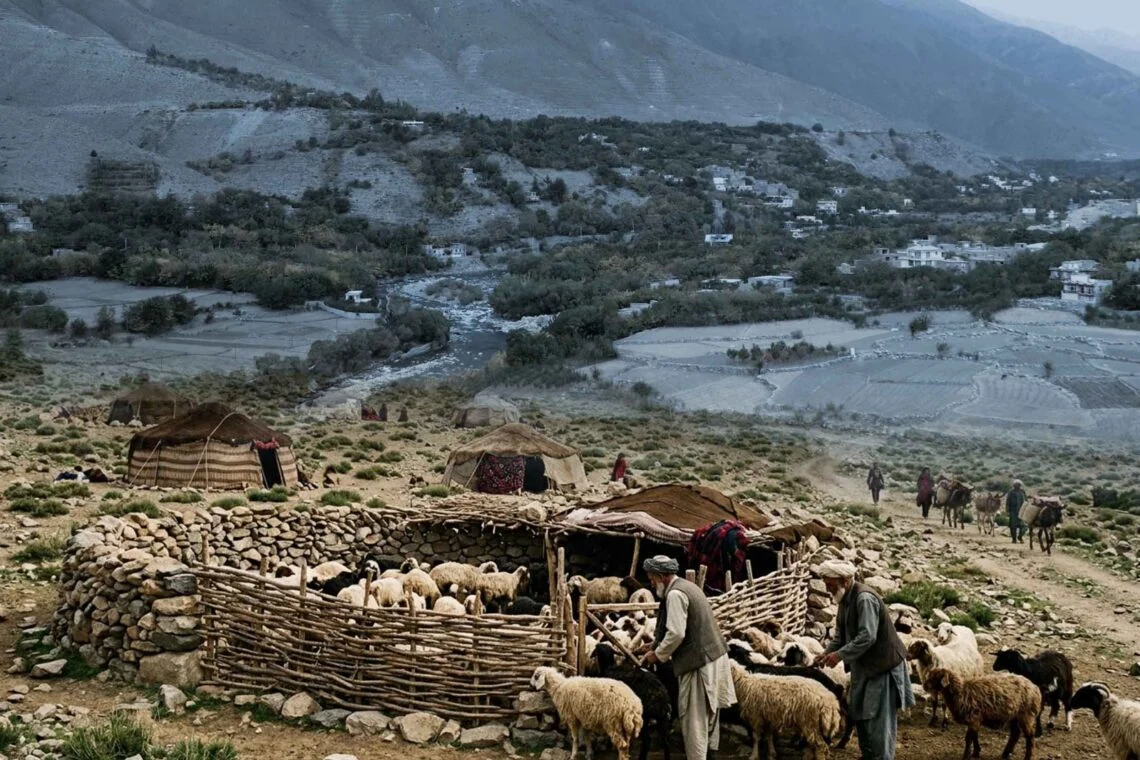
Aghil (Oghil) or Ilaq (Yilaq) is a place where livestock-owning villagers go to the mountain slopes in spring and summer and live temporarily until the end of summer, and sometimes until early Tir (late June). After the harvest has been gathered in their villages, these Aghil dwellers return to their homes. The mountain slopes provide the best and most abundant grass for the villagers’ flocks of goats and sheep. Gathering the firewood needed for winter and staying away from farmland lead the villagers to go to the Aghil in this season and settle there.
During the year (spring and summer), Aghil dwellers try to collect the firewood they need and stack it. After it dries, they gradually carry the firewood to their homes until the end of the Aghil season. Aghil dwellers also collect animal dung, moisten it with water, and mold it into round bricks, known in colloquial speech as “Tapai.” Tapai is among the most widely used winter fuels and is more effective than mountain brush (bushes), and even some types of wood, in heating homes.
Besides collecting firewood, Aghil dwellers try to gather and store their dairy products, such as qurut, qaymaq and clarified butter, for their winter consumption. Of course, a small number of these Aghil dwellers may sell these dairy products.
The Aghil
Although Aghils may take different forms in different parts of Afghanistan, in Panjshir all the rooms of an Aghil, which are called “chayla,” are usually of the same type. The walls are built of stone. The roof is left open throughout the year, except during the Aghil season. When Aghil dwellers go to the Aghil, they place several large beams (dastak) over the roof of the Aghil room (chayla) and lay brush on top. After the Aghil season, they collect the chayla beams again and hide them under a pile of stones, which is called ambah or amba’. Many of these chaylas are built in a rough form (stone without mud mortar). Most of these rooms have not even been plastered with mud and straw. Of course, a small number of the families who go to the Aghil every year cover the roofs of their chaylas and plaster the walls with mud and straw. But most chaylas have open roofs.
The Aghil rooms (chaylas) stand side by side. The circular open space between these rooms is called a qutan (qotan). During the day, Aghil dwellers use the qutan as a “sufa,” or a place to stroll and gather, but at night their livestock sleep in it. Usually each Aghil dweller has one chayla. If guests arrive one night, or for any other reason the number of people in a chayla exceeds its capacity, the men of the family go to the Aghil mosque and spend the night there.
The Aghil mosque stands outside the qutan compound and farther away from it (usually 20 to 50 metres away). The structure of the mosque does not differ much from the chaylas of the Aghil dwellers. The only difference is that the mosque’s roof is always left open and is covered with a type of mountain grass called kuda. Alongside the prayer space, this mosque also serves as a guesthouse and an extra room for the Aghil dwellers.
In the village of Karaman (the place where our families went to the Aghil), there were three qutans. The first, or lower, qutan belonged to the residents of Karaman proper, and we called it the qutan of the Karamanis. The second qutan belonged to the villages of Pakh Tah (Lower Pakh) and Upper Pakh and to some residents of the village of Eskinaz. We called it our qutan, and it was the middle one. The upper qutan belonged to the residents of the village of Navijeh, and we called it the qutan of the Navijehgis. These three qutans stood about one hundred metres apart, close to each other. All three were known as the “Sarchashma Aghil,” and they were located in an area called Sarchashma on the slopes of Mount Ataal, within the Karaman village area of Dara District in Panjshir Province.
Of course, there were other aghils on the slopes of Mount Ataal as well, including the Poshanda Aghil, the Siyahsang Aghil, the Nasirkhan Aghil, the Qala’i Aghil (located in the Lokh mountains), the Takht Aghil, and others. One of the most famous of them was the Poshanda Aghil, which stood higher than the Sarchashma Aghil. The residents of the village of Lula usually lived in this aghil. I think the reason it was named Poshanda (“covered”) was that the roofs of all its chaylas were covered with wood and mud, and unlike other aghils, they did not have open roofs. The Poshanda Aghil was about 20 minutes from the Sarchashma Aghil. In those years (the 1990s), when we went to the Aghil, the Nasirkhan, Qala’i, and Takht Aghils were abandoned. But Aghil dwellers went to the Poshanda and Sarchashma Aghils every year.
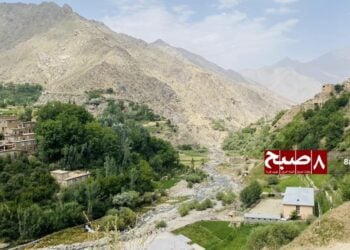
The Sarchashma Aghil was located in a beautiful and captivating place. As a child, every time I went there, I was entranced by its unique beauty. The qutans stood on higher ground, and from there one could look out over the valley. The Karaman River, which draws a silver-like line through the heart of the valley, added to its beauty. Opposite the Aghil stood high mountains called Mount Lokh. On the other side of Mount Lokh lies the village of Pashghur in Hissa-e Awal District. On its heights there is a famous pond called Mahmkhan Pond. The place is called Sarchashma (“the source”) because the Karaman River originates there.
I loved the nights of the Aghil more than its days. They were dark, starry nights. Inside the chayla, a kerosene lamp, usually an Erikin, lit the space with its faint glow, but the clear sky and its beautiful stars stole the heart of anyone who saw them. Although I was still only a child, whenever I went to the Aghil, I loved to gaze at the stars at night. The clear, pure water on the one hand, the fresh, lush and lively air on the other, and the sky painted with beautiful, enchanting stars made me ever more entranced by this matchless creation of God.
A few metres from Sarchashma there was a shrine called the Sarchashma Shrine. Exactly which figure this shrine is associated with is not known for certain. But it is one of the well-known shrines along the Karaman River. Beside this shrine there is a spring called the Shrine Spring. The water of this spring is always cold and cool (during the Aghil season), so cold that one cannot keep a hand in it for more than a few seconds. As children, we used to compete with other children over this. Whoever kept his hand in the water to a count of 100 (about 100 seconds) won.
Aghil dwellers and villagers go to this shrine from time to time, tie a piece of cloth to its standard (alam), and ask for their heart’s desire. Villagers recount that once the butter of one of the Aghil dwellers had gone missing from her chayla. The owner’s efforts to find it came to nothing. In the end, all the women of the Aghil sat around the shrine and prayed together that God would disgrace whoever had stolen that woman’s butter. After the late-morning meal that same day, a calf fell ill because it had eaten the butter. From this incident, the Aghil dwellers inferred that the shrine had granted their wish.
Moving Out of the Aghil
The most important and fascinating part of Aghil life was the closing days of the Aghil season. These days, which usually fell in the second half of September or the first days of October (depending on how early the cold arrived; if the winter cold came sooner, the Aghil dwellers returned sooner), brought more work and activity for the Aghil dwellers than ordinary days. In the final weeks of the Aghil season, they tried to transfer to the village what they had collected over the season. As mentioned, firewood and dairy products were the most important things they gathered.
The Night Before the Move
The last night, after which the Aghil dwellers would complete another season of Aghil life and return to the village the next day, was one of the most beautiful and memorable nights of Aghil life. On the one hand, they were returning to the village and the ancestral home after nearly six months and would see the friends and families who had stayed in the village. On the other hand, they had completed an important project of life. These two things led them to celebrate the night before they all returned to the village together. That night, the women of the family baked bread (naghagi), which was in fact Bolani Qutakh, also called “Qutakh Darun” by villagers. Of course, today some people confuse Qutakh Darun with qutakhi, though the two are different. Qutakh Darun, or Bolani Qutakh, is a bread similar to bolani, in which qutakh, which resembles chaka, is placed in the middle instead of bolund, cumin, qaymaq, potatoes, and leeks. Qutakhi, however, is a dish in which the qutakh is fried and placed in a dish, a circular hollow is dug in its middle, clarified butter is poured into it, and it is eaten with dry bread.
On the night of the move, all the Aghil dwellers sat together around one dining cloth and ate the Qutakh Darun they had cooked. After the meal, a prayer of blessing and the gathering up of the dining cloth, they began to make merry and cheer. The elders of the Aghil sang “sangardi,” and the young people danced and stamped their feet. An atmosphere full of warmth, joy and gladness filled the enchanting setting of the mountains, and until midnight, and sometimes until dawn, this revelry and exhilaration continued on the mountain slopes. The song of sangardi and the qursak-singing of the Aghil dwellers carried from rock to rock and from mountain to mountain and echoed back. Villagers call this echoing “sheikh-awazi.” The Aghil dwellers enjoyed this revelry that rang through the mountains and echoed back as sheikh-awazi, and they kept up their celebration.
As part of the program, a “poetry duel” (sher-jangi) took place between the residents of each qutan. First, one member of a qutan would sing a ‘sangardi’, and then the residents of the other qutan had to give a fitting reply to it. Each qutan tries to stump the residents of the other. It must ask a question that the opposing qutan cannot answer. If there are no skilled people and accomplished qursak singers among the residents of one of these qutans, that qutan is in effect unable to answer the opposing qutan and is consequently defeated.
It should be noted that singing sangardi in a question-and-answer form has existed in Panjshir since long ago. It is said that two residents of the village of Karaman, who were also longtime friends, the late Mohammad Qayum, from Lower Pakh village, and the late Qutbuddin, from Navijeh village, once went in summer to hunt hen partridges on Gardana Mountain, which lies between Tanakhu in Dara Abdullah Khel and Band Jui village in Baba Ali (Baba Wali) in Abshar District. An interesting exchange of questions and answers took place between them and the Aghil dwellers of Tanakhu. First, one of the women Aghil dwellers of Tanakhu sang a sangardi in which, by reciting the following couplet, she asked the other party who they were and where they lived:
O sweet friend of my soul, where have you come from?
What business brought you to our land? (2)
After this question, the two old friends and companions consulted with each other to find a suitable answer. It is said that Mohammad Qayum told his friend Qutbuddin that the couplet did not fit his own name, so it was better for Qutbuddin to give their reply. Mohammad Qayum ultimately composed the following lines, and Qutbuddin sang them:
O sweet friend of my soul, my name is Qutbuddin,
My home and homeland is the village of Karaman.
O sweet friend of my soul, think of making preparations,
Tonight, my beloved, I am your guest. (3)
Of course, the author cannot independently confirm the claim that the above poem was composed by the two men. Perhaps this poem had been composed earlier by someone else, and on that day Mohammad Qayum changed some words and recited it to his friend Qutbuddin. In any case, what matters is the question-and-answer form in sangardi.
This question-and-answer tradition in sangardi has a long history in Panjshir. On summer nights, Aghil dwellers also challenge one another in singing sangardi; each qutan becomes an independent team, and the singing continues until midnight.
After the Aghil dwellers had spent the final night in the Aghil, they woke early in the morning and packed their belongings. Then they all set out together toward the village with cheer and hearts full of joy, and in this way another season of Aghil life came to an end.
Closing Remarks
It must be said that the custom of living in the Aghil in Panjshir has now faded considerably and has almost reached zero. There are several reasons for this fading: the decline of the livestock-raising tradition among the residents of Panjshir, villagers moving to cities, young people going to school and university, the arduous nature of Aghil life, better economic alternatives (for example, working in offices instead of herding), and so on.
Original Poems:
(1)
آغیل سر دره بلند افتاده
آهوی خیالم به کمند افتاده
عاشق شدهام به خوشه چین دخترکی
کارم به دم دهکده بند افتاده
عاصی
(2)
شیرین یار جان تو از کجا آمدهای
کار تو چه بود به ملک ما آمدهای؟
(3)
شیرین یار جان مه قطبالدین نام هستم
ده و وطنم قریه کرامان هستم
شیرین یار جان فکر تیاری ته بکن
امشب به تو جانانه که مهمان هستم
You can read the Persian version of this article here;