Tehrik-i-Taliban Pakistan (TTP)
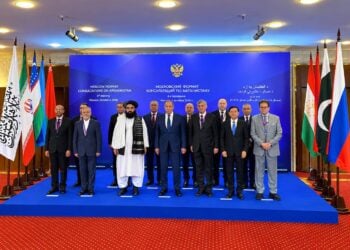
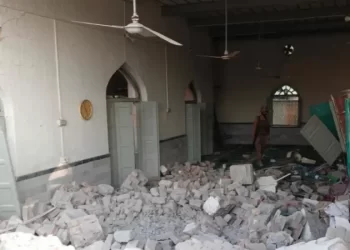
The TTP, one of the main allies of the Taliban, has gained access to all necessary financial and military resources since the group took power in Afghanistan and has grown stronger over time. According to a United Nations Security Council report, between 4,000 to 6,000 TTP fighters are present in the provinces of Nangarhar, Kunar, Paktia, Paktika, Logar, and Khost. Noor Wali Mehsud, the leader of TTP, is also in Afghanistan. This group has carried out deadly attacks against the Pakistani government, leading to a deterioration in relations between the Afghan Taliban and Islamabad. The Pakistani government claims that the Taliban have failed to fulfill their promises regarding the containment of the TTP and that this group operates freely under the protection of the Afghan Taliban. Pakistan has long increased pressure on the Afghan Taliban to control the TTP; however, it appears that the regime in Kabul – though sometimes taking superficial actions to address Pakistan’s demands – has, in practice, shown no signs of suppressing the TTP. The group continues to receive unwavering support from the Afghan Taliban.
At one point, in response to Islamabad’s increasing pressure, it was reported that Mullah Hibatullah, the leader of the Taliban, issued a decree declaring the war in Pakistan forbidden (haram). However, despite Islamabad’s insistence, the Afghan Taliban refused to make this decree public. It seems that either no such decree existed, or Mullah Hibatullah, fearing internal group conflicts, chose not to make it public. Even if there was no other evidence proving the Taliban regime’s consistent support for the TTP, the mere refusal to publicize this decree indicates the deep ideological ties between the two extremist Islamic groups and reveals why expecting the Taliban to fight the TTP is nothing more than wishful thinking.
With full support from the Afghan Taliban, the TTP has now become a major challenge for the Pakistani government. The Pakistani military has launched an operation named “Azm-e-Istehkam” (Commitment for Stability) to suppress the TTP, though it is unlikely to achieve significant success. If the Pakistani military had not engaged in creating, equipping, and consistently supporting extremist Islamic groups since the Soviet invasion of Afghanistan – aiming to gain strategic depth in Afghan territory – we would not be witnessing today’s booming terrorism industry, and both countries would have avoided the disasters and misery they now face. The Pakistani military, which has long sustained itself by fostering the terrorism industry and maintaining control over the situation, may never have imagined that Islamic extremism could become a bigger headache, even more dangerous than what we are witnessing today.
Take a look at the Afghan Taliban. For a long time, the Pakistani military provided full support to this group, enabling them to eventually gain political power in Afghanistan. The situation became even more interesting when the Taliban gradually began to reject Islamabad’s influence and, in the end, with full support for the TTP, sought to reverse the Pakistani military’s cherished dream of “strategic depth.”
The Pakistani military has not only failed to establish a puppet regime in Afghanistan – at the beginning of the Taliban’s rise to power, when the then-chief of Pakistan’s Inter-Services Intelligence (ISI) was displaying power in Kabul, this failure was not expected; but now, most facts suggest that the current situation in Afghanistan is not in the Pakistani military’s favor – but they are also unable to compel their old allies to contain the TTP, let alone hand over or suppress the leaders of this group. The Afghan Taliban are no longer willing to dance to the Pakistani military’s tune at every signal. This should be a significant lesson for the military of that country, assuming they have lost their old overconfidence and become somewhat more realistic. Has the Pakistani military realized that it is in the interest of peace and democracy to abandon their support for the terrorism industry? Unfortunately, there is still no sign of such a change within the Pakistani military, and it is not expected that we will witness such a major transformation any time soon. Thus, even if “Azm-e-Istehkam” intends to, it will not be able to weaken terrorism, let alone eradicate it. On the contrary, terrorism will likely be reproduced through this operation – something the Pakistani military may not entirely mind. With terrorism flourishing, the Pakistani military will extend its longevity and enjoy more time in power in the country.
Indeed, the Taliban’s support for the TTP and other terrorist groups in Afghanistan is part of Mullah Hibatullah’s global jihad agenda – a program that the current circumstances do not require the Taliban to speak much about, but there is no doubt that with their takeover of Afghanistan, the group has taken the first step toward implementing their global jihad plan and is now in the process of executing its subsequent stages. Even Islamists with the fewest resources nurture the dream of expanding jihad worldwide, let alone Mullah Hibatullah, who has a country under his control. He has repeatedly spoken explicitly about continuing jihad until the Day of Judgment, showing that the Taliban leader is not easily deterred. The longer the group remains in power, Mullah Hibatullah’s ambitions will grow.
Therefore, the notion that the Taliban is merely a local jihadist organization with limited goals within Afghanistan is more misleading than enlightening. This view is deceptive because it only skims the surface of reality and shows little interest in a deeper analysis of the situation. This perspective – that the Taliban is a local movement with no grand ambitions beyond Afghanistan – is propagated by the Taliban’s friends to justify the group’s presence in power: Look, you can get along with the Taliban because they have no intention or plans to pursue global jihad, and they consider it over. This way, the Taliban is reduced from a terrorist group with global and regional objectives to a localized organization confined to Afghanistan. However, the mere presence and activities of international terrorist groups – including the TTP – within Taliban-controlled territory is proof that the global jihad project has never stopped. Even if the Taliban are unable to declare it openly, they will secretly and unofficially continue to pursue it, as jihad is a persistent concern for all Islamists.
You can read the Persian version of this analysis here:
You can read part 1 here: Part 1: The Friends of the Taliban
You can read part 2 here: Part 3: The Friends of the Taliban