• 8AM.MEDIA
  • ویب‌سایت فارسی
  • پښتو ویب‌پاڼه
  • اۉزبېکچه ویب‌سایت
  • Podcast
Tuesday, September 15, 2026
Hasht-e Subh
  • Home
  • News
    • Afghanistan News
    • World News
  • Opinion
    • Editorial
    • Analysis
  • Reports
    • Daily Reports
    • Investigative Reports
  • Society
    • The story of people
  • Women’s Word
  • Columns
    • Three Years After Afghanistan’s Fall: The Taliban’s Resurgence
    • Towards Equality
    • The Resurgence of the Taliban: Two Years Since Afghanistan’s Fall
    • Hebatullah Report Special Edition
    • Resistance for Education Special Edition
    • Special Column on Taliban’s Education Curriculum
    • Nawroz
  • Interviews
  • Contact Us
    • About Us
    • 8AM MEDIA Annual Awards
    • Submit an Article to Hasht-e-Subh
  • 8am.mediaBack
Subscribe
No Result
View All Result
  • Home
  • News
    • Afghanistan News
    • World News
  • Opinion
    • Editorial
    • Analysis
  • Reports
    • Daily Reports
    • Investigative Reports
  • Society
    • The story of people
  • Women’s Word
  • Columns
    • Three Years After Afghanistan’s Fall: The Taliban’s Resurgence
    • Towards Equality
    • The Resurgence of the Taliban: Two Years Since Afghanistan’s Fall
    • Hebatullah Report Special Edition
    • Resistance for Education Special Edition
    • Special Column on Taliban’s Education Curriculum
    • Nawroz
  • Interviews
  • Contact Us
    • About Us
    • 8AM MEDIA Annual Awards
    • Submit an Article to Hasht-e-Subh
  • 8am.mediaBack
No Result
View All Result
Hasht-e Subh
No Result
View All Result

Part 1: The Friends of the Taliban

Aamonpur Aamonpur
21 October 2024 - Solar Hijri Date: 1403/07/30 [t_time:1729532393]
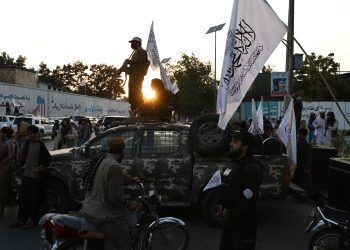
Taliban militants ride in a convoy through Kabul, as evening falls over the city. The Taliban's ties with terrorist groups, like al-Qaeda, persist. (Photo Credit: Wakil KOHSAR / AFP)

Wakil KOHSAR / AFP

Introduction

In comparison to the enemies of the Taliban, the friends of this group are in a better situation, which is quite normal and natural. With the return of the Taliban’s Emirate to power, Afghanistan has turned into a haven for local and international terrorist organizations and networks, allowing them to fully utilize resources to grow and strengthen themselves. The Taliban, by supporting these terrorist organizations and networks, aim to extort concessions from the world on the one hand, while on the other, they rely on the active presence of these groups for their survival in power. Even ISIS, which currently opposes the Taliban, in a way helps maintain the Taliban’s hold on power. Therefore, the Taliban do not have a strong and resolute determination to eliminate ISIS. It is true that even if the Taliban were serious about eradicating ISIS, they would still be unable to do so. However, there are factions within the Taliban that may not even have the slightest interest in weakening ISIS, let alone destroying it. ISIS is a project that benefits the Taliban more if it continues to exist rather than being completely wiped out.

During the Karzai and Ghani governments, powerful factions supported the Taliban with the intent of sidelining their rivals and retaining power for longer. This deadly game ultimately led to the disgraceful collapse of Ghani’s government, resulting in harm to everyone involved—whether those playing the Taliban’s fifth column or those opposing them. The deadly nature of this game does not mean that the current regime in Kabul, or certain factions within it, will refrain from repeating it. In corrupt countries like Afghanistan, where nothing endures except corruption, an opportunistic regime driven by short-term gains has always been in power. In such chaotic circumstances, most leaders lack a strategic vision and try to exploit the crisis for their own gain. In the current ongoing game, both the Taliban and their friends are partners in crime and protectors of the caravan. ISIS or any other terrorist group will only be suppressed when it disregards the control strategy or challenges it.

Now that the Taliban control the game, they benefit the most from the current chaotic situation. In this scenario, the conditions of countries like Russia and Iran are noteworthy. They are still stuck in the foolish delusion that the Taliban are serious about fighting ISIS and therefore believe that supporting the regime in Kabul is necessary. Even the Americans are under the same illusion, believing that the Taliban are combating terrorist groups, including ISIS. U.S. President Joe Biden even suggested that there was cooperation with the Taliban in suppressing al-Qaeda, claiming that the network was crippled and no longer capable of attacking U.S. interests. However, the Pentagon quickly refuted Biden’s claim, and before that, multiple reports from the UN Security Council had accurately shown that al-Qaeda, with the full support of the Taliban, was significantly strengthening itself. In this article, which will be presented in several parts, we will briefly examine the status of the Taliban’s friends and the consequences of increasing cooperation among terrorist groups in Afghanistan.

Al-Qaeda Network

The al-Qaeda network was founded in 1988 by Osama bin Laden, a year before the Soviet forces withdrew from Afghanistan and the end of the jihad in the country. The establishment of al-Qaeda at a time when the Soviets were on the verge of defeat indicated the larger plans the leaders of global jihad had in mind. According to the leaders of this terrorist network, Afghanistan’s jihad was the first phase and a trial run for global jihad, where Islamic extremists aimed to test their capacity and capabilities. After the Soviet defeat in Afghanistan, Ayman al-Zawahiri, who succeeded bin Laden, remarked: “The battle with the Soviets was an educational phase to prepare the Mujahideen of Islam for the battle against the new global superpower, the United States. Moreover, it provided an opportunity for Arab, Pakistani, Turkish, Central Asian, and East Asian Muslims to fight alongside each other in Afghanistan’s jihad against the enemies of Islam.” The managers of the global jihad project required an open nursery and a free space where terrorism could proliferate freely to continue their mission.

With the collapse of the Soviet Union in Afghanistan, Osama bin Laden and Ayman al-Zawahiri regarded the country as one of the nurseries for a new generation of jihadists. The rise of the Taliban allowed them to achieve this goal, turning Afghanistan into a hub of terrorism in the region. However, the U.S. invasion of Afghanistan in 2001 disrupted the plans for global jihad and led to shifts in the geography of terrorism. Despite this, Afghanistan, as an Islamic country with conditions favorable for the growth and reproduction of jihadists, never fell out of the Islamist’s crosshairs. Terrorists have exploited every available opportunity to return to Afghanistan. Now that the Taliban controls the country, al-Qaeda and other terrorist groups are striving to complete their unfinished project of establishing a terrorism nursery in Afghanistan.

According to credible reports, 300 al-Qaeda fighters, along with their families, numbering around 2,000 people, are currently in Afghanistan. The UN Security Council reports that this network has established training bases in Helmand, Nangarhar, Badghis, Zabul, and Nuristan. Al-Qaeda members serve as advisors to the Taliban, and some hold important positions within the Taliban regime. While Ayman al-Zawahiri, the leader of al-Qaeda, was killed in Kabul—possibly due to intelligence provided by Kandahari Taliban in their rivalry with the Haqqani network—the relationship between al-Qaeda and the Taliban remains strong and enduring. There has been no tangible action from the Taliban that signals any hostility toward al-Qaeda. This group has never clashed with al-Qaeda and has always, as an ideological ally, hosted and provided safe havens for them in various provinces.

You can read the Persian version of this analysis here:

بخش نخست: دوستان طالبان | روزنامه ۸صبح


You can read part 2 here: Part 2: The Friends of the Taliban
ShareTweetSendSendShare

Related Posts

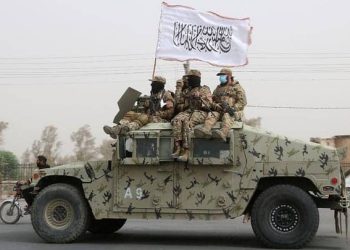
Taliban fighters atop a U.S. Humvee in Kabul, marking their takeover as the group’s flag waves from the vehicle. (Photo Credit: AP)
Analysis

Part 6 and Final: The Friends of the Taliban

19 November 2024 [t_time:1732004866]
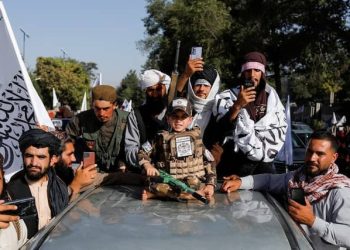
Taliban insurgents, including a child soldier, armed and draped in their flag, occupy a military vehicle amidst rising drug trade allegations. (Photo Credit: REUTERS | Representational Image)
Analysis

Part 5: The Friends of the Taliban

17 November 2024 [t_time:1731846824]
A Taliban ranger patrols through a bustling Kabul square, accompanied by armed militants, highlighting the group's presence in urban settings. (Photo Credit: Wakil KOHSAR / AFP)
Analysis

Part 4: The Friends of the Taliban

9 November 2024 [t_time:1731174062]

Latest

Loading latest news...

Popular stories

  • Hamza bin Laden - the son of Osama bin Laden (Photo: Social Media)

    Al-Qaeda Releases Hamza bin Laden Message on 9/11 Anniversary

    Share
    Share Tweet
  • Sajjad Haider Khan: Those with Valid Visas Will Continue Their Studies in Pakistan

    Share
    Share Tweet
  • Scholarship to Deportation: Pakistan Orders Mass Expulsion of Afghanistan Citizen Medical Students

    Share
    Share Tweet
  • UN Report Reveals Shifts in Family Attitudes and Rise in Domestic Violence in Afghanistan

    Share
    Share Tweet
  • Taliban Shoot Young Man from Herat After Torturing Him with Hands Tied

    Share
    Share Tweet

Podcast

Insights
Insights

Join Lynne O’Donnell for 8AM’s podcast series, Insights.
Lynne talks with generals, diplomats, soldiers, journalists, politicians, activists, people who have front row seats for conflicts around the world, and citizens with a story to tell, happy or sad. For this first series, Afghanistan is the focus. Lynne and her guests talk about the collapse of the republic in August, 2021, and the impact since — for the people of Afghanistan, for the security of the region, for the safety of the world. It’s important, interesting and insightful.

Insights/22: Controlling the Narrative with Mina Sharif
byinsights8am

Controlling the Narrative

Lynne O’Donnell talks with Mina Sharif, author, activist, women’s rights campaigner, educator and mentor. They discuss who controls the narrative and who speaks for Afghanistan’s people when the Taliban appear to have seized control not only of the country but of the message, too.

Have a listen

Insights/22: Controlling the Narrative with Mina Sharif
Episode play icon
Insights/22: Controlling the Narrative with Mina Sharif
Episode Description
Episode play icon
Insights/21: Media Meltdown with Zahra Joya
Episode Description
Episode play icon
Insights/20: Terror Inc with Scott Richards
Episode Description
Episode play icon
Insights/19: Busting Stereotypes with Bushra Gohar
Episode Description
Episode play icon
Insights/18: Media Matters with Waliullah Rahmani
Episode Description
Episode play icon
Insights/17: What Goes Around Comes Around with Sima Samar
Episode Description
Search Results placeholder
Hasht-e Subh

8AM Media, also known as Hasht-e-Subh Daily, stands as Afghanistan's premier independent and non-profit newspaper, resonating as a beacon of journalistic integrity since its establishment in June 2007 by esteemed Afghan journalists and human rights advocates. With a steadfast commitment to citizen journalism and civic education, Hasht-e-Subh Daily has earned its place as the most esteemed publication in the nation.

Publisher: Sanjar Sohail
Email: [email protected]
Executive Director: Parwiz Kawa
Email: [email protected]

Read More

Buying and Selling Aid: What Is Happening Inside the Taliban’s Directorate of Refugees and Returnees Affairs in Kunduz?

International Day of Democracy: All Fundamental Rights Denied to People of Afghanistan

Badakhshan Booksellers: Book Market Has Almost Collapsed

World Democracy Day: UNESCO Says Freedom and Human Rights Are Foundations of Democracy

Mandatory Turbans, Mullah Advisers: Zabul Health Workers Alarmed by Taliban Interference

Editor’s Choice

Every Saturday morning, 8AM MEDIA English Services Department will guide you through the week’s biggest stories from Afghanistan and the international community.

Subscribe

© 2026 - ©Hasht-e Subh Daily

No Result
View All Result
8am.Media
پښتو ویب‌پاڼه
ویب‌سایت فارسی
اۉزبېکچه ویب‌سایت
  • Home
  • News
    • Afghanistan News
    • World News
  • Opinion
    • Editorial
    • Analysis
  • Reports
    • Daily Reports
    • Investigative Reports
  • Society
    • The story of people
  • Women’s Word
  • Columns
    • Three Years After Afghanistan’s Fall: The Taliban’s Resurgence
    • Towards Equality
    • The Resurgence of the Taliban: Two Years Since Afghanistan’s Fall
    • Hebatullah Report Special Edition
    • Resistance for Education Special Edition
    • Special Column on Taliban’s Education Curriculum
    • Nawroz
  • Interviews
  • Contact Us
    • About Us
    • 8AM MEDIA Annual Awards
    • Submit an Article to Hasht-e-Subh
  • 8am.media

© 2026 - ©Hasht-e Subh Daily