You can read part 1 here: Part 1 – The Enemies of the Taliban
You can read part 2 here: Part 2 – The Enemies of the Taliban
You can read part 3 here: Part 3 – The Enemies of the Taliban
You can read part 4 here: Part 4 – Enemies of the Taliban
Summary
1) Among all the forces active against the Taliban, women have the most prominent and active role. Their persistent resistance has proven that they are the most serious in their opposition to the group. This enmity is deep and lasting because the Taliban’s hostility toward women is far more ideologically intense compared to other political entities and phenomena. From the Taliban’s perspective, society can only be “reformed” by properly controlling women. More than three years have passed since restrictions were imposed on the lives of all citizens, especially women. Although the regime’s oppressive policies have worked effectively, it seems the Taliban are still not entirely satisfied with the current state of affairs. As a result, they continue to enforce misogyny with even greater intensity. However, the heightened oppression has not only failed to put an end to women’s resistance but has also motivated protestors to continue their demonstrations against the Taliban’s restrictions with more vigor. While this is encouraging, it is by no means sufficient. Women’s protests alone cannot dismantle the Taliban regime, although they have managed to pose challenges to one of the most misogynistic political regimes in the world. The Afghan women’s movement can only achieve its goals if it garners the active support of the rest of the population. Unfortunately, there is currently no promising sign of the broader public joining this protest movement. Women have no choice but to rely on their small but active and influential force in confronting the Taliban.
2) While military fronts cause the Taliban some trouble with sporadic attacks in cities, they are not yet powerful enough to present a significant military challenge to the group. We do not know the plans of the two active military fronts opposing the Taliban, but what is certain is that with their current behavior and approach, they are unlikely to succeed. The Taliban cannot be brought down by assassinating a soldier or at most a low-ranking member. Political forces active outside the country have also failed to make any significant progress in the political arena, despite more than three years passing since the Taliban’s rise to power. It is unlikely that these forces will soon put aside their differences and take coordinated and cohesive action against the Taliban. Many of the politicians who now oppose the regime in Kabul amassed wealth and power during the twenty years of the U.S. presence in Afghanistan and are accused of widespread corruption and political incompetence. Now, having taken refuge from the Taliban in various countries, they are once again waiting for the “international community” to take action against the regime in Kabul and reinstate them. However, it seems that the desired “employer” is currently only interested in “engaging” with the Taliban regime and is not keen on rehiring the failed Afghan politicians.
3) Among the enemies of the Taliban, left-wingers are the most disorganized and delusional. Having been ignored and repeatedly defeated in Afghanistan’s political arena, they have turned into a perpetual furnace of anger and hatred toward the Taliban and other political groups. This anger mostly plays out on social media, where they vent their frustrations, as they have no other outlet. The old left has fallen so far behind the current reality of Afghanistan that it may never catch up, or at least, synchronize with it. The small leftist organizations and groups, whose cohesion is largely based on their members’ financial interests and family ties, were unable to make a meaningful impact even during the twenty years of Western presence in Afghanistan when there was ample opportunity for political activity. Now, with the Taliban banning even the former jihadist parties and criminalizing the mere mention of political parties, their chances of success seem even slimmer.
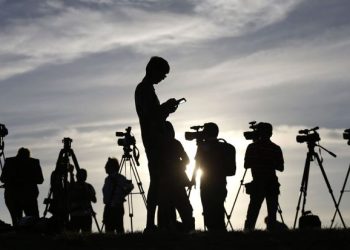
4) However, the exiled media, which the Taliban have declared war on, have been successful in their efforts and have effectively challenged the group in the propaganda war. These media outlets, operating outside Afghanistan, have sided with the truth and are striving to inform the public about the grim reality under Taliban rule without censorship. Suppose the enemies of the Taliban, supported by such powerful media, can better represent themselves in Afghanistan’s political sphere. In that case, the group will certainly face severe defeat and collapse. But currently, all forces and political factions opposed to the Taliban are working in scattered and uncoordinated fronts, and there is no indication that a unified large political front against the group will emerge. This disunity prolongs the regime’s lifespan in Kabul.
Considering what has been said, the enemies of the Taliban are not without achievements in the ongoing conflict, but they have not yet managed to excel as expected. Meanwhile, the Taliban and their allies have done their homework well over the past three years and have been relatively successful in maintaining control—especially compared to their adversaries. The longer it takes for the enemies of the Taliban to recover from the shock of the fall of Kabul on August 15, 2021, the more the Taliban and their allies will solidify their power in Afghanistan.
You can read the Persian version of this analysis here:
بخش پنجم و پایانی – دشمنان طالبان | روزنامه ۸صبح
You can read part 1 here: Part 1 – The Enemies of the Taliban
You can read part 2 here: Part 2 – The Enemies of the Taliban
You can read part 3 here: Part 3 – The Enemies of the Taliban
You can read part 4 here: Part 4 – Enemies of the Taliban