
Abstract
Afghanistan is a country in the heart of Asia. Being Muslim is a characteristic of the majority of this country’s population.
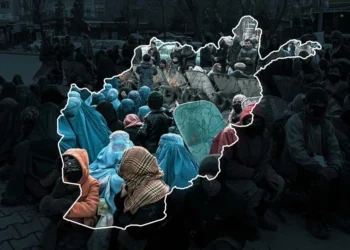
On August 15, 2021, the government of the Islamic Republic of Afghanistan, led by Mohammad Ashraf Ghani, collapsed, and the Taliban regime dominated Afghanistan for the second time.
2. Causes of the Taliban’s Return to Power
The Taliban are among the most extreme Islamist fundamentalist movements. From 2001 to 2021, they carried out hundreds of suicide attacks in Afghanistan, killing thousands of citizens of Afghanistan, including women and children. They declared music and fine arts contrary to Islamic sharia and banned them, prohibited the education of women in schools and universities, altered the content of school and university textbooks in line with their extremist beliefs, suppressed the media, reintroduced executions and floggings of men and women, declared it forbidden even to look at women’s faces or hear their voices, presented suicide bombings and explosions in textbooks as legitimate religious and Islamic acts, and carried out hundreds of similar measures in Afghanistan under Taliban rule in the twenty-first century.
The actions and activities of this movement, both before and after the fall of the republic, match every indicator of terrorism. For this reason, the movement has been recognized as a terrorist group by some countries, including the United States, and several European countries.
After the Taliban seized power in Afghanistan for the second time, the group transformed into a regime based on state terrorism and now bears the character of a terrorist regime.
The Taliban’s style of governance resembles that of no other country, and in their view, all other countries are places of moral corruption. For this reason, they maintain ties with many extremist Islamist movements in various parts of the world. The findings of this research show that groups such as al-Qaeda, the Islamic State (ISIS), the Pakistani Taliban, Yemen’s Houthis, Hamas, Pakistan’s Lashkar-e-Taiba, and similar groups maintain relations with the Taliban, and in the current situation, forces from these movements are present in various parts of Afghanistan. As a result, Afghanistan under Taliban rule has become a haven for terrorism.
In addition, due to the changes made to school and university textbooks, the transformation of the educational environment in line with the Taliban’s worldview, and the presence of individuals who previously took part in suicide attacks and terrorist operations and now work as schoolteachers and university professors, it can be said that a large portion of Afghanistan’s students today are being raised based on extremist ideas.
The findings of this research indicate that the security of citizens in countries across the region and the world, including Pakistan, India, Russia, Europe, the United States, and others, will be threatened by terrorism in the future, with Afghanistan as the epicenter of that threat. This is because, on one hand, many extremist Islamist movements have established a presence in Afghanistan in coordination with the Taliban, and on the other hand, more than 40,000 religious seminaries have been established in Afghanistan that operate in line with the Taliban’s worldview. If these seminaries produce even a single extremist individual each year, it would mean that more than 40,000 extremist recruits enter society annually. On this basis, the author concludes that if this trend continues, within the next ten years Afghanistan will become one of the largest centers for producing extremism in the world.
The research methodology of this study follows the Chicago style. In addition, it draws on scholarly articles, library sources, reports from credible media outlets, and interviews with several officials from Afghanistan’s former government who now live abroad, as well as several young people residing inside Afghanistan.
Keywords
Afghanistan, Taliban, terrorism, Islam, home of terrorism, international peace and security, human rights
Introduction
The Encyclopaedia Britannica defines terrorism as “rule by fear,” meaning acts of violence, killing, suicide attacks, bombings, hostage-taking, beatings, and other actions carried out to instill fear and advance political or ideological goals.
The Taliban is one of the movements that possesses many characteristics of terrorism. For this reason, several countries, international organizations, researchers, and civil society activists have described the group as a terrorist movement.
The Taliban seized power in Afghanistan for the second time on August 15, 2021. Afterward, they closed the doors of all schools and universities to women, reintroduced punishments such as execution, flogging, and stoning, banned the broadcast of images of living beings on television, declared women’s work and business contrary to Islam, and confined them to their homes. According to published reports, they have also detained several women civil society activists and subjected them to sexual violence. Reports have also been published regarding forced marriages of underage girls and instances of self-immolation by some of them to escape this situation.
As an extremist Islamist movement, the Taliban expanded their ties with other extremist Islamist groups. From al-Qaeda to the Pakistani Taliban and other similar groups, all strengthened their relations with the Taliban, since the Taliban were no longer a fugitive group but held territorial control over a country called Afghanistan.
This research examines the presence of Islamist terrorist movements from various countries in different regions of Afghanistan.
Statement of the Problem
In today’s world, when terrorism is discussed, minds are often drawn toward extremist Islamist movements. In recent decades, numerous events have occurred, such as the September 11 attacks in the United States, suicide attacks in Nigeria, the October 7 attack on Israel, suicide attacks and bombings in Afghanistan after 2001, the Mumbai attacks in India, and terrorist operations in Pakistan, Europe, and other countries. Based on this premise, the author of this research has focused the study on extremist Islamist movements.
In the author’s view, these movements generally show little tendency toward peaceful coexistence. Existing evidence also shows that since the Taliban’s return to power in 2021, a number of these groups have established themselves in various cities across Afghanistan, and Afghanistan under Taliban rule has become a home of terrorism.
The central question of this research is what factors have turned Afghanistan into a base for groups such as al-Qaeda, the Islamic State, and other extremist Islamist movements.
Objectives of the Research
The current research was conducted to achieve the following objectives:
- To verify the presence of global terrorists in Afghanistan;
- To identify common ground between the Taliban and other terrorist groups such as al-Qaeda and similar organizations;
- To examine the future security of citizens of various countries, particularly the United States, should the Taliban regime persist;
- To identify the future of Afghanistan and its youth, given the existence of state terrorism (the Taliban), the presence of foreign terrorists in the country, and the growing number of religious seminaries aligned with Taliban beliefs.
Central Research Question
The Taliban’s conduct, from the group’s inception to the present, matches the defining characteristics of terrorism, and most countries and scholars have identified the Taliban as a terrorist group, with some describing it as the worst terrorist group of all. Since 2021, following their renewed takeover of Afghanistan, this group has turned the country into a haven for terrorism, and this represents the greatest threat to the security of citizens of all countries, particularly the United States and Europe. Nevertheless, the international community, and Western countries in particular, have largely overlooked this major threat during this period.
The central question is: what assurances or guarantees has the Taliban given the international community, particularly Western powers, that have led these powers to engage with this terrorist movement and overlook the threats of terrorism and Islamist extremism?
Research Hypothesis
It appears that the Taliban have numerous lobbyists in Western countries and among the world’s major powers, and these lobbyists have concealed the group’s terrorist face and dangerous reality.
Research Methodology
This research was conducted using the Chicago style. In writing it, the author drew on library sources, news and reports from credible media outlets, interviews with several officials of Afghanistan’s former government, clandestine interviews with several citizens of Afghanistan currently living under Taliban rule, and certain field observations.
Part One: General Overview
1. Causes of the Fall of the Republic
The republican government, named the “Islamic Republic of Afghanistan,” was established in Afghanistan in 2001 with the support of the international community, particularly the United States. However, the republic collapsed in August 2021, and its president, Mohammad Ashraf Ghani, fled to the United Arab Emirates.
The most important causes of the republic’s collapse are as follows:
High levels of corruption in Afghan governments from 2001 to 2021: As a result of widespread financial and administrative corruption within the Afghan government, security in the country deteriorated steadily during the republican era, anti-government terrorists infiltrated state structures, poverty increased, the quality of security forces declined, and ultimately the republic collapsed. From 2001 to 2010, financial assistance from the international community and the United States to Afghanistan was substantial. From 2010 onward, the level of this assistance decreased but was not cut off entirely. For example, from 2002 to 2020, Washington contributed $88 billion to the security sector, $36 billion to the civilian sector, and $3.9 billion to the humanitarian sector in Afghanistan. Additionally, in 2021, the year the republic fell, the United States had pledged an additional $3.3 billion in military assistance to Afghanistan. This aid, along with assistance from Europe, Japan, and other countries, was extensive but did not have a significant positive impact on the situation in Afghanistan. In the author’s view, a large portion of this aid was embezzled by senior Afghan government officials and a number of foreign officials involved in the aid process, and joint financial and administrative corruption formed between Afghan government officials and certain foreign officials. The author of this study interviewed a former general of Afghanistan’s Ministry of Interior who now lives abroad. The general told the author that he had once told a U.S. serviceman at Bagram Airfield that the vehicles being purchased for them were far too expensive, and that the same vehicles could be bought for 60 percent less in Dubai. The American serviceman, however, angrily replied that the money for the vehicles had been paid by the United States, not by them, and that instead of criticizing and offering suggestions, they should be grateful. The general added that after hearing this, he remained silent in front of the American serviceman. Furthermore, in the author’s view, several senior Afghan officials also embezzled a large share of international aid. Hamid Karzai and several members of his family, Mohammad Ashraf Ghani and members of his family, particularly his wife Rula Ghani, several finance ministers, national security council advisors, ministers of urban development and housing, senior customs officials, ministers of defense and interior, provincial governors, mayors, ministers of energy and water, the head of the state power utility, heads of state banks, ministers of communications and information technology, the Afghanistan Telecom Regulatory Authority (ATRA), Fazl Mahmood Fazly, and certain influential local figures such as the family of Mohammad Qasim Fahim, Atta Mohammad Noor, Mohammad Karim Khalili, Mohammad Younus Qanooni, Mohammad Mohaqiq, Abdullah Abdullah, Amrullah Saleh, the Rahmani family, and similar individuals are, in the author’s assessment, among those who held the principal reins of power and wealth between 2001 and 2021. In the author’s view, the companies and assets of these individuals are now active in the United Arab Emirates, Swiss banks, Europe, the United States, Canada, Turkey, and other countries, and a significant share of this wealth was derived from aid paid by taxpayers of Western countries, particularly the United States. For this reason, the author concludes that Western financial assistance to Afghanistan failed to establish security, reduce poverty and violence, or eliminate terrorism, and ultimately led to the collapse of the republic, after which the Taliban regime took control of Afghanistan (Aminian, Bahador, 2024).
Incompatibility of Afghanistan’s political system with the country’s needs and realities: Afghanistan’s political system, under the constitution ratified in 2002, was presidential in nature. From the outset, critics of the presidential system argued that this type of system could not function effectively or be accountable in Afghanistan. They contended that a presidential system concentrates power in the office of the presidency, and that if the president were of Pashtun ethnicity, he might adopt an ethnically biased view toward the Taliban, most of whose members are also Pashtun, which could increase insecurity in Afghanistan in the future. Critics’ concerns were, to some extent, later reflected in the conduct of certain Afghan presidents. General Mohammad Daud Daud, a senior Ministry of Interior official who was assassinated in Takhar province during Hamid Karzai’s presidency, inflicted heavy losses on the Taliban in his efforts to secure northern Afghanistan. However, Hamid Karzai accused him of massacring Pashtuns in the north, even though he had fought only against the Taliban, who suffered heavy casualties in that conflict. Afterward, Hamid Karzai obstructed the continuation of General Daud’s extensive operations against the Taliban, and some time later, General Daud was assassinated in Takhar province. Similarly, Mohammad Ashraf Ghani, Afghanistan’s former president, repeatedly stated during his election campaigns that prisoners held on charges of Taliban membership were predominantly Pashtun, describing this situation as unjust. While this statement carried ethnic overtones, it was also true that a large proportion of Taliban fighters were, and remain, ethnic Pashtun; however, this in no way means that all Pashtuns should be considered Taliban members or terrorists. In Afghanistan’s modern history, King Amanullah Khan, Mohammad Zahir Shah, and Mohammad Daud Khan were all Pashtun, yet held modern views and sought Afghanistan’s development. The proximity of Pashtun-inhabited areas to the Pakistani border led many Pashtuns to migrate to Pakistan, where some came under the influence of extremist ideas in that country’s religious seminaries, a factor that contributed to their increased presence within Taliban ranks. Nevertheless, Pashtuns include many intellectuals, cultural figures, civil society activists, and scholars, and there is no doubt that the majority of them oppose the Taliban’s terrorist acts.
Influential Taliban lobbyists in powerful countries: Several citizens of Afghanistan who migrated to the United States and other Western countries years ago and acquired citizenship there are among the most important Taliban lobbyists within Western political structures. They have consistently portrayed the Taliban as a peaceful movement and a reliable partner for Western countries. These individuals have depicted the republic as a failed experiment and the Taliban as a lower-cost, more reliable alternative. In the author’s view, they have succeeded in encouraging world powers to support the Taliban. Taliban lobbyists are also active among Western and Arab countries, Russia, and others, and this is considered one of the important factors behind the collapse of the republic in Afghanistan.
Foreign power interference: In addition to the factors mentioned above, foreign interference was another cause of the republic’s collapse. During the republican era, civil liberties in Afghanistan were expanding, Western powers maintained a presence in the country, and laws were moving toward secularization. This trend was unacceptable to the Islamic Republic of Iran, which is why Iran increased its engagement with Taliban leaders to weaken and bring down the republic. Pakistan, too, worked toward the collapse of the republic due to its close ties with the Taliban. In the first week after the republic’s fall, Pakistan’s army chief was seen among Taliban members inside the Afghan presidential palace, the Arg. Additionally, in the author’s view, Taliban lobbyists in the United States had also persuaded the White House regarding the Taliban, and as a result, several countries around the world came to prefer a severely terrorist movement over the Afghan republic (Amrullah Saleh, 2025).
2. Causes of the Taliban’s Return to Power
The most important factors that paved the way for the Taliban’s return to power are as follows:
Weakening of the republican system in Afghanistan: As mentioned earlier, from 2014 onward, the republican system gradually weakened and ultimately collapsed in 2021. Following the fall of the republic, the Taliban took control of Afghanistan for the second time.
Shift in the United States’ view of the republic and the Taliban: The United States, as Afghanistan’s most important ally, changed its approach toward democracy and the republic in Afghanistan. The talks held in Qatar between U.S. representatives and the Taliban reflected this shift in policy. In the author’s view, the Taliban regained control of Afghanistan as a result of the agreements reached there.
Support from certain governments for the Taliban: Pakistan, Iran, Qatar, the United States, Turkey, the United Arab Emirates, Saudi Arabia, several European countries, and others established extensive contacts with the Taliban. Each of these countries, based on its own interests, favored the Taliban over the republic, and in the process, human rights as a universal value were disregarded.
Strategic error at the Bonn Conference: In 2001, when the international community and Afghan leaders gathered in Bonn, Germany, to design Afghanistan’s future, Taliban representatives were not present at the conference. At the time, many believed the Taliban had been eliminated and had no chance of returning. Several experts consider the exclusion of the Taliban from that conference to have been a strategic error.
A fundamentalist society: In the author’s view, a large segment of Afghan society holds religious fundamentalist tendencies. This has, on one hand, provided the ground for the Taliban’s resurgence and the continuation of their rule, and on the other, contributed to ongoing violence and the suppression of intellectuals and advocates of freedom. Numerous religious seminaries have been established in many cities and villages across Afghanistan, and are supported by local populations. Experience has shown that a number of these seminaries have provided fertile ground for the growth of fundamentalist ideas, which is why many of their teachers and students have shared an ideological affinity with the Taliban.
Rootless politicians in the Afghan presidency: Several citizens of Afghanistan who had returned from Western countries and held senior government positions in the presidential palace and the Ministry of Finance lacked a deep understanding of Afghan society, on one hand, and, on the other, saw their own futures in Western countries. As a result, they gave little thought to fundamental, long-term plans for Afghanistan. These individuals, alongside the president, held a significant share of governmental power.
3. Characteristics of the Taliban
Tribalism: One of the most important characteristics of the Taliban is their deep belief in ethnic values. If traditional Islam is the first pillar of Taliban ideology, ethnic nationalism is the second; and if ethnic nationalism takes precedence, traditional Islam takes second place. In other words, a blend of ethnic nationalism and traditional Islam is among the Taliban’s most defining characteristics. More than 95 percent of the group’s members are ethnic Pashtuns from Afghanistan.
Traditional Islamism: Stoning, flogging, extensive restrictions against women, the banning of music, mandatory dress codes for women, and the intrusion of religion into public and private spheres are, in the author’s view, indicative of the Taliban’s adherence to a traditional interpretation of Islam.
Precedence of the ummah over the nation: From the Taliban’s perspective, a fundamentalist Muslim in Gaza matters more than a non-Muslim citizen of Afghanistan. For them, the concept of the Islamic ummah takes priority over the nation and nation-building.
Hostility toward Western powers and secular governments: Although the Taliban outwardly claim to seek engagement with the world, in the author’s view, opposition to Western countries and secular governments constitutes a significant part of their belief system.
A dictatorial spirit: Like many extremist movements, the Taliban do not believe in democracy or peaceful dialogue. From their perspective, peace means surrender. They believe that the amir, government officials, clerics, and commanders should issue orders, while the people should only obey.
4. The Taliban’s Red Lines and Unchangeable Positions
In the author’s view, the Taliban maintain three fundamental red lines from which they are unwilling to retreat:
Ethnicity: The Taliban consider themselves Pashtun above all else and regard many local Pashtun customs and values as unchangeable, including the belief that the head of government must be Pashtun, that all citizens of Afghanistan must identify as Afghan, and that many local disputes should be resolved through jirgas and traditional gatherings rather than through official state institutions. The author nonetheless emphasizes that many intellectual and moderate Pashtuns oppose the Taliban.
Traditional Islam: The Taliban reject modernist and engagement-oriented interpretations of Islam. They apply Islam as it was interpreted fourteen centuries ago, combined with their own ethnic customs, as their standard of conduct, and regard this approach as unchangeable.
Women: In the author’s view, the Taliban’s position on women is unchangeable. He argues that as long as the Taliban remain in power, the doors of schools and universities will remain closed to women. Although some Taliban officials, such as Sirajuddin Haqqani, have spoken of limited education for women, even in their view,w education is not a natural, human right for women but rather a privilege that men, under specific conditions, may grant to women, such as education in midwifery or religious studies. Accordingly, in the author’s view, confining women to their homes is one of the Taliban’s unchangeable policies (Bek Khorasani, 2024).
Part Two: Taliban Domestic and Foreign Policy
1. Taliban Domestic Policy
The Taliban have not yet articulated codified principles for their domestic and foreign policy, but their conduct can help explain both.
Taliban domestic policy amounts to a form of religious-ethnic governance. Under this approach, Islamic clerics hold general and absolute authority over the people. Each Islamic cleric is regarded as a special representative of the Amir al-Mu’minin (Commander of the Faithful). As a result, clerics can humiliate people in the streets, refer them to prison, subject them to beatings, and do virtually anything they wish.
In addition to the clerics, Taliban government officials and their military commanders each act as independent rulers over the people’s affairs, and no individual has the right to criticize them. Social order under Taliban policy is built on repression and fear. They establish their desired social order through the repression of the people and the creation of fear.
In their domestic policy, the Taliban do not believe in assessing the psychological causes of crime; instead, emphasizing the Islam of 1,400 years ago, they believe in severe and degrading punishments. For this reason, their common punishments include execution, public flogging, stoning, and the public shaving of young men’s heads, among similar measures.
2. Taliban Foreign Policy
In their foreign policy, the Taliban outwardly claim to favor engagement with the world, but they do not regard human rights as a universal phenomenon, instead treating it as a domestic matter tied to their own internal policy. As a result, they seek relations with the world but do not allow other countries to criticize them over human rights and human freedoms (Amrullah Saleh, 2025).
Part Three: Afghanistan and Terrorism
First: The Ideological Principles of ISIS and Other Islamist Terrorist Movements
The Islamic State (ISIS) is among the most extreme and dangerous terrorist movements of the present era. This ideological movement holds that life should be lived in accordance with Islam as it existed 1,400 years ago, during the time of the Prophet of Islam. It holds that non-Muslims may be enslaved; that non-Muslim women may be used as concubines, and that raping them, if they are enslaved, is not a sin; that an Islamic state must be established to advance the lives of Muslims, and that within this Islamic state, women have no right to education, employment, or political participation; that punishments such as execution, amputation, flogging, and stoning are the primary forms of punishment; that an Islamic state must first be formed and then used to conquer the entire world; and that anyone who does not accept Islam must be killed, and if that person is a woman, the soldiers of the Islamic state may kill her or use her as a concubine.
In this movement’s view, Muslims are permitted only two days of joyful celebration each year: Eid al-Fitr and Eid al-Adha. Other celebrations, such as Christmas, Nowruz, and other cultural festivities, are forbidden, and anyone within the Islamic state who observes them is subject to punishment. Furthermore, non-Muslims can never become friends of Muslims, and therefore Muslims should not form friendships with non-Muslims.
These are the most important ideological principles of ISIS, principles that are shared not only by ISIS but also, on matters such as women, Islamic governance, the punishment system, and treatment of non-Muslims, by movements such as al-Qaeda, al-Shabaab, the Pakistani Taliban, and other similar groups (Washington Free Beacon, 2025).
Second: Shared Principles Among ISIS, Other Islamist Terrorist Movements, and the Taliban
The Taliban, ISIS, al-Qaeda, al-Shabaab, the Pakistani Taliban, and similar groups share serious and extensive commonalities. All of these movements hold shared doctrinal beliefs. All of them believe that people in an Islamic state may celebrate only twice a year, during Eid al-Fitr and Eid al-Adha, and oppose celebrations such as Christmas and other occasions.
All of them oppose the education and employment of women. The punishment system in all of these groups is based on execution, amputation, flogging, and stoning. All of them believe that life today should follow the way of life of Muslims 1,400 years ago. To achieve their goals, they employ bombings, suicide attacks, killings, kidnappings, and the instillation of fear, and all of them support the establishment of an Islamic political system.
Additionally, all of these groups believe that enslaving non-Muslim women is not a sin. Citing this same understanding, the author claims that numerous documents and reports show that the Taliban have committed rape against female prisoners, since they consider imprisoned women advocates of freedom to be infidels.
Third: Signs and Evidence of the Presence of Global Terrorist Movements in Afghanistan Under Taliban Rule
Documents and evidence show that Afghanistan, following the Taliban’s rise to power, has become one of the safest places for ISIS to operate and plan. Several ISIS members in Afghanistan are Muslims from Arab countries, Tajikistan, Uzbekistan, and other countries who have traveled to Afghanistan under Taliban rule, while others were previously Taliban members but now operate with ISIS.
The most important difference between the Taliban and ISIS, in the author’s view, lies in the territorial scope of the Islamic state. The Taliban believe that they must first bring Afghanistan under their complete control and then gradually spread their Islamic beliefs to other countries, particularly Western countries, and that if Afghanistan achieves military and economic power, it should attack other lands, similar to the Arab conquests 1,400 years ago. The author emphasizes that this aspiration is shared by many Islamist terrorist movements.
ISIS, by contrast, believes that activity should occur simultaneously in various regions, such as Iraq and the Levant, with other territories seized as quickly as possible.
In the author’s view, a form of cooperation has developed between the Taliban and ISIS in Afghanistan. Based on shared ideological ground and political interests, the Taliban have provided safe locations in Afghanistan for ISIS members and use them in two ways. Externally, they tell other countries that they are fighting ISIS and that, without the Taliban, ISIS would spread to those countries, and on this basis they seek international recognition of their regime under international law.
Internally, they also make use of ISIS within Afghanistan. The author claims that the Taliban target certain ethnic groups, minorities, and opponents through ISIS while attributing responsibility for these attacks to ISIS itself. The Taliban also regard ISIS as a reserve force, to be used as auxiliary fighters whenever a war is launched against them. In the author’s view, this type of cooperation exists in Afghanistan not only between the Taliban and ISIS but also between the Taliban and several other terrorist movements around the world.
You can read part two here:
Part II and Final: Afghanistan, the Home of Terrorism: Its Political Present and Future
You can read the Persian version of this analysis article here: