“Don’t worry. We will see each other in our university classroom again.”
After months of waiting, those words had finally come true. They had been the only source of comfort amid the uncertainty and turmoil of leaving or staying, offering a little hope during a difficult time.
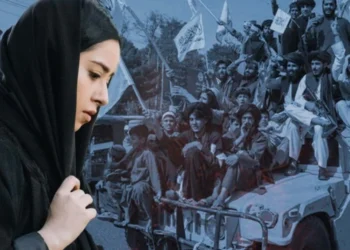
On September 6, 2022, the white flag bearing the inscription “There is no god but Allah, and Muhammad is the Messenger of Allah” had also been raised above the entrance gate of Kabul University. The wind waved it with a strange sense of calm and patience. The city and its people had gradually grown accustomed to the presence of Taliban fighters. Yet some still boiled with anger at the sight of them, muttering indistinct words under their breath. Many others, however, no longer felt the same fear they had experienced in the early days.
During one of the darkest periods in the country’s history, the only voices that shook Taliban rule were those of women protesters taking to the streets across Kabul. Their chants of “Bread, Work and Freedom” echoed everywhere. Some women stood on the front lines of the struggle, confronting the group at the cost of their lives. While some praised these women, others subjected them to repression and verbal abuse. Yet their resistance and determination became part of history, inspiring every young woman and man who believed in freedom. It was a history that must never be forgotten. These protests took place while Taliban fighters continued to violently suppress their opponents across Kabul, in its narrow alleys and main streets, both day and night, shooting them in bursts of gunfire.
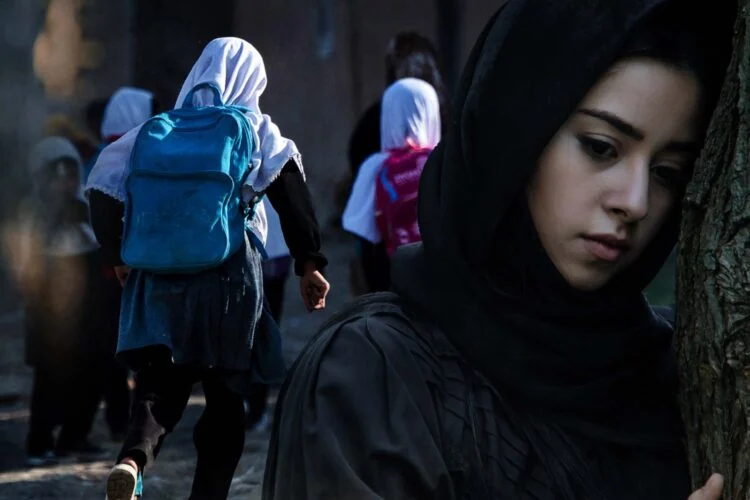
Amid the killings, repression and resistance, news that universities would reopen came as a surprise but also rekindled a spark of hope in students’ hearts. We were told that we could return to our classrooms once the universities resumed operations. So, complying with the mandatory dress code imposed on female students, which required a long black garment, a black face veil and gloves, leaving only the eyes visible, we set out for university once again.
Dressed in the compulsory black clothing, I made my way to the university, surrounded by darkness. The outfit felt unbearably heavy, and the merciless sunlight was absorbed by its black fabric. I got off at University Intersection, just a three-minute walk from the entrance gate. A strange feeling overwhelmed me. My hands and feet were trembling, and my mouth had gone dry. For the first time in months, I was walking toward the university gate again. With every step, my heartbeat grew faster.
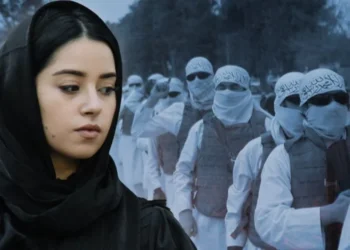
A sea of female students, all dressed almost identically, had lined up outside the entrance gate. Taliban fighters stood armed at all four sides. The sight was heartbreaking. A checkpoint had been set up to inspect students’ compliance with the dress code. I felt overwhelmed by grief, regret and helplessness. I realized that tears were streaming down my face, making it difficult to see where I was going. I wiped them away and joined the long queue for the inspection.
The students seemed to share the same feelings: fear, anxiety, silence and occasional glances toward the weapons and Taliban fighters. The silence was repeatedly broken by the shouting and insults of women assigned to the dress-code inspection booths, adding to the girls’ fear and anxiety. Some students were denied entry even though they had complied with the compulsory dress code. They turned back in tears, their faces filled with disappointment. Seeing them made me feel even worse. I had thought the girls might be insulted and sent back from inside the university for failing to follow the dress code. But in reality, the authorities were looking for something almost impossible to find, like searching for a needle in a haystack.
As the minutes passed, more students joined the queue. Despite the long line, only two girls at a time were allowed into the inspection booth. Time seemed to crawl, and everyone held their breath. The first class period was passing by while the inspections continued, but for the authorities, nothing seemed more important than checking the students’ clothing.
Finally, it was my turn. I entered the booth nervously and looked at the women who had recently been assigned there. They were all dressed in black and behaved harshly. Among them, I recognized a guard who had also worked there during the republic. She had changed so much. She looked sad and withdrawn. Her nail polish was gone, as was the kohl around her eyes and the warm expression she had once worn when trying to get to know and befriend the girls. She was no longer wearing her military uniform. Only her face was visible beneath the black clothing, and her eyes seemed to scream that she, too, was being forced to live under these conditions.
They carefully inspected my clothing to make sure it was neither short nor tight. They even checked underneath it, warning me not to be wearing jeans. Then they gave me several instructions and warnings: I was not allowed to remove my face veil inside the university; not even a single strand of hair could show from beneath my headscarf; and I had to pay attention to the buttons on my clothing. Only after that did they allow me to enter the university grounds.
I was so overwhelmed by the pressure that I barely realized how I had entered the university. I found myself at a fork in the road, between the main and secondary pathways. The place that had once been filled with smiling young women and men pursuing knowledge was now occupied only by female students with distressed expressions and trembling bodies. Each had entered the university after enduring the shock of the inspection and listening to the warnings. I had always preferred taking the wide main pathway to reach my faculty. But that day, afraid of the Taliban fighters, I chose the narrower side route instead.
The first class period was nearly over, yet I no longer felt the excitement or motivation I once had to get to class on time. My steps were slow and hesitant. After witnessing what had happened, the happiness I had felt the day before the university reopened had given way to despair and hopelessness. It was clear from the beginning that such harsh treatment and injustice would be unbearable in an academic environment, and that the university doors would soon close to girls once again.
With a troubled mind and trembling hands, I reached my faculty and then my classroom. Nothing was as it had been before. The atmosphere among students and across the faculty was filled with hopelessness and a sense of helplessness. I opened the classroom door and looked into the eyes of my classmates. The joy of seeing one another again made me feel a little better, but no one was satisfied with the situation.
Only 21 of the 45 students in our class remained. The classrooms had become painfully empty, and students had lost their hope and motivation. The Taliban’s return to power had suddenly cast a dark and heavy shadow over the student community, scattering everyone in different directions. Some had left the country in search of a new life elsewhere. Others had been denied permission to continue their studies. Some had been forced to stay at home, while one had even joined the Taliban. Still, despite all the hardship, humiliation, insults and psychological abuse, a number of us remained and continued our studies for several more months.