The Taliban, continuing their media restrictions, have gradually banned photography and videography across Afghanistan. This ban is already in effect in Takhar, Kandahar, and Helmand provinces, with the group emphasizing plans for nationwide implementation. Local Afghan journalists, citing increasing pressure, claim that the Taliban aim to turn Afghanistan into a country devoid of images and voices. In response, organizations supporting journalists are urging the international community, particularly those involved in press freedom, to stand by Afghan media and apply diplomatic pressure to reverse these restrictions. The Taliban argue that the ban falls under their “Law for the Propagation of Virtue and Prevention of Vice” and is being enforced gradually.
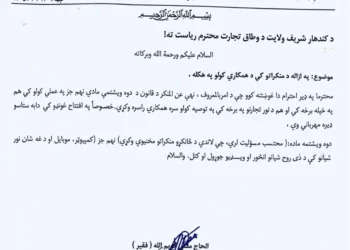
During a meeting with local journalists in Takhar province, Taliban authorities issued a complete ban on photography and visual reporting. An intelligence representative emphasized that visual media should be replaced with radio broadcasts. The head of the Taliban’s Directorate for the Propagation of Virtue and Prevention of Vice in Takhar had previously prohibited photography and videography at local officials’ meetings and banned visual interviews with them. He instructed local officials and employees to submit reports only in written or audio form.
In Maidan Wardak province, the Taliban similarly banned journalists from taking photos or videos during meetings. Sources confirmed to Hasht-e Subh Daily on Sunday, October 13, that the province’s Directorate of Information and Culture issued the directive. According to sources, the decision was made by the committee responsible for enforcing the “Law for the Propagation of Virtue and Prevention of Vice” in the region.
Despite these bans, senior Taliban officials continue to use social media, sharing photos, and videos, and appearing on visual media, including international televised interviews. The Taliban’s Minister for the Propagation of Virtue and Prevention of Vice frequently appears before the media to discuss bans on images of living beings, while images of himself are regularly published.
Afghan journalists fear that the Taliban’s actions are turning Afghanistan into a “land without images or voices,” and soon, citizens may not even keep personal photos on their phones. They see this as part of the Taliban’s systematic suppression, aimed at preventing any visual or auditory evidence of Afghanistan’s realities from reaching the outside world.
One journalist, who requested anonymity, noted that despite the Taliban’s restrictive policies over the past three years, local media have continued to share images reflecting the dire situation in the country. However, this is changing, as people are now losing the right to photograph or film. In a recent incident, Taliban Morality Police in Badakhshan province raided a wedding for playing music and recording videos, injuring a girl and an elderly man, and fining the groom approximately 30,000 Afghanis.
Moreover, individuals sharing information with the media have been arrested. Journalists speaking anonymously to Hasht-e Subh Daily mentioned facing discrimination, oppression, and inhumane treatment in their workplaces, yet they cannot report these issues for fear of Taliban retaliation and torture. One source noted that the Taliban recently arrested a person in one province for allegedly sharing information.
The Afghanistan Journalists Center (AFJC) expressed deep concern and urged the Taliban to reconsider this “regressive decision.” The media defense organization also reported that the provincial branch of the National Radio and Television of Afghanistan (RTA) in Takhar has shut down following the Taliban’s directive, and private media outlets have ceased broadcasting visual content. The organization previously noted that the Taliban issued at least 17 directives over the past three years, severely restricting media freedom, particularly targeting women journalists.
The Afghan Journalists Safety Committee (AJSC) also voiced concern over the photography and videography bans in Takhar and Maidan Wardak provinces, condemning the Taliban’s actions. The committee emphasized that banning photography and videography is a clear violation of freedom of expression and limits public access to information. It noted that similar verbal orders have been issued in other provinces. The AJSC called on the international community, human rights organizations and journalist support groups to take stronger actions to support Afghan journalists and to counter the Taliban’s restrictions through diplomacy and international pressure.
Simultaneously, the International Federation of Journalists (IFJ) issued a statement expressing concern over the arrest of two journalists by Taliban intelligence and the group’s photography and videography bans. The IFJ noted that journalists in Afghanistan continue to face arbitrary arrests and reaffirmed its solidarity with Afghan media workers, urging the international community to increase its support.
Agence France-Presse (AFP) reported that a spokesperson for the Taliban’s Ministry for the Propagation of Virtue and Prevention of Vice confirmed the group prohibits publishing images of living beings in the media. On Monday, October 14, AFP revealed that the Taliban had begun enforcing this policy, banning media from publishing images of living beings under their “Law for the Propagation of Virtue and Prevention of Vice.” The spokesperson emphasized that the ban would be enforced gradually across the country.
Saif al-Islam Khyber, the spokesperson for the Taliban’s Ministry for the Propagation of Virtue and Prevention of Vice, told AFP: “This law will be enforced throughout Afghanistan and implemented gradually.” He claimed that publishing images of living beings is “against Sharia law” and stressed, “There is no compulsion in enforcing this law; it is merely advisory, and convincing people otherwise is truly against Sharia and must be avoided.”
Khyber further noted that enforcement efforts have already begun in provinces like Kandahar, Helmand, and Takhar, though the law has not yet been implemented nationwide. A journalist in Ghazni province told AFP that visual media reporters in the area have been instructed to take photos from a distance and gradually reduce filming.
The Taliban’s “Law for the Propagation of Virtue and Prevention of Vice” advises media outlets to refrain from publishing images of living beings and prohibits mockery or insults contrary to Islamic law. Under this law, the Taliban have directed citizens not to take or view images of living beings on phones or other devices. Article 17 of the law instructs the Taliban’s Morality Police to prevent the publication of content featuring such images.
Since 2021, the Taliban have ordered business owners to deface images of men and women in advertisements, cover mannequin heads with plastic bags, and blur the eyes of fish on restaurant menus.
AFP also reported that when the Taliban took control of Afghanistan in August 2021, there were 8,400 media workers in the country. That number has since dropped to 5,100.
During their first regime from 1996 to 2001, the Taliban banned photography, filming, and television. They also deemed painting living beings and playing music un-Islamic. Even today, artists remain prohibited from drawing images of living beings.
You can read the Persian version of this daily report here:
منع عکاسی و فلمبرداری؛ طالبان افغانستان را به کشوری بیتصویر و بیصدا تبدیل میکنند | روزنامه ۸صبح