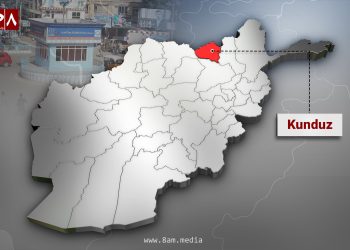

Many residents of Kunduz province are concerned about continuing to live under Taliban rule. They say that due to the spread of extremism and radical behavior by the group, people are worried about the future. According to Kunduz residents, people are afraid to face Taliban members due to their oppressive behavior.
Several Kunduz residents told the Hasht-e Subh Daily that public despair about the future in this province has increased. They said that the continuation of life under Taliban rule and the imposition of widespread restrictions by the group has turned life in Kunduz into a state of hopelessness.
Many people living in Kunduz are fed up with the Taliban’s extremist and radical behavior and hope that this group’s rule will end soon. These Kunduz residents emphasize that due to fear of the Taliban’s behavior, people cannot confront this group or express their opinions.
Some residents of Kunduz City, quoting people who have remained silent in front of the Taliban, say: “These [Taliban] are ignorant; you cannot engage with the ignorant.”
The report’s findings show that young people are more desperate than others. These youths say that the Taliban only give a share in the government to their supporters and backers. Many students from Kunduz universities, who belong to different ethnic groups, told the Hasht-e Subh Daily that with the continuation of the Taliban regime, they do not hope for a better future and see their lives as bleak.
Naqibullah, a fourth-year student at one of Kunduz University’s faculties, says: “It doesn’t matter which field we graduate from; we are forced to turn to freelance work or smuggle ourselves to neighboring countries. These people [the Taliban] won’t give anyone a job even if they wander around for ten years and remain unemployed. There are no organizations like before to recruit people, no manufacturing companies, so what future should we hope for?”
Masoud, who graduated from Kunduz University’s Faculty of Economy, says that despite a year of efforts, not even a glimmer of hope has opened up for him to hope for a better future. He says he does not expect the Taliban to hire him in government institutions because, according to him, the group does not employ those who do not belong to their tribe or ideology. Mr. Masoud says: “If the Taliban leave one day, maybe we can get a job then. Now, even organizations do not hire unless you have connections. I have sent out more than hundreds of job applications, none of which have yielded any results so far.”
In addition to men’s despair, women and girls, who have been banned from education, work, and freedom of movement due to the Taliban’s widespread restrictions, consider themselves excluded from society. They say that under Taliban rule, they see their future as dark and worry that polygamy will become a norm among all men in society.
Sohaila, one of the girls who worked in a government department in Kunduz province during the previous government, says: “Now, of all the rights we claimed to have equal to men, not even half remains. Women have been trampled by men; we don’t even have the courage or the right to complain about harassment. To whom should we complain? To the Taliban? If men truly adhere to Islamic rights, there is no problem, but the Taliban and men misuse Islamic Sharia against women.”
The majority of Kunduz residents, even those who welcomed the Taliban’s rule, complain about the current situation and consider the continuation of this group’s rule as the destruction of the dreams of several generations. They say that due to severe repression, they have been forced into silence or have shown forced consent.
Some farmers in Kunduz are also worried about the continuation of Taliban rule. They say the Taliban-controlled agriculture department focuses on collecting tithes and zakat and does nothing to develop and mechanize agriculture.
Najmuddin, one of the farmers in Kunduz, says: “Taliban individuals come from the agriculture department every year to collect tithes and zakat, while we are Muslims and know that tithes and zakat are for the poor and needy. We have many poor and needy people in our area, but the Taliban take what they claim as their rights from us.”
Farmers in Kunduz say that the Taliban do not distribute improved seeds, chemical fertilizers, and other agricultural aid to those in need. They claim that these agricultural aids are distributed to those with connections among the Taliban.
Some shopkeepers also complain about the lack of market prosperity and the decrease in people’s purchasing power, attributing it to the inability to develop their businesses. They believe that increased taxes and capital flight from Afghanistan have prevented them from making necessary profits.
Haji Naseem, one of the wholesalers of basic goods in Kunduz province, says: “In previous years, my capital increased every year. The buy and sale business was great for us. Now, taxes have tripled. I used to pay 60,000 Afghanis in taxes, but now it is more than 200,000 Afghanis. My business is collapsing. I deeply regret not taking my capital out of Afghanistan when the Taliban first came.”
It is worth mentioning that with the Taliban’s takeover, millions of citizens have lost hope in living in Afghanistan. They describe life under Taliban rule as dark and say they have lost hope for the future and are determined to migrate.
You can read the Persian version of this daily report here:
ناامیدی مردم از شیوه حکومتداری طالبان؛ باشندهگان کندز آینده خود را «سیاه» میبینند | روزنامه ۸صبح