The release of a forced confession video showing a girl dressed in male clothing by the Taliban has triggered widespread reactions. Senior officials from the previous government, civil activists, and social media users have condemned the Taliban’s actions, emphasizing that while the group once disguised itself in women’s clothing to carry out suicide attacks, girls are now being detained and punished simply for wearing male clothing out of necessity to earn a living. Critics note that the girl wore male clothing to provide food for herself and her family due to extreme poverty and the extensive restrictions imposed by the Taliban. They stress that instead of lifting prohibitions on women, the group has violated her human dignity, humiliating, insulting, and publicly shaming her.
In the video, the child explains in her forced confession that she had to wear male clothing to protect her sisters and be able to work. She adds that she had been employed in a restaurant for three years, earning seven thousand Afghanis initially, and later ten thousand Afghanis, until she was detained by the Taliban.
Although the exact time and location of the video are unclear, a man can be heard asking the girl about her identity, residence, and family, with both speaking in Pashto. The man asks, “Are you a boy or a girl?” She replies that she is a girl and wears male clothing out of necessity to take responsibility for her family.
The man questioning the girl also asks about her workplace, length of employment, employer, and wages. The girl responds that she has worked in a restaurant for the past three years. Initially, her wage was seven thousand Afghanis, and over the past eight months to a year, she received ten thousand Afghanis.
In her confession, the child states her name as “Nooria” and her father’s name as Mohammad Gul. She confirms that she is from Ghor Province and lives in the village of Zarghun, Nad Ali District, Helmand Province. Following her father’s death, she had to wear male clothing and work to support her family.
Reactions to Nooria’s Forced Confession
Rahmatullah Nabil, former Director General of National Security under the previous government, wrote in response: “Look at the difference in religious interpretation: the Taliban considered it their right to wear women’s clothing and kill people, yet a girl, forced to wear male clothing solely to sustain her family, is punished. One act is permitted for taking life, the other is forbidden for preserving life.”
Fazel Ahmad Manawi, former Minister of Justice, commented: “Oh homeland, oh homeland! I witnessed an event that brings tears to every conscience and a lump to the throat. A girl, merely to earn a lawful living and help her impoverished family, was forced to wear male clothing; under the Taliban system, women working in public is considered a crime. Instead of being supported, she was identified, detained, violently treated, humiliated, and publicly shamed through a video shown to the people.”
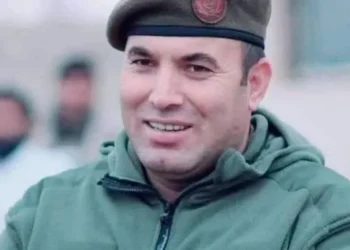
Golchehrah Yaftali, a women’s rights activist, shared an image of the girl, writing: “This image is the cry of a crime: a girl forced to hide her female identity for more than three years to work under the terrorist and misogynist Taliban, so that a fatherless family does not go hungry. By excluding women from education, work, and public life, the Taliban have pushed them into the shadows, depriving them of the right to live with dignity.” She added: “Islamic jurists have stated that necessity can make prohibitions permissible, and Imam Abu Hanifa emphasized that preserving life, honor, and livelihood takes precedence over rigid formalities.”
Haseeb Walwaliji, a social media user, wrote: “This story is not merely the suffering of one girl; it reflects a system that imposes poverty and restrictions on women’s lives. When a girl must hide her identity to keep her family alive, it is no longer a personal choice but the result of political and social structures that deny half of society the right to breathe.”
Meanwhile, citizens worldwide have shared videos of the 13-year-old girl, calling her a hero and emphasizing that Nooria deserves recognition and praise. Others have questioned how Taliban lobbyists respond to such shocking and painful situations faced by girls. Many also emphasized the importance of respecting Nooria’s courage and determination, as she stood strong under difficult circumstances to support her family.
Dressing girls in male clothing was also common during the first Taliban rule in Afghanistan. Girls altered their appearance to evade restrictions, attend school, work, and participate in society. With the Taliban’s return to power, some girls are once again forced to wear male clothing to provide for their families.
Some social media users, sharing scenes from the 2003 film “Osama” directed by Sediq Barmak, which tells the story of a girl dressed as a boy, highlighted that Nooria’s bravery deserves praise. “Osama” depicts a girl compelled to enter society disguised as a boy, resisting deprivation and social exclusion under the first Taliban regime. At the time, Barmak described the film as “a true tragedy in a period when no one had the right to make decisions for themselves.”
Over the past four years, the Taliban have imposed widespread restrictions on women and girls. Currently, girls above sixth grade are not allowed to attend school, and women and girls are denied access to education, work, travel, sports, political power, and other areas of public life. Human rights organizations and women activists have described these measures as clear examples of gender apartheid and have called for their recognition.
You can read the Persian version of this report here:
واکنشها به اعتراف اجباری نوریه؛ تلخی زندهگی دختران زیر حاکمیت طالبان