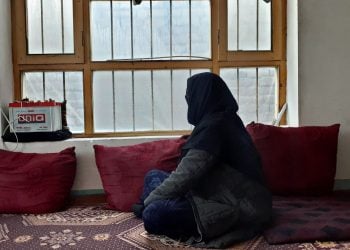
Pakistan has intensified the arrest and deportation of Afghanistan’s refugees following the suicide attacks on the Wana Military College in South Waziristan and in Islamabad. Thousands of people who were forced to flee Afghanistan after the Taliban’s takeover are now living in severe uncertainty and deeply distressing conditions in Pakistan. Several of these refugees say that, in addition to the ambiguity and uncertainty surrounding the processing of their relocation cases to Western countries, Pakistan has been broadly subjecting them to harassment after tensions with the Taliban and the recent suicide attacks. Many families, including children and the elderly, leave their homes day and night out of fear of arrest and are exposed to extortion and bribery by the police. Others report severe psychological disorders caused by the repeated pressure exerted by the police, stressing that if they are deported to Afghanistan, they will be arrested or killed by the Taliban.
Following border clashes between the Taliban and Pakistan and the recent suicide attacks in the country, Pakistan’s police have intensified the arrest and forced deportation of Afghanistan’s refugees who had fled there out of fear of Taliban retaliation. Thousands of individuals who were at risk of Taliban revenge or had gone to Pakistan after being released from the group’s prisons are now facing a halt in visa extensions by the Pakistani government, along with widespread arrests and deportations. These refugees say Pakistan should not take revenge for the Taliban’s actions by targeting migrants, as they themselves are victims of the group’s discriminatory policies.
Several refugees who sought refuge in Pakistan after the Taliban’s takeover, and many of whom remain in limbo due to the halt in the U.S. relocation process, have found themselves in even more difficult circumstances after rising tensions between the Taliban and Pakistan and the suicide attacks. The Pakistani government has announced that no one is allowed to rent homes to, or shelter, migrants who do not have valid visas. This directive was issued at a time when the visa extension process for citizens of Afghanistan in Pakistan had been halted for more than four months.
Qoyaash, one of Afghanistan’s refugees in Islamabad, told the Hasht-e Subh Daily that during the past four months, Pakistan’s police have gone to Faisal Town, where he lives, almost every day in both civilian and official clothing to conduct arrests and extortion. He says: “Last night around 12:00, a police vehicle arrived and took away an Afghan boy who lived in our neighborhood from the courtyard of the block. When I saw him again today, I said: Thank God you were released. He said they called my father and demanded 200,000 rupees for my release. My father pleaded with them and managed to deliver 140,000 rupees, after which they let me go.”
This refugee adds: “Homeowners and property agents have distributed warning notices to all refugee households, stating that those without visas must leave their homes. Now I have spent several nights in nightmares and severe anxiety. On the one hand, the Ministry of Interior does not extend visas, and on the other hand, they demand visas from us. Where in the world does such logic exist? And everyone here who has experienced exile and displacement is not an admirer of the Taliban. If we were, we would have adapted ourselves to the Taliban’s oppressive system. Pakistan’s police must understand that not only I, but all the migrants who have settled in Pakistan over the past four years, have done so out of necessity. For me and my family, who are both journalists, returning to Afghanistan would cost us our lives.”
Uzair Parwiz, one of the exiled journalists, says that a few days ago, when he and another journalist neighbor were heading to the Faisal Town market to buy bread, they were stopped by two men in a Prado vehicle. These two men, wearing civilian clothing with shaved beards and long mustaches, asked for their visas and passports. Since their visas had expired, they were forcibly detained.
The journalist adds: “We showed our passports, but because our visas had expired and the Pakistani government is not issuing new visas, we could not present valid ones. Without listening to our reasonable explanations, they pushed both of us into the vehicle and transferred us to a police center on the road known as Fateh Jang, located near Islamabad Airport. After nearly three hours, they returned our phones and told us to call someone close to us to resolve our problem.”
Mr. Parwiz says that after contacting several neighbors, they were released at 10 p.m. upon paying 40,000 Pakistani rupees. He adds: “In this extremely difficult exile, where providing for my household and children alone is already a heavy burden, the financial cost of this incident and the fear of being arrested again have placed immense psychological pressure on me.”
Thousands of refugees who remain stuck in Pakistan due to delays in the relocation and processing of their cases by Western countries, and also due to Pakistan’s suspension of issuing visas to citizens of Afghanistan, are in extremely difficult conditions. They say their women and children have developed psychological issues, and due to fear of the police, they are deprived of education and even the ability to go to hospitals, and their sick family members cannot access treatment centers.
Following the suicide attacks on the Wana Military College in South Waziristan and in Islamabad, Pakistan’s Interior Minister claimed that both attacks were carried out by citizens of Afghanistan. Last Thursday, he asserted: “It has been confirmed that they came from Afghanistan and carried out these attacks.” Naqvi had previously claimed that the attackers involved in the Wana Military College incident were in contact with their organizers in Afghanistan.
Khawaja Asif, Pakistan’s Defense Minister, has also threatened that his country may take military action inside Afghanistan. He called the Taliban’s condemnation of the attack “insincere” and said Pakistan will hand over evidence of the Taliban’s involvement in recent incidents to mediating countries such as Qatar and Türkiye. Asif further warned: “We will not leave the aggressors’ attack unanswered and will deliver a decisive response.”
Tahir Andarabi, spokesperson for Pakistan’s Ministry of Foreign Affairs, announced yesterday at a press conference that the country has never refrained from dialogue with the Taliban. At the same time, he emphasized that Pakistan will not negotiate with any terrorist group. Andarabi added that Tehrik-e Taliban Pakistan (TTP) and the Balochistan Liberation Army (BLA) are Pakistan’s enemies. He stressed: “Anyone who shelters them, encourages them, or finances them is not considered a friend or well-wisher of Pakistan and its people.”
The spokesperson for Pakistan’s Ministry of Foreign Affairs said that the promises of the Taliban regime in Afghanistan have been “hollow and unfulfilled.” He added: “We regret that the Taliban regime constantly tries to portray the issue of terrorists hiding in Afghanistan as a humanitarian matter.” Andarabi said: “The Taliban regime is attempting to depict Tehrik-e Taliban Pakistan and the Balochistan Liberation Army as refugees in Afghanistan. This is neither a humanitarian nor a refugee crisis, but a tactic to present terrorists as refugees.”
You can read the Persian version of this report here: