• 8AM.MEDIA
  • ویب‌سایت فارسی
  • پښتو ویب‌پاڼه
  • اۉزبېکچه ویب‌سایت
  • Podcast
Monday, September 21, 2026
Hasht-e Subh
  • Home
  • News
    • Afghanistan News
    • World News
  • Opinion
    • Editorial
    • Analysis
  • Reports
    • Daily Reports
    • Investigative Reports
  • Society
    • The story of people
  • Women’s Word
  • Columns
    • Three Years After Afghanistan’s Fall: The Taliban’s Resurgence
    • Towards Equality
    • The Resurgence of the Taliban: Two Years Since Afghanistan’s Fall
    • Hebatullah Report Special Edition
    • Resistance for Education Special Edition
    • Special Column on Taliban’s Education Curriculum
    • Nawroz
  • Interviews
  • Contact Us
    • About Us
    • 8AM MEDIA Annual Awards
    • Submit an Article to Hasht-e-Subh
  • 8am.mediaBack
Subscribe
No Result
View All Result
  • Home
  • News
    • Afghanistan News
    • World News
  • Opinion
    • Editorial
    • Analysis
  • Reports
    • Daily Reports
    • Investigative Reports
  • Society
    • The story of people
  • Women’s Word
  • Columns
    • Three Years After Afghanistan’s Fall: The Taliban’s Resurgence
    • Towards Equality
    • The Resurgence of the Taliban: Two Years Since Afghanistan’s Fall
    • Hebatullah Report Special Edition
    • Resistance for Education Special Edition
    • Special Column on Taliban’s Education Curriculum
    • Nawroz
  • Interviews
  • Contact Us
    • About Us
    • 8AM MEDIA Annual Awards
    • Submit an Article to Hasht-e-Subh
  • 8am.mediaBack
No Result
View All Result
Hasht-e Subh
No Result
View All Result

Shortage of Pakistani Medicines Drives Price Surge, Leaves People Unable to Afford Treatment

Translated by Farhad Farhaad

Mohammad Farhaad Mohammad Farhaad
26 April 2026 - Solar Hijri Date: 1405/02/06 [t_time:1777145748]
Citizens concerned over rising medicine prices in local market (Photo Credit: AI)

AI

Following the Taliban’s order to halt the import of medicines from Pakistan, Pakistani pharmaceuticals have become severely scarce in the Afghanistan market, with prices for some items increasing by more than 100 percent. The shortage and rising cost of Pakistani medicines in the country have directly affected the fragile economy of the people, leaving patients grappling with unprecedented drug prices as well as low-quality Iranian products.

Several pharmaceutical traders who previously imported from Pakistan say that Pakistani medicines are no longer entering the country legally, and whatever remains in the market was either imported in the past or is being supplied through smuggling. According to them, smuggling carries significant risks, and if discovered by the Taliban, the shipments are destroyed, which in turn affects prices.

Ahmad Shah Mozamil, a pharmaceutical importer, says that the Taliban exert pressure on importers from all sides, have increased taxes, collect substantial customs deposits, and, in addition,n have banned the import of Pakistani medicines. In his view, the rise in drug prices is not largely linked to the exchange rate of the dollar, as it has been relatively stable over the past two to three years; rather, Taliban policies and the group’s conflict with Pakistan have led to sharp price increases in the market.

Abdul Rahman Achakzai, another pharmaceutical importer, says they are aware that rising drug prices place pressure on the public, but they are compelled to increase prices because they themselves import medicines at higher costs.

Mr. Achakzai notes that Pakistani medicines have a key advantage in that they are both reasonably priced and of high quality, making them highly beneficial for the public. He adds that in the absence of Pakistani medicines, the only affordable alternative is Iranian medicine, which is of significantly lower quality, while higher-quality medicines are imported from Turkey, the United Arab Emirates, and India, but their prices are considerably higher than those of n Pakistani medicines, despite having similar quality.

This pharmacist says: “For example, a packet of 100 mg Quetiapine, an antipsychotic drug, previously cost between 80 and 100 Afghanis per pack, but now it exceeds 200 Afghanis, while its Iranian equivalent costs 10 Afghanis per pack.”

Meanwhile, some patients and their relatives complain about the increase in drug prices, saying that even a minor illness now requires spending around 1,500 to 2,000 Afghanis on medication.

Abdul Rahim, who has come to the market to purchase medicine, complains about the high prices of pharmaceuticals and says, “Pray that no one falls ill, otherwise it will cost dearly. My mother has diabetes; her medicine used to cost 500 to 600 rupees, but now it is no less than 1,500.” He considers the Taliban’s obstinacy to be the main factor behind the rising cost of medicines and other essential goods, adding: “Do not look only at medicine; the closure of the Pakistan route has also increased the price of potatoes.”

Pharmacists, however, say that the rise in drug prices is beyond their control and they are forced to adjust to current market rates. They complain of increasing pressure from the Taliban, stating that members affiliated with the group’s public health sector regularly inspect pharmacies and confiscate any Pakistani medicines they find.

Rashid Ahmadi, a pharmacy seller in the city center, says that the border is closed and medicines are not being imported from Pakistan, which has led to rising prices.

In the Solar Hijri year 1404 (2025–2026), following tensions with Pakistan, the Taliban announced a complete halt to the import of medicines from Pakistan. The group has also recently warned that if smuggled consignments of Pakistani medicines are identified, they will be burned.

You can read the Persian version of this report here:
کمیابی داروی پاکستانی؛ افزایش قیمت دوا و ناتوانی مردم

ShareTweetSendSendShare

Related Posts

Residents walk toward a health center in Uruzgan province, where locals say common illnesses often go untreated due to a shortage of doctors and medicine. (Photo credit: 8am.media)
Daily Reports

Uruzgan Residents: “Even Common Illnesses Go Untreated Here”

17 September 2026 [t_time:1789651816]
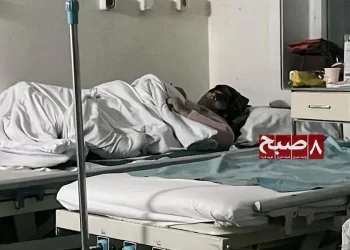
A patient rests on a bed at a government hospital in Kabul, as citizens complain that treatment costs now differ little from private clinics. (Photo credit: 8am.media)
Daily Reports

Patients Say Treatment Costs at Government Hospitals Barely Differ from Private Clinics

14 September 2026 [t_time:1789405060]
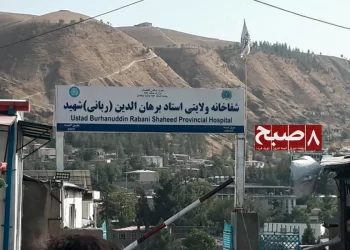
A road sign marks the entrance to Ustad Burhanuddin Rabani Shaheed Provincial Hospital in Badakhshan, where patients have complained of medicine shortages and negligence. (Photo credit: 8am.media)
Daily Reports

Badakhshan Provincial Hospital: Patients Complain of Medicine Shortages, Lack of Equipment, and Doctors’ Negligence

13 September 2026 [t_time:1789321577]

Latest

Loading latest news...

Popular stories

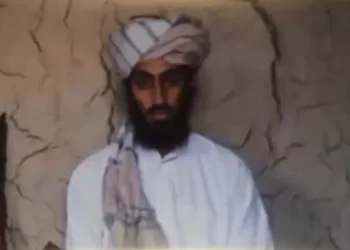
  • Hamza bin Laden - the son of Osama bin Laden (Photo: Social Media)

    Al-Qaeda Releases Hamza bin Laden Message on 9/11 Anniversary

    Share
    Share Tweet
  • UN Report Reveals Shifts in Family Attitudes and Rise in Domestic Violence in Afghanistan

    Share
    Share Tweet
  • Pakistan Army Spokesperson: Afghanistan Has Become a Base for Dozens of Terrorist Groups

    Share
    Share Tweet
  • German Politician Calls for Faster Deportation of Undocumented Afghan Migrants

    Share
    Share Tweet
  • U.S. Defense Secretary Calls Washington Post Worse Than Iranian State Media

    Share
    Share Tweet

Podcast

Insights
Insights

Join Lynne O’Donnell for 8AM’s podcast series, Insights.
Lynne talks with generals, diplomats, soldiers, journalists, politicians, activists, people who have front row seats for conflicts around the world, and citizens with a story to tell, happy or sad. For this first series, Afghanistan is the focus. Lynne and her guests talk about the collapse of the republic in August, 2021, and the impact since — for the people of Afghanistan, for the security of the region, for the safety of the world. It’s important, interesting and insightful.

Insights/22: Controlling the Narrative with Mina Sharif
byinsights8am

Controlling the Narrative

Lynne O’Donnell talks with Mina Sharif, author, activist, women’s rights campaigner, educator and mentor. They discuss who controls the narrative and who speaks for Afghanistan’s people when the Taliban appear to have seized control not only of the country but of the message, too.

Have a listen

Insights/22: Controlling the Narrative with Mina Sharif
Episode play icon
Insights/22: Controlling the Narrative with Mina Sharif
Episode Description
Episode play icon
Insights/21: Media Meltdown with Zahra Joya
Episode Description
Episode play icon
Insights/20: Terror Inc with Scott Richards
Episode Description
Episode play icon
Insights/19: Busting Stereotypes with Bushra Gohar
Episode Description
Episode play icon
Insights/18: Media Matters with Waliullah Rahmani
Episode Description
Episode play icon
Insights/17: What Goes Around Comes Around with Sima Samar
Episode Description
Search Results placeholder
Hasht-e Subh

8AM Media, also known as Hasht-e-Subh Daily, stands as Afghanistan's premier independent and non-profit newspaper, resonating as a beacon of journalistic integrity since its establishment in June 2007 by esteemed Afghan journalists and human rights advocates. With a steadfast commitment to citizen journalism and civic education, Hasht-e-Subh Daily has earned its place as the most esteemed publication in the nation.

Publisher: Sanjar Sohail
Email: [email protected]
Executive Director: Parwiz Kawa
Email: [email protected]

Read More

Trump Seeks Sanctions Against International Criminal Court

Four Family Members, Including Three Women, Killed by Gunmen in Kapisa

Taliban Fighter Killed by Unknown Gunmen in Badghis

Shipping Traffic Declines in the Strait of Hormuz

Russian Officials Claim Ukraine Attacked Russia with More Than 1,000 Drones

Editor’s Choice

Every Saturday morning, 8AM MEDIA English Services Department will guide you through the week’s biggest stories from Afghanistan and the international community.

Subscribe

© 2026 - ©Hasht-e Subh Daily

No Result
View All Result
8am.Media
پښتو ویب‌پاڼه
ویب‌سایت فارسی
اۉزبېکچه ویب‌سایت
  • Home
  • News
    • Afghanistan News
    • World News
  • Opinion
    • Editorial
    • Analysis
  • Reports
    • Daily Reports
    • Investigative Reports
  • Society
    • The story of people
  • Women’s Word
  • Columns
    • Three Years After Afghanistan’s Fall: The Taliban’s Resurgence
    • Towards Equality
    • The Resurgence of the Taliban: Two Years Since Afghanistan’s Fall
    • Hebatullah Report Special Edition
    • Resistance for Education Special Edition
    • Special Column on Taliban’s Education Curriculum
    • Nawroz
  • Interviews
  • Contact Us
    • About Us
    • 8AM MEDIA Annual Awards
    • Submit an Article to Hasht-e-Subh
  • 8am.media

© 2026 - ©Hasht-e Subh Daily