For more than four years, the Taliban have carried out widespread arrests, assassinations, and extrajudicial killings, while forcibly disappearing former military personnel. Despite mounting evidence, the group has consistently dismissed investigative reporting by the media, human rights organizations, and field and visual documentation, labeling them as baseless accusations. Recently, the Hasht-e Subh Daily documented a video recording of a covert member of the Taliban intelligence. In the footage, the intelligence operative openly discusses the killing of a person believed to be a student and describes, in disturbing detail, the exchange of clothes, the method of murder, and the payment of cash to the attacker.
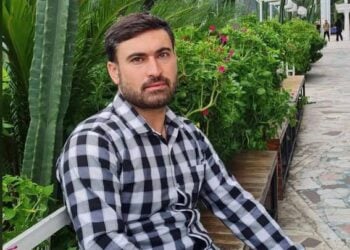
The video obtained by the Hasht-e Subh Daily shows a young man calmly discussing a plan to kill a student with another individual, assuring him that equipment and money would be provided. Findings by the Hasht-e Subh Daily reveal that this man was not involved in a single plot but had also played a role in several other targeted attacks against former military personnel and other citizens of the country.
The investigation further shows that he operated multiple social media accounts under different names at the same time. He is identified as Amanullah, son of Aghajan, originally from Deh-Katuri village in the Ghous Valley of Nijrab, and currently living in Bagh Aman village in Dara-e Pata. Alongside these covert activities, Amanullah worked as an employee in the Taliban’s criminal investigation unit in the second district of Mahmood Raqi, the provincial center of Kapisa.
According to the findings, he also held an unofficial role within the intelligence circle of the Taliban governor in Kapisa. Sources say Mawlawi Abdul Wahab, a former Taliban facilitator, introduced him to Qari Baryalai, the Taliban governor in Kapisa province, who, according to those sources, is also affiliated with al-Qaeda. Amanullah had previously studied at Fath al-Madaris seminary but abandoned his education before completing it.
Sources told the Hasht-e Subh Daily that this covert intelligence operative arrested a former military member, Abdul Zahir Entezar, two days ago. They added that he has already detained several other former military personnel and is now actively seeking journalists to hand them over to the Taliban as well.
Earlier, General Ikramuddin Saree, the former commander of Takhar province under the previous government, was shot and killed on Wednesday, December 24, 2025, at around 7:30 p.m. Tehran time, in the Imam Hussein area of northern Tehran. Mohammad Amin Almas, another former military member, was killed alongside him. The incident triggered widespread reactions among the people of Afghanistan. Many politicians and political and military groups opposed to the Taliban blamed the group for the killings and said the Taliban’s cross-border assassination unit carried out the operation. Despite these claims, authorities have not released further details.
In a more recent development, the Afghanistan Freedom Front stated in its annual report that in 2025, the Taliban systematically targeted former military personnel across the country through arrests, torture, and killings. The report documented at least 123 former military members killed in 29 provinces, while another 131 individuals in 20 provinces were tortured in Taliban prisons after their arrest.
These findings align with earlier reports by the United Nations Assistance Mission in Afghanistan (UNAMA), which confirmed that human rights violations against former government officials and former members of the Afghanistan National Defense and Security Forces continue. UNAMA documented at least six cases of extrajudicial executions, 24 cases of arbitrary arrest and detention, and six cases of torture and ill-treatment involving these individuals.
In several periodic reports, UNAMA has also confirmed that since the Taliban takeover, authorities have recorded numerous cases of arbitrary arrests, enforced disappearances, and extrajudicial killings. These abuses have disproportionately affected former military personnel, government employees, members of the security forces, civil society activists, and some minority groups. According to UNAMA, many of those arrested later disappeared or died without any judicial process, while their families remained in the dark about their fate.
Richard Bennett, the United Nations Human Rights Council’s Special Rapporteur for Afghanistan, has repeatedly stressed that the Taliban have failed to honor their declared commitment to a so-called general amnesty. He described documented cases of extrajudicial killings, enforced disappearances, torture, and systematic threats against opponents and former military personnel as serious human rights violations. Bennett warned that the continuation of these practices deepens fear and entrenches impunity across Afghanistan, and he has called for accountability for those responsible.
Human Rights Watch has also confirmed that the Taliban have forcibly disappeared or killed former military personnel. The organization reported that the group accessed employment records left behind by the previous government and used them to identify individuals for arrest and execution. In one example from Kandahar city in late September, Taliban forces raided the home of Baz Mohammad, a former employee of the National Directorate of Security, and detained him. His relatives later discovered his body.
Taken together, these reports show that despite repeated denials by the Taliban, international human rights organizations continue to document extensive and systematic violations of human rights, particularly the right to life and personal security, throughout Afghanistan.
You can read the Persian version of this report here:
قتلهای سیستماتیک و فراقضایی؛ اعترافی که پرده از جنایتهای هدفمند طالبان برمیدارد