The Taliban’s Ministry of Justice has issued a new directive banning all construction, purchase, or sale in the “Omid-e Sabz Township,” also known as “Haji Nabi Township,” located in District 6 of Kabul City until the group’s courts issue a final ruling. Documents obtained by the Hasht-e Subh Daily reveal that the Taliban’s Supreme Court Council has overturned previous government court rulings regarding the ownership of Mohammad Nabi Khalili, the owner of Omid-e Sabz Township. These documents show that, under the former government, the Kabul Court of Appeals had ruled in favor of Khalili in a legal dispute over the township’s land. However, the Taliban claims that the previous Supreme Court had already rejected this ruling, deeming it harmful to the state. Khalili reportedly held approximately 1,761 hectares of land through four Islamic title deeds.
Earlier, the Taliban’s Commission for the Prevention of Land Grabbing announced that the investigation into the “seized lands” of Omid-e Sabz Township had been referred to the group’s special court for further review.
For over three years, the Taliban have faced continuous accusations of engaging in ethnically and linguistically discriminatory practices. Recently, the group imposed a ban on buying and selling properties in Omid-e Sabz Township, Kabul. According to findings by the Hasht-e Subh Daily, the Taliban instructed all real estate brokers in Kabul to halt transactions involving properties in Omid-e Sabz Township, also known as Haji Nabi Township, which is associated with Karim Khalili, the former second vice president of Afghanistan and brother of Mohammad Nabi Khalili.
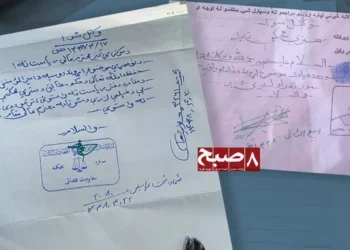
The Hasht-e Subh Daily obtained a written directive from the Taliban-controlled Ministry of Justice’s General Directorate of Coordination. The document, signed by Haroon Nouri, head and acting director of the Population Affairs Directorate, prohibits construction, purchase, or sale in Omid-e Sabz Township. Issued on September 30, 2024, under reference number 582/1372, the letter was sent to the Union of Real Estate Brokers of Kabul. It stresses the ban on property sales in the township, instructing brokers to avoid transactions until the Taliban courts reach a final ruling.
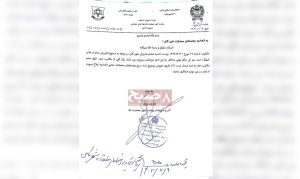
In a letter to the Union of Real Estate Brokers in Kabul, the Taliban’s Ministry of Justice stated: “Letter No. 68, dated September 25, 2024, from District 6 of Kabul Municipality, regarding the prohibition of property sales in Omid-e Sabz Township until a final court ruling, has been sent to this agency. A copy of the letter is attached, and you are instructed to inform brokers within the union to comply with this directive.”
Previously, District 6 of the Taliban’s Kabul Municipality had sent a letter to the Ministry of Justice’s General Directorate of Coordination, requesting a ban on property transactions in Omid-e Sabz Township until the Taliban courts issue a final verdict. In letter No. 68/101, dated September 25, 2024, the municipality communicated the ban on property sales to the Coordination Directorate.
The letter explained that Omid-e Sabz Township had been part of a dispute between a Taliban representative and Mohammad Nabi Khalili. The Taliban Supreme Court validated the claims of the State Litigation Authority (now referred to as the “Emirate Litigation Authority”) and overturned previous court rulings that had favored Khalili. Khalili claims ownership of 1,761 hectares of land in the area based on four Islamic Title Deeds. The State Litigation Authority, under the Taliban-controlled Ministry of Justice, has requested the cancellation of Khalili’s title deeds and ordered a halt to all construction, purchasing, and selling activities in Omid-e Sabz Township until the Taliban courts deliver a final ruling.
The Taliban-controlled District 6 Municipality of Kabul sent a letter to the Ministry of Justice’s Coordination Directorate, noting that the General State Litigation Authority had also been involved in a legal dispute with Mohammad Nabi Khalili over the properties in Omid-e Sabz Township during the previous government. The letter stated that Khalili’s ownership claims were deemed unfounded. It further explained that the Taliban’s “Supreme Court Council” found the State Litigation Authority’s arguments valid and, through a judicial ruling, annulled all prior decisions made in favor of Khalili.
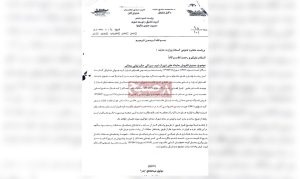
In a letter from the Taliban’s District 6 Municipality in Kabul to the Ministry of Justice’s Coordination Directorate, the issue of Omid-e Sabz Township is addressed. The letter refers to a previous communication, Letter No. 1687, dated September 5, 2020, from the Emirate’s General Directorate of State Litigation, which the Kabul Municipality received. It confirms that the Taliban Supreme Court validated the Emirate’s litigation claims against Mohammad Nabi Khalili and, through Judicial Ruling No. 6, dated June 16, 2020, annulled earlier court decisions in Khalili’s favor. The relevant documents were forwarded for further action in Letter No. 179, dated July 21, 2020.
The Kabul Municipality, now under Taliban control, further noted that the Ministry of Justice’s State Litigation Authority has requested the Taliban courts to annul Khalili’s ownership documents. According to the letter, Khalili claims ownership of 1,761 hectares of land based on four Islamic Title Deeds. The Emirate’s Litigation Authority plans to request the annulment of these deeds in court. Until a final court ruling is issued, all construction and property transactions in Omid-e Sabz Township are to be suspended.
The letter also warns that, despite previous notifications, brokers have continued to buy and sell land in Omid-e Sabz Township. It stresses that in the future, all property transactions must cease until the Taliban courts reach a final decision on the matter.
Another letter, signed by a Taliban official but issued during the previous government, indicates that the Kabul Appeals Court had ruled in favor of Mohammad Nabi Khalili.
The letter refers to Letter No. 1686/770 from the General State Litigation Authority, dated September 5, 2020, which was sent to the Kabul Municipality. It mentions a legal dispute over Omid-e Sabz Township between a representative of the State Litigation Authority and Khalili. The General Rights Chamber of the Third Judicial District of Kabul had initially ruled in favor of Khalili and against the state. However, after the State Litigation Authority’s representative expressed dissatisfaction, the case was forwarded to the Kabul Appeals Court. The letter further notes that the former Supreme Court’s General Rights Chamber ultimately upheld the ruling of the Kabul Appeals Court.
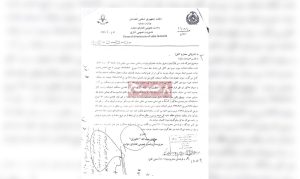
The letter states that in 2020, a representative of the General State Litigation Authority requested a review of previous court rulings, citing new evidence. The Supreme Council of the Taliban’s Supreme Court found the arguments presented by the representative valid and annulled all prior court decisions in favor of Mohammad Nabi Khalili in Judicial Ruling No. 6, dated June 16, 2020.
The document, citing the previous government’s General State Litigation Authority, explains: “A dispute over Omid-e Sabz Township arose between the General State Litigation Authority representative and Mohammad Nabi Khalili. The General Rights Chamber of the Third Judicial District of Kabul ruled in favor of Khalili and against the state in Ruling No. 1/1, dated July 21, 2007. Due to dissatisfaction from the General State Litigation Authority representative, the case was forwarded to the Kabul Appeals Court, which upheld the original decision in Ruling No. 9, dated May 16, 2009. The documents were then sent to the Supreme Court’s General Rights Chamber, which also confirmed the Appeals Court’s ruling in Ruling No. 683, dated October 11, 2009.”
Following this, the General State Litigation Authority representative requested a review of the court’s decisions. The Supreme Council of the previous government’s court deemed the representative’s arguments valid and annulled all rulings made in favor of Mohammad Nabi Khalili. They also instructed the 101st Asmai Zone Command to prevent further construction in Omid-e Sabz Township. This letter, issued by Obaidullah Alkozai, the acting head of the General State Litigation Authority under the Taliban’s Ministry of Justice, used legal terminology from the previous government.
The letter further details: “In 2019, the General State Litigation Authority representative sought a review due to new evidence. The Supreme Council of the Supreme Court found the arguments valid and annulled all prior court rulings in favor of Mohammad Nabi Khalili in Judicial Ruling No. 6, dated June 17, 2019. The relevant documents were forwarded for further action in Letter No. 179, dated July 21, 2020. Khalili claims ownership of 1,761 hectares of land based on four Islamic Title Deeds. The General State Litigation Authority representative will request the court to annul these deeds. Until the court completes its review and issues a ruling, all construction and transactions in the township are halted.”
On April 3, 2024, the Taliban’s Ministry of Justice announced that the examination of land-grabbing claims in Omid-e Sabz Township would be transferred to the group’s special court. The ministry reported that the Commission for the Prevention of Land Grabbing and Recovery of Seized Lands had decided to refer “the issue of land grabbing in Omid-e Sabz Township,” located in District 6 of Kabul, to the special court.
In a meeting of the Taliban’s Commission for the Prevention of Land Grabbing and Recovery of Seized Lands, 1,595 hectares of land in Omid-e Sabz Township were reviewed. The Taliban’s Ministry of Justice previously announced that, following a decision by its special court on cases of illegally occupied state land, the lands in “Sardar Mohammad Daud Khan Township” in Paghman District, Kabul, were deemed state property and handed over to the commission.
On June 23, 2024, the Taliban-controlled ministry confirmed that the township, covering 556 hectares, is entirely classified as state property, referred to as “Emirati” by the group. The Ministry of Justice stated: “After thorough examination, the Commission for the Prevention of Land Grabbing presented the case for legal and Sharia-based judgment to the special court. Upon reviewing all documents, evidence, and proofs, the court confirmed the entire township as Emirati property.”
Meanwhile, multiple sources have raised complaints, accusing the Taliban of treating private properties as “booty” and using force and threats to seize them. These sources also claim that the Taliban’s legal and judicial bodies ignore their pleas, labeling property owners as enemies.
Previously, individuals reported to Hasht-e Subh Daily that the Taliban easily and without resistance seize personal properties, while victims face severe difficulties in seeking justice, often putting their safety at risk. Many victims, they claim, are forced to abandon their complaints against the Taliban due to the challenges in pursuing legal action.
Over the past three years, numerous media reports have surfaced detailing the Taliban’s ongoing confiscation of homes, residential and commercial properties, political offices, and assets belonging to political figures and former government officials. Sources in Panjshir and Badakhshan provinces have also accused the Taliban of seizing their private lands under the pretext of them being “Emirati” properties, leaving them with no institution to file complaints for resolution.
You can read the Persian version of this daily report here:
طالبان ساختوساز و خرید و فروش در «شهرک امید سبز» را ممنوع کردند | روزنامه ۸صبح