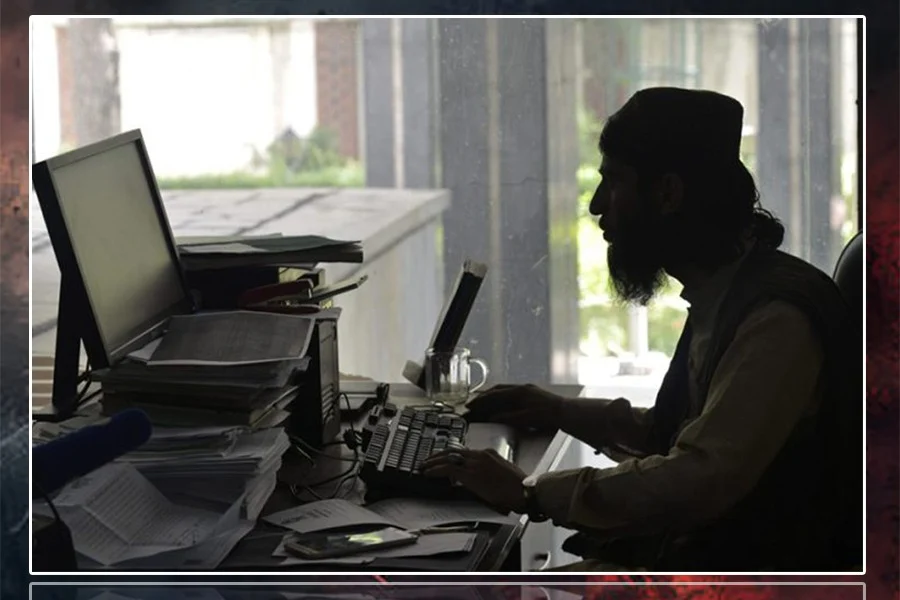
A number of the country’s citizens complain about corruption and discrimination in offices under Taliban control. They say the Taliban hire members of their own ethnic group, relatives, and kin to government posts wherever possible. They add that in some cases, relatives of Taliban officials receive salaries without doing any significant work, while most of the offices’ work is placed on the shoulders of former employees or newly hired specialists.
Nemat (pseudonym), a Kabul resident, says one of the problems in Afghanistan under Taliban rule is administrative corruption, cronyism and nepotism among Taliban officials. According to him, officials of ministries, directorates and other government institutions under Taliban control hire people from their own ethnic group, relatives and kin wherever possible, unless they cannot find a qualified and specialized person among their relatives for an announced post. In that case, the turn for hiring comes to others, and even then with many restrictions.
The Kabul resident says: “For example, the person hired must look like a Taliban member, cannot bargain much over his salary, and there have even been cases where people were hired in exchange for bribes. One of the worst forms of administrative corruption in Taliban offices is that officials hire a large number of their relatives or people affiliated with the Taliban, but a large part of the office’s work is done by one or two former employees or newly hired professional staff.”
Nemat adds: “In this way, the relatives of officials receive salaries without doing any significant work, and the main duties are placed on the shoulders of former employees or newly hired specialists. This is itself a form of illegitimate exploitation of people’s desperation.”
Mohammad (pseudonym), a source close to the Taliban, says corruption exists in most offices under the group’s control. According to him, contracts in the Taliban-controlled Kabul Municipality are not awarded transparently, and there is widespread corruption in the licensing section of the group’s Ministry of Public Health (MoPH).
The source says: “Contracts are given to individuals or companies that pay bribes and kickbacks to Taliban officials. In revenue collection as well, in some cases, documents at the municipality are altered in exchange for money.”
Mohammad adds: “There is also corruption in the licensing section of the Taliban’s MoPH, and licenses are issued in exchange for payment. Brokerage and corruption are also rampant in the Taliban’s security institutions. Likewise, in offices, the work of a person who has an acquaintance there or is connected to the Taliban is processed faster than that of others.”
Hikmat (pseudonym), another Kabul resident, says cronyism exists in most offices under Taliban control, and that he has personally witnessed it. According to him, every Taliban member who holds a position in the offices tries to hire relatives and close associates in the sections under their authority, even if these individuals do not have the necessary competence and expertise for the job.
The Kabul resident says: “The offices of Taliban-run Afghanistan have practically been placed largely at the disposal of people from one ethnic group. Even people from other ethnic groups, when they visit to get administrative work done, face red tape, arbitrary treatment and humiliating behavior.”
Meanwhile, Ahmad (pseudonym), an employee of a government office under Taliban control, says the treatment by the officials and heads of this office toward employees who also worked in government offices during the Republic era is different. According to him, these employees carry out the work of the office, but the senior posts and higher salaries are held by the relatives and affiliates of the Taliban.
The employee says: “When the Taliban came, we were dismissed, but because Taliban members could not do my work, they called me back, and because of the lack of job opportunities, I was forced to return. However, their treatment of us, the employees who worked during the Republic era, is very different. In many cases, we face humiliation and insulting remarks. Some of them call us ‘slaves of the infidels.'”
Ahmad says: “Even their salaries are higher than ours. We do the main work of the office, but the senior posts are held by the relatives and members of the Taliban, and they also receive higher salaries. Given that the country’s economic situation is not good and unemployment has increased, we are also forced to continue our work.”
This comes as sources in the Taliban’s Ministry of Interior Affairs (MoIA) said some time ago that administrative corruption is widespread in various sections of the ministry.
These sources added in an interview with the Hasht-e Subh Daily that in security zones, shops, stores, restaurants, bakeries, workshops, mobile phone shops and many other businesses are being extorted illegally. According to these sources, corruption is not limited to extortion, and the processes of issuing weapon-carrying permits, distributing weapons, reviewing criminal cases, releasing detainees, distributing cooking oil, and hiring personnel are also accompanied by heavy bribes.
You can read the Persian version of this report here:
فساد و تبعیض در رژیم طالبان؛ برای استخدام یا باید طالب بود یا وابستهگی قومی داشت