• 8AM.MEDIA
  • ویب‌سایت فارسی
  • پښتو ویب‌پاڼه
  • اۉزبېکچه ویب‌سایت
  • Podcast
Sunday, September 13, 2026
Hasht-e Subh
  • Home
  • News
    • Afghanistan News
    • World News
  • Opinion
    • Editorial
    • Analysis
  • Reports
    • Daily Reports
    • Investigative Reports
  • Society
    • The story of people
  • Women’s Word
  • Columns
    • Three Years After Afghanistan’s Fall: The Taliban’s Resurgence
    • Towards Equality
    • The Resurgence of the Taliban: Two Years Since Afghanistan’s Fall
    • Hebatullah Report Special Edition
    • Resistance for Education Special Edition
    • Special Column on Taliban’s Education Curriculum
    • Nawroz
  • Interviews
  • Contact Us
    • About Us
    • 8AM MEDIA Annual Awards
    • Submit an Article to Hasht-e-Subh
  • 8am.mediaBack
Subscribe
No Result
View All Result
  • Home
  • News
    • Afghanistan News
    • World News
  • Opinion
    • Editorial
    • Analysis
  • Reports
    • Daily Reports
    • Investigative Reports
  • Society
    • The story of people
  • Women’s Word
  • Columns
    • Three Years After Afghanistan’s Fall: The Taliban’s Resurgence
    • Towards Equality
    • The Resurgence of the Taliban: Two Years Since Afghanistan’s Fall
    • Hebatullah Report Special Edition
    • Resistance for Education Special Edition
    • Special Column on Taliban’s Education Curriculum
    • Nawroz
  • Interviews
  • Contact Us
    • About Us
    • 8AM MEDIA Annual Awards
    • Submit an Article to Hasht-e-Subh
  • 8am.mediaBack
No Result
View All Result
Hasht-e Subh
No Result
View All Result

Reactions to Desecration of Bodies: Calls Grow to Investigate Taliban’s Actions as War Crimes

Translated by Farhad Farhaad | Originally reported in Persian by Nima

Mohammad Mohammad
22 August 2026 - Solar Hijri Date: 1405/05/31 [t_time:1787407808]
Reactions to Desecration of Bodies: Calls Grow to Investigate Taliban's Actions as War Crimes. (Photo Credit: Social Media)

Social Media

Videos obtained by the Hasht-e Subh Daily show that the Taliban killed several fighters loyal to Juma Khan Fateh, their disgruntled commander, in Darwaz and then desecrated their bodies. In one of the recordings, the person killed is seen to be an elderly, white-bearded man lying in a pool of blood, while a Taliban fighter stomps on the elderly man’s face with his feet. The videos also show Taliban fighters desecrating the body of Hasib Panjshiri, one of the senior commanders of the National Resistance Front (NRF), who was killed in an ambush by the group in northern Salang. In the footage, Taliban fighters are seen grabbing his hair and dragging his body after killing him, while hurling insults at him. Some senior officials of the former government, including the former attorney general, have described the Taliban fighters’ desecration of the bodies of those killed as a clear violation of human dignity and international humanitarian law, and have called for these incidents to be documented and investigated as war crimes.

The Taliban’s treatment of the bodies of those killed has drawn widespread reactions in recent days. Videos related to Juma Khan Fateh’s fighters in Nusay district of Badakhshan and the body of Hasib Panjshiri, one of the senior commanders of Afghanistan’s National Resistance Front, have triggered a wave of criticism against the Taliban. Citizens of the country, along with political and civil society activists, have described the Taliban’s actions as amounting to war crimes, saying that the desecration of the bodies of those killed violates all standards of warfare and morality, and that the Taliban adhere to no code or principle.

Sources also say that Juma Khan Fateh’s forces were killed by the group’s southern fighters in the Dalwakh area after the fighting had ended and the Taliban had announced a ceasefire. According to these sources, the leader of the group of men killed was a person named Nasim, the son of Juma Khan’s maternal uncle. Some local Taliban members have also confirmed this claim, saying that the men in question were killed after the group’s fighters had already announced a ceasefire.

One source said: “There were people who surrendered. They dropped a bomb on them first and then killed them. These people had called out that they were surrendering and were not firing. They had received word of Juma’s surrender.”

The desecration of the dead by Taliban fighters has provoked widespread reactions among the country’s citizens on social media. Political, civil society, and human rights activists have strongly condemned the Taliban’s actions, emphasizing that the fighters’ conduct runs contrary to all moral, humanitarian, and Islamic values, and does not fall within the bounds of the laws of war either.

Many others have characterized the Taliban’s treatment of the dead as ethnically motivated, saying that any faction or group that rises to challenge the Taliban’s ethnic dominance faces this kind of humiliation and disrespect. They have warned that this Taliban conduct is highly dangerous and creates the conditions for a cycle of revenge.

Farid Hamidi, the former attorney general under the previous administration, wrote in response to the desecration of the bodies of those killed by Taliban fighters: “Human dignity is a divine gift that endures even after death and applies equally to all human beings, regardless of race, religion, language, ethnicity, and nationality. Disrespecting the dead and prisoners of war is an act contrary to human morality and a clear violation of Islamic principles and international law, including the Geneva Conventions.”

Mr. Hamidi wrote: “Desecrating bodies and insulting the dead represents the height of ignorance and moral collapse. Recent videos from Badakhshan, Badghis, and Salang show that this crime against humanity has been committed on a wide scale by the official forces of the Taliban administration. The officials, perpetrators, and those responsible who have remained silent in the face of these crimes bear equal responsibility. War, too, has its ethics, rules, and regulations. All warring parties must abide by these rules. Treating the dead in a manner contrary to human dignity is a sign of ignorance.”

Mujib-ur-Rahman Rahimi, spokesman for the High Council for National Reconciliation (HCNR) of the former government, wrote in response to the Taliban’s actions: “Mutilating and desecrating bodies is the conduct of polytheists and belongs to the age of ignorance.” He emphasized that the images and videos released from the recent fighting in Badakhshan show conduct that is clearly at odds with these principles.

Mr. Rahimi wrote: “Kicking bodies, placing a foot on the face of a killed elderly man and filming it, as well as the degrading treatment of the body of Commander Hasib Panjshiri, including pulling his hair and toying with his corpse. Such conduct cannot be justified in the name of Islam.”

Halim Fidai, the former governor of Logar province under the previous administration, wrote in response to the treatment of the body of Hasib Panjshiri: “The case of Hasib Panjshiri’s body should be documented and investigated by international institutions as an instance of a violation of international humanitarian law and a war crime. Under international humanitarian law, insulting, desecrating, mutilating, or engaging in any degrading treatment of the bodies of those killed during war is prohibited. Article 34 of Additional Protocol I to the Geneva Conventions specifies that the remains of war victims must be handled with respect.”

Mr. Fidai wrote: “Furthermore, Rule 113 of the International Committee of the Red Cross (ICRC)’s Customary International Humanitarian Law prohibits any desecration, mutilation, or insult to bodies. In addition, Article 8 of the Rome Statute of the International Criminal Court (ICC) classifies insulting and degrading conduct against human dignity as constituting a war crime; legal interpretations of this article also extend to the desecration of victims’ bodies.”

Videos of Taliban desecration of the bodies of those killed have been released repeatedly in the past as well. Over the past five years, the Taliban have consistently insulted and desecrated the bodies of those who fought against them after killing them.


You can read the Persian version of this report here:

واکنش‌ها به بی‌حرمتی به اجساد کشته‌شده‌گان؛ این اقدام طالبان به‌عنوان جنایت جنگی بررسی شود

ShareTweetSendSendShare

Related Posts

A shaded map highlights Badakhshan in Afghanistan's northeast against a backdrop of the region's rugged mountains. (Photo credit: Wikipedia)
Analysis

Badakhshan: From a Legacy of Resistance to a Role in Afghanistan’s Political Transition and the Building of an Inclusive National State

12 September 2026 [t_time:1789237315]
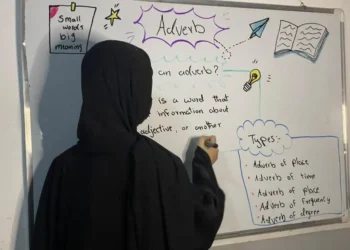
A girl attends an online class on her computer, part of Afghanistan's growing network of remote education for women barred from university. (Photo credit: Social Media)
Analysis

Woman Online University: Civil Resistance Redefines Education in Afghanistan’s Age of Closure

12 September 2026 [t_time:1789236462]
Mullah Hafiz, the Taliban governor of Farah, seen smiling beside an old photo of him as a young fighter in Badakhshan. (Photo credit: Social Media)
Daily Reports

Mullah Hafiz: How a Taxi Driver Became a Taliban Governor

12 September 2026 [t_time:1789234794]

Latest

Loading latest news...

Popular stories

  • Hamza bin Laden - the son of Osama bin Laden (Photo: Social Media)

    Al-Qaeda Releases Hamza bin Laden Message on 9/11 Anniversary

    Share
    Share Tweet
  • Taliban Shoot Young Man from Herat After Torturing Him with Hands Tied

    Share
    Share Tweet
  • UN Women: Ban on Women’s Entry to UN Offices in Afghanistan Enters Second Year

    Share
    Share Tweet
  • Sajjad Haider Khan: Those with Valid Visas Will Continue Their Studies in Pakistan

    Share
    Share Tweet
  • Scholarship to Deportation: Pakistan Orders Mass Expulsion of Afghanistan Citizen Medical Students

    Share
    Share Tweet

Podcast

Insights
Insights

Join Lynne O’Donnell for 8AM’s podcast series, Insights.
Lynne talks with generals, diplomats, soldiers, journalists, politicians, activists, people who have front row seats for conflicts around the world, and citizens with a story to tell, happy or sad. For this first series, Afghanistan is the focus. Lynne and her guests talk about the collapse of the republic in August, 2021, and the impact since — for the people of Afghanistan, for the security of the region, for the safety of the world. It’s important, interesting and insightful.

Insights/22: Controlling the Narrative with Mina Sharif
byinsights8am

Controlling the Narrative

Lynne O’Donnell talks with Mina Sharif, author, activist, women’s rights campaigner, educator and mentor. They discuss who controls the narrative and who speaks for Afghanistan’s people when the Taliban appear to have seized control not only of the country but of the message, too.

Have a listen

Insights/22: Controlling the Narrative with Mina Sharif
Episode play icon
Insights/22: Controlling the Narrative with Mina Sharif
Episode Description
Episode play icon
Insights/21: Media Meltdown with Zahra Joya
Episode Description
Episode play icon
Insights/20: Terror Inc with Scott Richards
Episode Description
Episode play icon
Insights/19: Busting Stereotypes with Bushra Gohar
Episode Description
Episode play icon
Insights/18: Media Matters with Waliullah Rahmani
Episode Description
Episode play icon
Insights/17: What Goes Around Comes Around with Sima Samar
Episode Description
Search Results placeholder
Hasht-e Subh

8AM Media, also known as Hasht-e-Subh Daily, stands as Afghanistan's premier independent and non-profit newspaper, resonating as a beacon of journalistic integrity since its establishment in June 2007 by esteemed Afghan journalists and human rights advocates. With a steadfast commitment to citizen journalism and civic education, Hasht-e-Subh Daily has earned its place as the most esteemed publication in the nation.

Publisher: Sanjar Sohail
Email: [email protected]
Executive Director: Parwiz Kawa
Email: [email protected]

Read More

Badakhshan: From a Legacy of Resistance to a Role in Afghanistan’s Political Transition and the Building of an Inclusive National State

Woman Online University: Civil Resistance Redefines Education in Afghanistan’s Age of Closure

Taliban’s Propaganda Tactics: Sowing Discord Among Opposition Fronts and Stoking Fear of Civil War

Taliban Revenge: Critics Arrested Upon Return to Afghanistan from Abroad

Mullah Hafiz: How a Taxi Driver Became a Taliban Governor

Editor’s Choice

Every Saturday morning, 8AM MEDIA English Services Department will guide you through the week’s biggest stories from Afghanistan and the international community.

Subscribe

© 2026 - ©Hasht-e Subh Daily

No Result
View All Result
8am.Media
پښتو ویب‌پاڼه
ویب‌سایت فارسی
اۉزبېکچه ویب‌سایت
  • Home
  • News
    • Afghanistan News
    • World News
  • Opinion
    • Editorial
    • Analysis
  • Reports
    • Daily Reports
    • Investigative Reports
  • Society
    • The story of people
  • Women’s Word
  • Columns
    • Three Years After Afghanistan’s Fall: The Taliban’s Resurgence
    • Towards Equality
    • The Resurgence of the Taliban: Two Years Since Afghanistan’s Fall
    • Hebatullah Report Special Edition
    • Resistance for Education Special Edition
    • Special Column on Taliban’s Education Curriculum
    • Nawroz
  • Interviews
  • Contact Us
    • About Us
    • 8AM MEDIA Annual Awards
    • Submit an Article to Hasht-e-Subh
  • 8am.media

© 2026 - ©Hasht-e Subh Daily