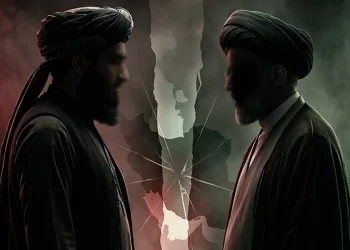

Five years have passed since the fall of the Republic of Afghanistan. During this period, the Taliban have managed to retain power; however, various political and military currents and groups have also formed in opposition to them. Nevertheless, these currents have not yet been able to become an influential political and military force or a credible alternative for Afghanistan’s future. The fundamental question is: why? From my point of view, the answer must be sought in several issues:
First: We still do not agree on “what do we want?”
A large part of the Taliban’s opponents agree on what they do not want; but when the question of the day after the Taliban is raised, there is no shared picture. What kind of system do we want? How should power be divided? What place should citizenship rights hold? What should the relationship between the center and the regions look like? How should we deal with ethnic and political differences?
Opposing the Taliban alone is not a political program. If the goal is merely a change of rule, but there is not even minimal agreement on the system that would follow it, the risk of repeating the past remains.
Second: Ethnocentrism, the absence of an inclusive narrative, and mistrust
One of the fundamental problems is that competition over the future of power begins even before power is attained. If one current enters the field with a clearly defined leadership and ethnic base, other groups may become concerned that after a change of rule, power will once again be monopolized by a single group. Under such circumstances, each group thinks more about “what will our place be?” than about “what kind of system is suitable for everyone?”
But the problem is not ethnocentrism alone; we have also not yet managed to build an inclusive political narrative capable of bringing different groups together around a shared future, beyond ethnicity, language, region, and political affiliation.
As long as each current looks at the future primarily through the lens of its own identity and interests, building a shared political project will remain difficult.
If we want a future Afghanistan that belongs to everyone, we need a narrative in which everyone can see themselves; a narrative based on equal citizenship, not the superiority of one group over another.
Third: Opportunistic leaders and the absence of strategic vision
Political and military struggle requires not only motivation and courage, but also strategic leadership. One of our problems is that we have more often encountered opportunistic leaders than program-oriented ones; leaders who at times think more about today’s opportunity, preserving their own position, and gaining power than about building a stable political future.
A strategic leader must be able to think beyond today’s circumstances; must know what they want, what path must be taken to achieve it, and, most importantly, how to govern the country if that goal is reached.
The problem becomes more serious when leaders use ethnicity, emotion, and slogans to mobilize people, yet have no clear program regarding the future political system, the division of power, citizenship rights, and how to manage disputes, including disputes over national identity.
A leader who has a plan only for seizing power but no plan for governing is not necessarily a strategic leader. We may have many leaders, but what we need is program-oriented, accountable leadership with a long-term vision.
Fourth: The people and social base
Responsibility for this situation does not rest with leaders alone; the people also play a role in shaping and sustaining it. To a large extent, we have not yet learned to make political programs and viewpoints the standard in politics, rather than the individual, ethnicity, language, and religion.
If people do not ask a given candidate, “what will you do if you win?”, leaders will have less incentive to present a clear program.
On the other hand, the Taliban’s opponents have not yet managed to build a broad social base that extends beyond ethnic, linguistic, and regional affiliations. Without the trust of the people, no political current can become a decisive force.
Fifth: Interests, money, and the war economy
Part of the problem facing the Taliban’s opponents must also be sought in the relationship between power, wealth, and war.
Over the past few decades, several leaders and commanders who were once on the battlefield have gradually acquired capital and economic interests, and today a large part of their lives is spent outside Afghanistan. This change in circumstances raises an important question: is their outlook on war and peace still the same as it was before?
War does not necessarily carry the same meaning for someone living inside Afghanistan who pays its cost every day as it does for someone living outside the country who enjoys a comfortable life.
In some conversations and online political programs among some of these leaders, an impression also emerges that certain currents, rather than building an independent capacity for struggle of their own, are waiting for international support and resources to become available so that they can enter a military phase.
Sixth: From opposition to a political alternative
Perhaps this is the most important problem of all. Being opposed to the Taliban is a starting point, but it is not enough to become an influential force. A political alternative must have leadership, organization, a program, a social base, and independence in decision-making.
If these elements do not come together, there may be many currents opposed to the Taliban, yet they may still be unable to exert a decisive influence on the country’s political equations.
If the Taliban’s opponents truly want to influence Afghanistan’s future, they must move beyond reactive politics and temporary coalitions and arrive at a clear political project; a project in which people know what is being fought for and how Afghanistan will be governed if that struggle succeeds.
In conclusion
Five years after the fall of the Republic, the important question is not merely when and how the Taliban will step aside. The more important question is: if an opportunity for change arises tomorrow, are the Taliban’s opponents ready to govern Afghanistan?
If we still do not agree not only on the political system, the division of power, citizenship rights, and how to manage disputes, including disputes over national identity, but have not even reached agreement on the minimal rules of transition, a change of power alone will not guarantee a better future.
Afghanistan does not need only a change of government; it needs a political alternative and an inclusive narrative. Perhaps this is the most important test facing the Taliban’s opponents: can they move beyond “opposition to the Taliban” and arrive at “a program for Afghanistan after the Taliban”?
You can read the Persian version of this analysis article here:
پنج سال پس از سقوط؛ چرا مخالفان طالبان هنوز نتوانستهاند بر آینده افغانستان تأثیر بگذارند؟