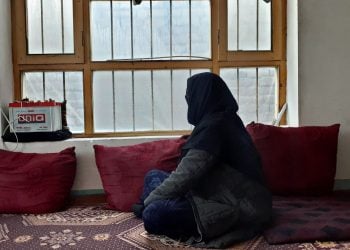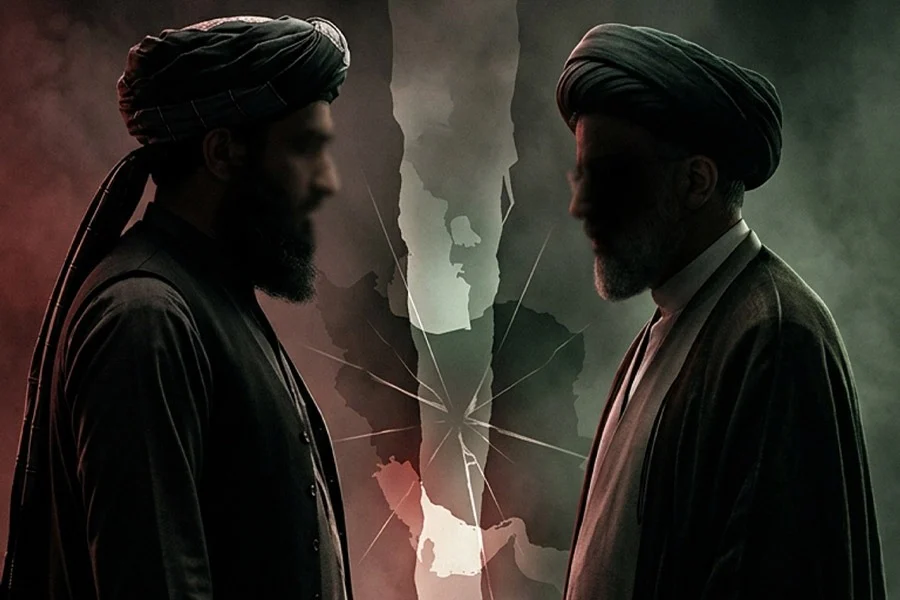
In recent weeks and months, pressure on the Shia has intensified, from restrictions on Ashura ceremonies to the closure of their educational and media institutions in Kabul and some other provinces. Amid this, the position of the Islamic Republic of Iran has come under question. It is a system that regards itself as the staunch patron of Shia around the world, yet it has often remained cautious and quiet in the face of the fate of the Shia of Afghanistan. To understand the Islamic Republic’s relationship with the Shia of Afghanistan, we must first answer this question: what place does Afghanistan occupy in Iran’s calculations at all?
The reality is that, despite being a neighbor and sharing historical, cultural, linguistic, and religious ties with Iran, Afghanistan has never held a place in the foreign policy of the Islamic Republic equal to that of the Arab world. Iran’s attention, especially in the years after the Islamic Revolution, has been directed mostly toward Palestine, Lebanon, Syria, Iraq, and later Yemen, along with the developments of yesterday and today in the Arab world. Afghanistan has remained on the margins. This neglect (if we do not call it indifference) is not limited to the political system either; Iranian citizens, too, do not trouble themselves to learn about Afghanistan. For this reason, the dominant Iranian definition of Afghanistan is as follows: a country made up of diverse ethnic groups, groups which, in their view, are mostly at war with one another and do not welcome peace. That is all.
For example, Chengiz Pahlavan, a well-known Iranian scholar of Afghanistan who spent years in the country and has also written a travelogue, openly criticizes the Iranian government and society for their lack of attention to Afghanistan. According to him, even when Afghanistan was under Soviet occupation, Iran was more turned toward Palestine and the Arab world than toward its eastern neighbor. Some other Iranian travel writers have likewise criticized in the manner of Pahlavan. For example, a travelogue titled The Creature of Kandahar by Hadi Masoumi Zare was recently published; he traveled to Afghanistan in the first days after the Taliban’s return. In his book, Masoumi also criticizes Iranians’ ignorance about Afghanistan and the foreign policy of the Islamic Republic toward Kabul. For example, he says the following to one of his hosts in Kabul: “Then I tell him that even the Iranian leftists in the 1960s and 1970s paid more attention to their Cuban and Russian comrades, and even Palestinian ones, than to your leftist compatriots. I do not know whether it comes from our racism. From your shortcomings. Or what.”
Given this, when Afghanistan does not have a clear place in Iran’s foreign policy, it is natural that the Shia minority of Afghanistan also cannot find a place equal to that of the Shia of Lebanon, Iraq, Yemen and others.
Even if we assume that Afghanistan is important to Iran, its foreign policy still cannot be explained merely by the question of Shiism. In Afghanistan, the Persian language has been at least as important to Iran as religion. Iran’s conduct during the first period of the Taliban regime and the resistance against that group is a clear example of this reality. At that time, the Islamic Republic was closer to Ahmad Shah Massoud than to the others. At the same time, it tried to remain in contact with Gulbuddin Hekmatyar as well; that is, with a large spectrum of Tajiks, Hazaras, Sayyids, Uzbeks and Pashtuns. In Lebanon, Iraq, Yemen and elsewhere, by contrast, it regards the Shia as its exclusive and key allies. Even now, among the forces opposed to the Taliban, it prefers Ahmad Massoud over the rest. Therefore, there is a fundamental difference in Afghanistan compared to the Arab world: in the Arab world, Shiism is Iran’s only point of entry, but in Afghanistan, not only Shiism but also the Persian language is a consideration. Mohammad Omar Daudzai, Hamid Karzai’s special envoy for Iran, also points to this same difference in his memoir. According to Daudzai, on its eastern borders, the Persian language matters more to Iran than Shia orientation (unlike its conduct in the Arab world). The importance of referring to Daudzai here lies not in the originality of his analysis but in his position. Daudzai was not an outside observer, but the special envoy of a country, and he dealt directly with Iran’s diplomatic apparatus over Afghanistan. From this perspective, his understanding becomes significant.
Alongside the two factors above, the fact that the Shia are a minority in Afghanistan also affects the calculations of the Islamic Republic. Namely, they do not enjoy the internal unity they should, and have not become a cohesive and unified political bloc. In Lebanon, by contrast, the situation is different: the Shia have gathered around Hezbollah as a political and military organization and a strategic ally of the Islamic Republic. In Iraq, too, the unity the Islamic Republic desires has been established. But in Afghanistan, it is unlikely that an organization of the Hezbollah type will easily take shape, one that would gather the Shia around a single axis and at the same time be a lasting partner of Tehran. Even the Fatemiyoun does not have this quality, because it was created outside Afghanistan and its main function is also beyond the borders. Therefore, the Islamic Republic’s understanding may be that political and security investment in Afghanistan, unlike in Lebanon and Iraq, will not produce a clear result. In Lebanon, Iran’s investment led to a powerful and lasting partner; in Iraq, too, a network of Shia political and security forces emerged that serves Tehran’s purposes. But this possibility faces difficulty in Afghanistan. Therefore, Iran’s caution in Afghanistan is to some extent the result of a “cost-benefit” calculation.
Another important factor is the nature of the Taliban regime, a regime founded on a particular reading of Sunni Islam and specifically the Hanafi school of jurisprudence, in which the Shia cannot have a place or standing. This situation makes the matter more complicated for Iran. In Iraq or Lebanon, a Sunni movement may have a sharp political dispute with the Islamic Republic, but this does not necessarily mean “anti-Shia sentiment.” In Afghanistan under Taliban rule, not only hostility toward Iran but also hostility toward the Shia is at stake. For this reason, the more visible Iran’s support for the Shia of Afghanistan becomes, the more likely it is that the Taliban will regard it not merely as the defense of the rights of a minority but as an effort to create religious and political influence in Afghanistan. In such circumstances, instead of reducing pressure on the Shia, Iranian pressure could heighten the Taliban’s sensitivity and even provide grounds for anti-Iranian and anti-Shia propaganda, the consequence of which would be this group’s drift toward the West and the Arab world. As a result, Tehran faces a dilemma: if it openly defends the Shia of Afghanistan, it intensifies the Taliban’s religious sensitivity; and if it chooses silence and caution, the gap between the words and actions of the Islamic Republic in supporting the Shia becomes more apparent.
However, one more factor cannot be ignored: the reformist government of Masoud Pezeshkian. We know that the policy of the Islamic Republic is not uniform; the government, the Ministry of Foreign Affairs (MFA), the Islamic Consultative Assembly, the Islamic Revolutionary Guard Corps (IRGC), and other centers of power do not necessarily speak with one voice on regional issues. For example, reformist governments support de-escalation, dialogue, and refraining from interference in the affairs of other countries, but hardliners do not. Hardliners speak openly about the necessity of supporting Iran’s proxies in the Middle East, but moderates and reformists hold their tongues and step forward with caution. This difference can be seen in the files on Iraq, Lebanon, Syria, Yemen, and others. Therefore, the political orientation of Pezeshkian’s government can affect the level of Iran’s support for the Shia of Afghanistan. Apparently, in his government’s approach, maintaining relations with the established regime in Kabul takes precedence over an open and costly defense of the Shia.
You can read the Persian version of this analysis article here: