In public discourse, the Taliban are often portrayed as two distinct factions: the hardline conservatives from Kandahar, led by Hibatullah, and the more pragmatic, reality-driven group in Kabul, associated with the Haqqani network. This dichotomy forms the basis of common judgment and intelligence expectations, encouraging the belief that emerging pragmatism within parts of the Taliban could fundamentally reshape the group’s behavior and policies. But is this assumption valid?
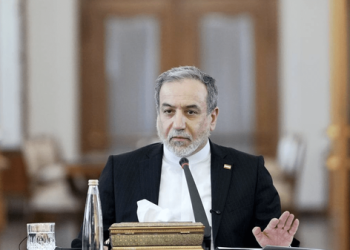
Across the region, warming interactions with the Kandahar faction, Russia’s recognition of the Taliban, China being granted an embassy, and Iran’s advisory cooperation all proceed from this very hypothesis. The key question remains: Are the Taliban genuinely prepared to replace ideological extremism with a pragmatic, modern approach?
In my view, the so-called “pragmatism” observed in Taliban conduct is not a strategic transformation; it’s a temporary tactic designed for survival and to deceive the international community. The Taliban use these tactical displays to buy time, extract concessions, and consolidate power, with no evidence of a genuine ideological shift.
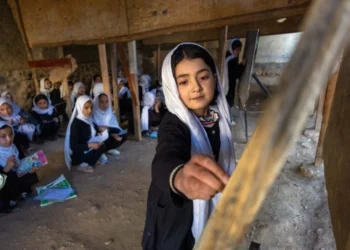
Dialogue between the Haqqani network and Western or neighboring countries does not represent a departure from the Taliban’s core principles. Excluding women from public life, affirming the supremacy of the Islamic Emirate, and suppressing civil liberties continue to be their red lines. Taliban pragmatism is superficial, selective, and instrumental, a deliberate effort at positive image-making rather than substantive change in beliefs or policy.
In realms of politics, economics, culture, and foreign relations, the Taliban have cleverly wielded deception to craft a more palatable public persona. Though these efforts have sown doubt among some governments, the reality remains that there is no substantive difference between the Haqqani network and the Kandahar leadership. Both are ethno-nationalist, tolerant of terrorism, opposed to pluralistic civilization, and dismissive of cultural and linguistic diversity.
The Haqqani network, without undergoing any fundamental transformation, has morphed into a monstrous apparatus advancing terror, intimidation, and extortion under the guise of a shadow state and state-sponsored terrorism. While providing sanctuary to al-Qaeda leaders and supporting terrorist factions, the group has turned its so-called “fight against ISIS” into a public relations spectacle. The Taliban’s ideological commitment to transnational terrorism has become a bargaining chip to extract concessions from both regional actors and the broader international community.
In the Taliban’s political lexicon, “pragmatism” is not a genuine evolution; it is an intelligence tactic designed to fabricate legitimacy. Even as the group seeks international recognition, it has never severed its ties with terrorist organizations, for those very ties serve as a key source of power and diplomatic leverage.
The Taliban’s tactical engagement with the world is primarily a strategy for crisis management and the preservation of political survival. If their hold on power were ever seriously threatened, the Haqqani network, with its seemingly moderate façade, would likely step forward to prevent complete collapse. Yet this superficial flexibility must not be mistaken for a retreat from the Taliban’s hardened ideological core.
Ultimately, there is no substantive difference between the Haqqani network and the Kandahar leadership in their ethno-nationalist, terrorist-sympathetic, anti-modern, and anti-Persian worldviews. Both factions manipulate the language of “pragmatism” merely to deceive global audiences and buy time. This duplicity will persist as long as the international community continues to turn a blind eye to the realities of Taliban terrorism and gender apartheid, a negligence that risks grave consequences for the region and beyond.
The Haqqani network is neither reformist nor liberal. Its projection of pragmatism is nothing more than a carefully crafted disguise, an instrument to ensure survival, whitewash its record, and maintain its support for terrorism. It knows well that ideological extremism and fidelity to Taliban doctrine remain the only reliable guarantors of its power.