Afghanistan faces more than a shortage of funding. Interconnected crises are making everyday life increasingly difficult. A child without adequate nutrition is more vulnerable to illness; a woman without access to a midwife faces greater risks in childbirth; and a family returning after years abroad may find itself without a home, work, or safe drinking water. Each problem compounds the others.
Donors should therefore look beyond the size of their budgets or how quickly projects can begin. They must first establish which needs are most urgent, how assistance will reach people, and what capacity will remain once funding ends. Prioritising the most vulnerable, understanding local conditions, and planning for lasting results can make limited resources more effective. It can also reduce duplication and direct support to underserved communities. The voices of vulnerable families must inform every stage.
Priority One: Maternal and Child Health, Where Delays Cost Lives
Care for pregnant women, newborns, and malnourished children must be central to the humanitarian response. The World Health Organization estimates that 14.4 million people in Afghanistan need health assistance in 2026. In October 2026, UNICEF warned that more than four million children could require treatment for acute malnutrition in 2027.
The crisis is not simply a shortage of medicine. Poverty, inadequate diets, unsafe water and distance from health facilities threaten mothers and children simultaneously. Nutrition services, vaccination, antenatal and postnatal care, patient referrals and safe water supplies must therefore be coordinated. Unpredictable funding can force a clinic to close when families have no alternative.
Restrictions on women’s education and employment also undermine the training of future midwives, nurses and female doctors. Supporting existing staff and offering further training with Afghan medical professionals abroad could help, but cannot replace the removal of fundamental restrictions. Sustainability in healthcare does not mean charging impoverished patients. It means reliable financing, qualified staff, medicines, and continuity of care.
Priority Two: Returnees, Displaced People and Host Communities
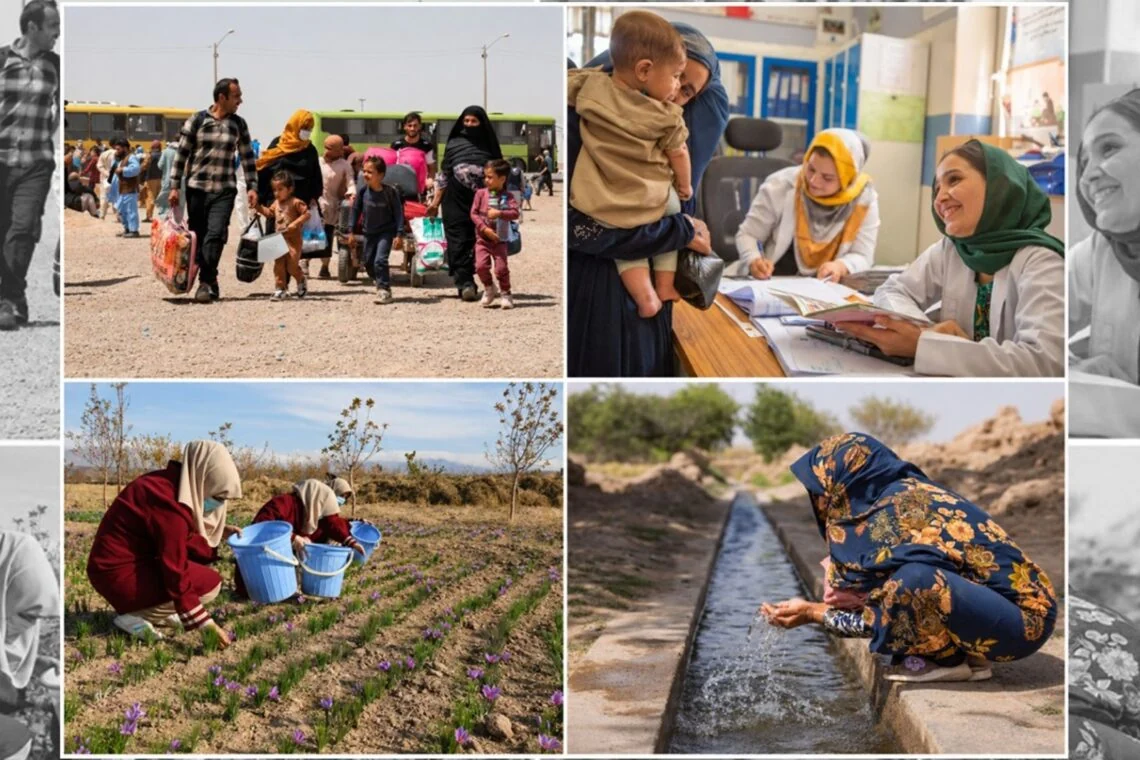
The return of Afghans from Iran and Pakistan is not simply a border-management issue. According to the International Organization for Migration, approximately 6.5 million Afghans returned from these countries between September 2023 and the end of August 2026. Many are arriving in areas already short of housing, water and jobs.
Cash and food assistance at entry points are essential, but families also need shelter, identity documents, schools, clinics and livelihoods where they settle. Long-term residents face greater pressure on public services and competition for employment. Assistance aimed exclusively at new arrivals can place additional strain on host communities.
Planning must therefore assess the capacity of the receiving area, not merely count border crossings. District-level assessments of water, housing, healthcare and labour markets can identify appropriate investments. Improving local water systems or supporting businesses that employ both returnees and established residents can benefit everyone. For internally displaced people, safety, equal access and freedom to choose where to live must remain fundamental.
Priority Three: Water, Food and Livelihoods, From Inputs to Income
In agricultural communities, water and income are inseparable. Building canals, distributing seeds or introducing new crops does not automatically create sustainable livelihoods without resource management and market access. Economic programmes must begin with a needs assessment and connect production, storage, processing, transport and sales.
Saffron cultivation in Uruzgan offers a useful lesson. The Dutch company Growing Sales Exchange launched a saffron initiative in 2007; official records reported cultivation by 126 farmers in 2008. A subsequent Dutch assessment found that outcomes depended on training, financing, security, prices and access to markets. Introducing a high-value crop is not enough: what matters is the producer’s share of the final value.
The same applies to dairy products, dried fruit and small industries. Before purchasing equipment, programmes should establish potential buyers, maintenance costs and the skills required. Emergency food or medical care must never be conditional on joining an economic programme.
Priority Four: Education and Skills, Especially for Women
Educational success should be measured not simply by enrolment or certificates, but by learning quality and readiness for further study or employment. A student completing grade 12 should have the knowledge and skills needed to meet entry requirements for universities in the region, neighbouring countries or international online degree programmes.
Online learning, stronger English-language skills, digital literacy and training local educators can help create these pathways. They are especially important for girls and women denied educational opportunities. The objective must be useful knowledge, recognised skills and genuine opportunities, not certificates alone.
The Role of Specialist Organisations: From Local Evidence to Sustainable Development
A central challenge in aid delivery is the distance between donors’ decisions and people’s lived realities. Needs and capabilities vary across Afghanistan’s provinces. Programme design must therefore start with reliable information, data analysis,s and verification of local needs. The durability of results should be considered from the outset, not after a project closes.
NOUR Peace Foundation, based in the Netherlands, draws on experience gathering and examining information from different Afghan provinces. Its approach is to analyse local evidence, then develop structured, practical programmes based on each area’s needs, resources and opportunities. Implementation could be entrusted to qualified, independent local organisations.
Under this proposed model, NOUR’s contribution extends beyond programme design. Locally relevant training materials, online courses and a train-the-trainer approach would help transfer knowledge within communities. Local organisations would implement activities; NOUR would provide analysis, technical guidance and educational support; and donors would establish financial oversight and independent evaluation. The aim is to leave behind the skills and local capacity needed to continue the work.
Priority Five: Independence, Oversight and Accountability for Results
Foreign assistance must reach people without handing control of resources to unaccountable structures. The Netherlands does not recognise the Taliban government and emphasises independent delivery channels and women’s access to aid. Yet calling an implementing partner “non-governmental” does not, by itself, guarantee independence.
Before signing contracts, donors should examine partners’ credibility, financial flows, beneficiary selection, ownership of equipment and safe complaint mechanisms. Essential administrative contact to deliver services does not itself constitute political recognition; the crucial test is whether control of assistance remains independent.
Success must also be measured by changes in people’s lives. Did a mother gain access to healthcare? Did a returning family secure shelter and income? Did a livelihood activity continue after funding ended? Baseline measurements, independent evaluations, and the ability to adjust programmes must be built into contracts.
Conclusion: From Fragmented Projects to Multi-Year Responsibility
An evaluation published in 2026 of humanitarian assistance in Afghanistan from 2020 to 2024 found that connecting emergency relief with sustainable solutions remained difficult. That is not an argument for ending aid. It is a case for better design, stronger monitoring and greater continuity.
Essential services, including maternal and child healthcare, require predictable funding. Livelihood programmes require local knowledge, viable markets and a credible plan for continued operation. Before approving any programme, decision-makers should ask: Which need is most urgent? Which response fits local realities? And what will remain for people once the money runs out?
Responsible aid should save lives today and, wherever possible, strengthen people’s ability to live and work independently tomorrow.