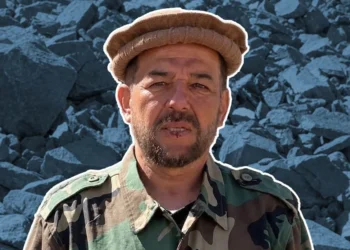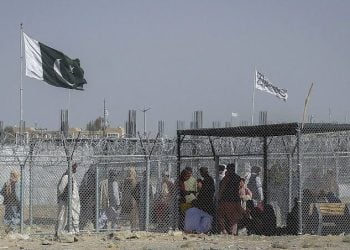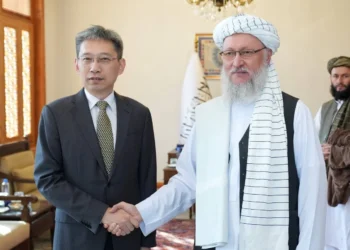

Over the past five years, the United States has repeatedly stated that it does not recognize the Taliban regime in its current form and structure, and that establishing ties with the group, even on a limited scale, is not on its agenda. The Taliban, on the other hand, are eager for friendship with the United States and try to seize every opportunity to pave the way for the renewed presence in Afghanistan of a country they fought for twenty years to expel. Amir Khan Muttaqi, the Taliban’s foreign minister, recently called for a US return to Afghanistan in interviews with Britain’s Financial Times and Japan’s Kyodo News, a return that would entail recognition of the Taliban regime, the reopening of the US embassy in Kabul, and Washington’s investment in various sectors, particularly mining. Senior Taliban officials have repeatedly called for relations with the United States before, but have so far been rebuffed. It appears that after seizing power, the Taliban have come to better appreciate American leverage, leverage that has prevented recognition of their regime. Taliban officials have repeatedly acknowledged that the key to recognition of their regime lies in Washington’s hands, and that efforts to secure recognition from other countries would not offer much of a way forward.
Given the above, a question arises: will the Taliban’s repeated appeals to the United States continue to go unanswered? To answer this question, it is worth turning to the history of hostility between the Islamic Republic of Iran and the United States. Mahmoud Sariolghalam, a well-known professor of political science in Iran, has written a series of articles on the Islamic Republic’s foreign policy. In these articles, he examines the dimensions and components of the Islamic Republic’s foreign policy in depth. He also discusses whether a revision of Iran’s foreign policy is possible, and whether the Islamic Republic has the capacity to form alliances with other countries. Most importantly, he offers noteworthy insights into the contradictions in the Islamic Republic’s foreign policy in its dealings with the West, particularly the United States. Reading about these contradictions brought to mind the Taliban’s entreaties toward the United States.
The first contradiction Sariolghalam identifies concerns Iran’s membership in the World Trade Organization (WTO). In his view, Iran strongly desires membership in this organization while opposing the regulation of the global economy by the United States, even though the organization was established by the United States and other wealthy industrialized countries. He argues this is untenable, and that one must choose between membership in this organization and confrontation with the United States. In his assessment, it is not possible to both benefit from membership in this organization and rise against the United States. In other words, one cannot simultaneously be friends with an established government and its opponents. This is unworkable, and anyone who attempts it meets the same fate as the Taliban: the deterioration of the group’s relationship with Pakistan over its support for Tehrik-i-Taliban Pakistan (TTP).
The second contradiction Sariolghalam identifies is the Islamic Republic’s strong desire for economic ties with the West without attaching the same importance to improving political relations with it. In other words, Tehran distinguishes between foreign economic relations and foreign political relations, and prioritizes the former over the latter. According to Sariolghalam, the Islamic Republic wants Western industry and technology, but not its politics, culture, or philosophy. He writes even more explicitly that nearly 90 percent of Iran’s foreign trade is with the West, even as the West is portrayed as steeped in corruption, or its existence is denied altogether. This too is unworkable, because, in his words, since 1995 the West has presented itself as a single system, a collection of politics, economy, industry, culture, technology, and so on, a system whose components must be accepted or rejected as a whole. There is no right to pick and choose at will. Of course, only powerful countries can afford to pick and choose; weaker actors cannot, unlike the Taliban, who must beg for relations.
The third contradiction, in Sariolghalam’s view, is the incompatibility of economic privatization with a revolutionary foreign policy. He defines economic privatization as “political accommodation” with the Western world, which he argues cannot coexist with a revolutionary foreign policy. In his view, the Islamic Republic must either abandon its revolutionary foreign policy or abandon the superficial efforts of some of its institutions toward economic privatization. A country that wishes to remain friends with the United States cannot maintain a centralized, state-socialist economy.
On closer examination, these same contradictions hold for Taliban foreign policy as well, with one difference: unlike the Islamic Republic, the Taliban do not define their existence through permanent confrontation with the West, particularly the United States, and they have no stake in the Israeli-Palestinian issue. But in many other respects, both hold the same view of the Western world, and the contradictions in their foreign policies are nearly identical.
For example, the Taliban openly cite religious verses and traditions to argue that women, being “lacking in reason,” are unfit to participate in politics, the economy, society, and culture. Yet at the same time, they extend a hand of friendship to a country that is the world’s strongest advocate for women’s rights (though its many shortcomings on this front are undeniable). This is unworkable, especially given how weak the Taliban are and how dependent their survival is on foreign financial assistance.
On politics too, the Taliban shoot down the shadow of democracy, yet seek recognition of their regime from the United States, a country that has even gone to war to spread and establish democracy around the world. What the Taliban want is for the United States to overlook the form and nature of their regime while still benefiting fully from America’s modern industry, economy, and technology. This too is unworkable, especially considering that on one side stands the world’s superpower, and on the other, a group that in more than five years has not even resolved its own crisis of legitimacy.
The same contradiction runs through economic matters. These days, Taliban officials openly declare that Afghanistan’s underground resources await exploration by the United States. Muttaqi has argued that America’s assessment of the Taliban should be based not on the twenty-year war but on the group’s “open economic policy.” He has said the United States could work with the Taliban in mining, infrastructure, agriculture, and other sectors, but he overlooks the fact that the Taliban regime is not prepared to accept the basic principles of a market economy, and that the United States only does business with countries whose private sector is alive and functioning, not one crushed under state control. The reality is that under Taliban rule, the private sector has effectively been buried, even as the group claims, in appearance, to support it. Even if the Taliban were to embrace privatization, the private sector would still be unwilling to operate under the group’s shadow, even at the cost of losses.
Given all this, recognition of the Taliban regime by the United States does not appear likely, unless the Taliban shed their skin entirely and become a different regime altogether, a separate discussion in itself. Engagement with the Taliban, however, is possible, though this falls far short of “formal relations.” Even now, the United States engages with the Taliban, an engagement from which neither side benefits much. This is why the Taliban want to move beyond the current half-hearted engagement and enter a “new phase,” something Washington does not want, a reluctance rooted in the ongoing contradictions in Taliban foreign policy.
You can read the Persian version of this analysis article here: