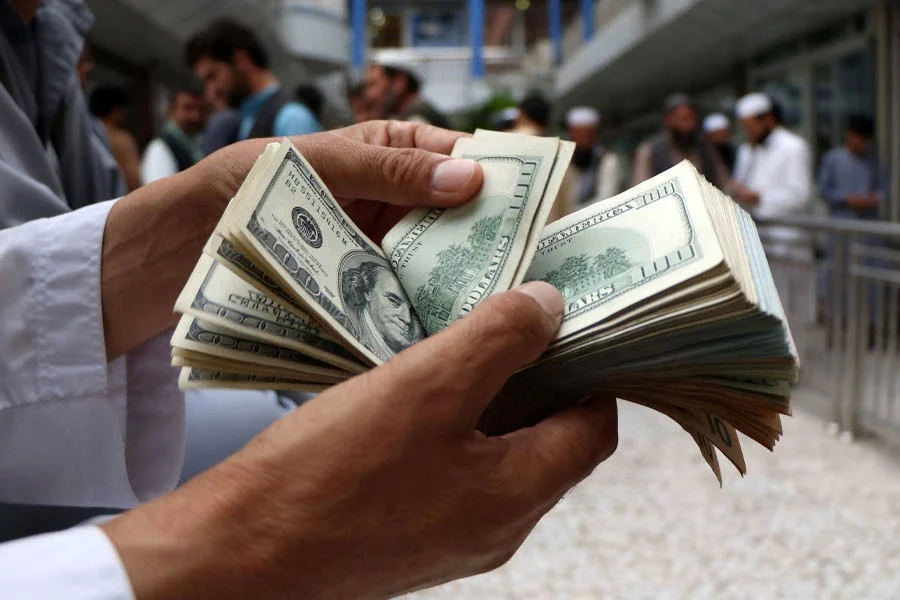
Despite the operation of private and state-owned banks in Afghanistan, a number of citizens and traders say they still use money exchange shops and the hawala system to send and receive money. They cite restrictions on withdrawing and transferring large sums, administrative procedures, the need for documents, delays in completing some transactions, and distrust of the banking system after the fall of the previous government as reasons for turning to exchange shops. According to them, the speed of settlement and easier access to exchange services have also led them to prefer these methods over banking services in some transactions.
In conversations with the Hasht-e Subh Daily, these residents and traders say that exchange shops in some cases help resolve customers’ problems after a financial loss or bankruptcy, whereas banks offer no such support. They stress that the difference in how customers’ problems are handled is one of the factors that has pushed them toward using exchange services. They call on banks to simplify the process of transferring and withdrawing money, ease the existing restrictions on large transactions, and lower the cost of banking services.
Sattar, a Kabul resident, says that despite the operation of state-owned and private banks, he mostly goes to exchange shops to transfer money and exchange currency. He cites the speed of transactions and the simplicity of the process as reasons for using exchange services. According to Sattar, differences in exchange rates between exchange shops also allow customers to choose a more favorable rate before completing a transaction.
The Kabul resident says: “At an exchange shop, my work is usually done faster, and for a simple transaction I do not have to go through several stages. I can ask several money changers about the dollar rate and other currency rates and choose the better one. At a bank, some services require more documents and steps, and the process takes longer. If banks make their services simpler and faster and offer more suitable fees and rates, people will use banking services more.”
Ajmal (pseudonym), another Kabul resident, says that the restrictions in banking services have led him to rely more on exchange shops and hawala dealers for his financial transactions. He adds that at exchange shops he can receive or transfer the money he needs in a shorter time. According to Ajmal, restrictions on withdrawing cash from bank accounts are also among the problems that have made using banking services difficult for him.
Ajmal says: “Most of the time we carry out our financial dealings at exchange shops and through hawala, because our work moves faster there. If dollars are sent to us from abroad, the exchange shop gives us those same dollars, but at a bank the money is usually paid in afghanis. Also, if we send money through hawala today, we can easily receive it tomorrow, while at a bank there is a withdrawal limit and we cannot withdraw more than two thousand dollars.”
In addition, the lack of bank branches in some areas has also led a number of residents to turn to exchange shops and hawala dealers to receive and transfer money.
Gada Mohammad Kohdamani, a trader, says that the working relationship and trust between traders and money changers is one of the reasons for the continued use of exchange shops in commercial transactions. He adds that traders need fast money transfers and immediate access to liquidity in their daily dealings, and that exchange shops meet this need in many cases.
Kohdamani says: “In recent years, we traders have mostly worked with money changers, and familiarity and trust have developed between us. When money is held with a money changer, we can access it quickly when needed and move our business forward. In some cases, when a trader faces a financial or commercial problem, the exchange shop that has a working history with him cooperates to resolve the problem.” According to him, this ongoing relationship and quick access to money have allowed exchange shops to keep their place in traders’ daily transactions.
This trader from the country continues: “Banks have fixed working hours, while a trader, especially a fruit and vegetable trader, deals with money and transactions at any time. When a truck of goods arrives and payment must be made, we cannot wait until the bank’s working hours. Also, when we receive or transfer a large sum at a bank, going through the procedures takes time, and sometimes we wait in line for one to two hours. In the current situation, these problems have led many traders to consider working with money changers easier.”
Meanwhile, a number of economic affairs experts say that ease of access, lower transaction costs, and people’s greater familiarity with exchange shops and hawala are among the factors that have led some citizens to keep using these services to transfer and receive money.
Mir Shekab Mir, an economic affairs expert, says that ease of access, a lower need for documents, and the speed of transactions are among the factors that have pushed people toward exchange shops and hawala. He adds that the cost of some small transactions through banks is also high for people, and this can reduce the use of banking services. According to him, distrust of banks and some people’s unfamiliarity with banking services also play a role in the continuation of this trend.
Mr. Mir says: “An exchange shop is simpler and more accessible for people, and usually a transaction does not require many documents and steps, but banks have more regulations and procedures. Also, for small transactions, the cost of transferring money through a bank can be high for people. In addition, some people’s distrust of banks, unfamiliarity with banking services, and waiting in lines lead them to choose exchange shops and hawala. If banks expand digital services, reduce the costs and commissions of small transactions, and make people’s access to financial services easier, the use of banking services can increase.”
This economic expert stresses that, to increase people’s use of banking services, banks must expand digital services, reduce the cost of small transactions, and make citizens’ access to financial services easier. He also emphasizes strengthening non-bank financial institutions, including money service companies, mobile payments, and financial technologies, so that small and everyday transactions become easier for people.
The use of exchange shops and the traditional hawala system by citizens and traders continues at a time when access to formal banking services and international transfers in Afghanistan still faces restrictions.
According to a World Bank report, the number of active bank branches in Afghanistan rose from 369 in 2022 to 446 in 2024, and the number of ATMs has reached 274. However, the institution says restrictions on the relations of Afghanistan’s banks with foreign banks have made transferring money into and out of the country difficult and raised the cost of transactions.
The World Bank adds that these restrictions have led companies and traders in Afghanistan to keep relying on cash and the hawala system for part of their transactions. In such a situation, exchange shops and hawala dealers continue to meet part of the needs of people and traders for money transfers, currency exchange, and access to liquidity.
You can read the Persian version of this report here:
محدودیتهای بانکی؛ شهروندان و بازرگانان همچنان به صرافی و حواله متکیاند