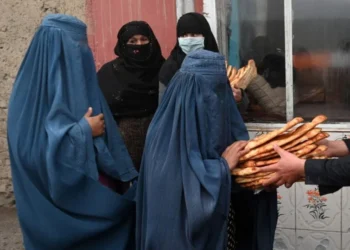

The issue of girls’ education has gradually become less of a focus, resulting in less public outcry and media attention on the millions of children and teenagers deprived of education. Instead of mass protests, round tables, demonstrations, and open letters, the media now reports individual chants and personal stories of the victims of the Taliban’s anti-human policy. Reports indicate that a girl has experienced mental illness or committed suicide after being kept at home for an extended period of time and being denied access to education and work. Occasionally, cases of girls’ individual resistance, finding a way to escape from Taliban restrictions, or obtaining scholarships and study opportunities abroad are also reported in the media. However, the general public has become largely silent on the matter and the sensitivity towards girls who are kept at home for days, months, and years without being educated has diminished.
The Taliban and international organizations that are involved in educational issues are particularly persistent in their efforts to promote the education of girls. This is evidenced by their activities and reactions, which demonstrate that they are attentive to even the smallest positive or negative changes in this area. During this period, the Taliban have implemented a number of edicts, rulings and anti-educational measures which have had the effect of diminishing the education environment and making it difficult for boys as well. On occasion, some Taliban insiders have suggested that schools and universities will be opened to girls and women, but as time passes, the restrictions on education become increasingly stringent. The Taliban have adopted a strategy of gradually taking control of the field of education, thereby managing to reduce the public’s sensitivity and reaction. International monitoring institutions active in education and women’s rights also keep track of the changes and sometimes issue announcements and reports based on the resources and structures they have.
Recently, Stephen Dujarric, the spokesperson for the United Nations, stated that the Taliban are likely to take a further abhorrent action against the people of Afghanistan, particularly women and girls, by prohibiting the educational activities of international organizations in certain provinces. Heather Barr, the associate director of the Women’s Rights Division at Human Rights Watch, also tweeted that the Taliban are likely to forbid primary education for girls. In the past, many times such news about the potential action of the Taliban has been confirmed before the official announcement of that group, and consequently, we have seen that the “possible” event speculated by the institutions has come to fruition.
Even now, on the occasion of their two-year rule, it is evident that the Taliban will continue to enforce the mission of the “Emirate” in prohibiting the education and employment of women, and the hope that the Taliban would allow girls to be educated again by introducing new dress codes and adjusting the number of students will remain unfulfilled. Thus far, a portion of the population has been deceived by the propaganda that was disseminated for years regarding the change of the Taliban and they still cannot believe that the leaders of the Taliban truly consider closing schools and universities to be a religious act. Most of the conversations revolve around the Taliban’s political exploitation of women’s education and deprivation of women. Many believe that Taliban leaders have taken women hostage in order to gain concessions from foreigners and gain legitimacy, and thus anticipate that with the leniency of the Western powers and the encouragement of the Taliban’s regional allies, that group will lift the restrictions.
Regarding the Taliban’s anti-educational policies, several opinions have been expressed by Afghans. Firstly, it is believed that these policies are reflective of the internal tensions within the group. Secondly, it is thought that women’s rights and education are being used as bargaining chips by the Taliban in their dealings with the international community. Thirdly, a faction within the Taliban leadership holds the view that women should not receive an education, and that non-madrasa education should be completely closed off to women, while men’s education should be limited to technical matters, with non-madrasa topics being removed from social sciences. None of these three opinions can be disregarded. There is much contention among the Taliban concerning the education of girls, and they are using women’s education and work as a means of furthering their internal struggles for control and consolidation of their factional power.
The issue of women’s rights is being used by the Taliban as a bargaining chip to gain concessions from the world. Some Taliban insiders are hoping that with the increased access to education and work for women, international support for the “Emirate” will increase and their rule will be stabilized. However, the main problem lies in the beliefs of the Taliban, and the fact that powerful individuals such as Mullah Hibatullah Akhundzada, the Taliban Supreme Leader, consider the presence of women in the community to be un-Islamic and unethical. Akhundzada is not alone in this view, as an influential circle in Kandahar and Kabul also supports this approach, and this position has strong supporters within the society and the ranks of the Taliban.
Last spring, after months of anticipation, high school girls were informed that schools were to be closed to them for an indefinite period of time, prompting a nationwide outcry of protest and concern. People in rural and remote areas congregated to advocate for the education of girls, posting photos and videos to demand the reopening of schools. Reports indicate that prior to the announcement of restrictions, the Taliban held numerous clandestine meetings to deliberate potential reactions.
At the meeting held in Kandahar, Mullah Hibatullah and his three intellectual companions, Abdul Hakim Haqqani, the Taliban Chief Justice, Noor Mohammad Saqib, the Taliban Minister of Hajj and Religious Affairs, and Mohammad Khaled Hanafi, the Taliban Minister for Promotion of Virtue and Prevention of Vice, strongly opposed the reopening of schools and defended the necessity of banning girls’ education with “Sharia” explanations. As a result, schools were closed for an unspecified period of time. This closure of girls’ schools for an unknown duration was not the main policy of Mullah Hibatullah and his companions, but rather it was a measure taken in an effort to maintain the Taliban unity and a plan to discourage urban supporters and those Taliban members who believe that schools should be reopened with “reforms” in the curriculum and education system. Since then, the restrictions on women’s education and work have become more stringent and it is now clear that “until further notification” is another tactic to manipulate the people. The Taliban “Emirate” does not intend to open schools and universities to girls.
In his book published last year about the Emirate System, Abdul Hakim Haqqani described the educational approach of the Taliban, which was acknowledged and commended by Mullah Hibatullah. Haqqani argued that modern non-religious teachings have weakened Islam and Muslims, and the Taliban should take steps to prevent this process from continuing. He further asserted that the duty of women is to be a wife and raise children, and they should not be involved in the administration, market, or government. Haqqani explicitly wrote that women are mentally weaker than men, and thus, they should obey men and take care of the house, give birth to children, and raise children in private.
In his book, Haqqani has devoted a chapter to women’s education, asserting that women have the right to education, but with conditions based on Taliban regulations. Firstly, he states that women should be educated at home by family members and not leave home for education. Secondly, they should never be taught alongside men. Thirdly, if women do leave home for education, their teachers must be female. Additionally, he believes that teaching chemistry and physics is unnecessary for women. In 2022, the Taliban enforced this order in Afghanistan’s National University Entrance Examination, prohibiting women from studying certain fields such as economics, engineering, agriculture, geology, and journalism.
Mullah Hibatullah and Haqqani, due to their positions of authority within the Taliban based on their madrasa education, are superior to others in establishing the legal framework and ideology of the Taliban. Haqqani is a compatriot of Mullah Hibatullah and a close friend of Mullah Omar. He is considered one of the founders of the Taliban group and is thought to have had aspirations of becoming the Taliban’s supreme leader.
Mullah Hibatullah and Abdul Hakim Haqqani are two individuals who have considerable influence among the Taliban and take a strong stance against the education of girls in the leadership council. Shaikh Noor Mohammad Saqib, who is six years younger than Hakim Haqqani and has held important positions since the first round of the Taliban rule, is the third person with such influence. He has authored numerous books, and many Taliban commanders and influencers were once his students. Saqib was born in Tashqurghan City, but received his basic education in Kabul and its surrounding areas.
According to his biography published on the website of the Taliban Ministry of Hajj and Religious Affairs, Shaikh Saqib went to Pakistan to study in the last year of Dawood Khan‘s rule, when he was only fourteen years old. He studied in various schools, including the Haqqani School of Akora Khattak, for many years. He has claimed the caliphate in all four ways: Naqshbandiyyah, Chishtiyyah, Qadiriyyah, and Suhrawardyyah. In his detailed biography, he has presented himself as a theorist, educated, and highly talented. He has stated that he completed high school at the age of twenty–one, and in 1999, the Taliban Education Qualification Commission awarded him a doctorate degree.
At the end of his biography, Noor Mohammad Saqib attached a list of sixteen book titles, claiming that they are widely read in schools and among the Taliban, some of which have become scarce and are photocopied and reproduced by those interested. Saqib is reported to be a conservative figure, influential in the Taliban leadership council, and an associate of Mullah Hibatullah. In his book “The Return of the Taliban“, Hassan Abbas introduced Saqib as a radical person with takfiri thoughts, noting that he is an influential and extremely conservative member of the Taliban cabinet, a prominent member of the Darul Uloom Haqqani Taliban, and was the Chief Justice of that group in the first round of the Taliban emirate. Abbas further stated that Saqib has issued several anti–Shia fatwas that have led to crimes against the Hazara and Shia people in Afghanistan and Pakistan. According to Abbas and Saqib‘s autobiography, it can be concluded that he has influenced extremists and Takfiris in Pakistan. Abbas wrote that one of Saqib‘s former colleagues said in an interview that he is a radical person even according to the standards of the Haqqani school, and the officials of that school warned him to curb his takfiri approach. Abbas also wrote the nickname Haqqaniya at the end of Noor Mohammad Saqib‘s name.
Saqib did not refer to himself by the nickname in his biography, instead referring to himself as “Honored Shaikh Al–Hadith, Jurisprudent Dr. Noor Mohammad Saqib“. It appears that, like some Taliban leaders, he is attempting to present a different image of himself in accordance with the current requirements and not emphasize his takfiri tendencies. In his biography, he mentioned his foreign travels, including trips to Hungary, Qatar, United Arab Emirates (UAE), Saudi Arabia, and Pakistan. He highlighted his trip to Hungary, noting that he had a detailed discussion with representatives from Holland, Germany, Italy, Austria, Belgium, South Africa, Egypt, Iran, and India. Despite his takfiri fatwas, he did not use takfiri literature when mentioning the names of foreign countries, and even though he excommunicated the Shias of Afghanistan and Pakistan, he mentioned the Shia government of Iran without insults. It is unclear whether he has changed since being warned by the authorities of the Haqqani madrasa, due to the passage of time, and his return to the ministerial post under different circumstances. Reports published in the last two years do not indicate much change in him, and he is still presented as a radical person who opposes the education and work of women and the rights of minorities.
Shaikh Mohammad Khaled Hanafi, born in 1971 in Nuristan, is the fourth figure in the influential anti–modern education circle of the Taliban. He is younger than Mullah Hibatullah, Hakim Haqqani, and Noor Mohammad Saqib. Reports last year mentioned him several times as a staunch opponent of women‘s education, and Hassan Abbas‘s book describes him as an associate of Mullah Hibatullah and an opponent of women‘s education. His ministry symbolically works in the building of the former Ministry of Women‘s Affairs, which started with the cancellation of human and women‘s rights defender institutions. Unlike the other three, Hanafi did not hold a position in the first round of Taliban rule and was a madrasa student during those years.
In his biography, Shaikh Hanafi emphasizes his family‘s “Jihadi“ accomplishments and speaks of his father who was a commander during Jihad, his brother who was killed in the early years of the Taliban in Nimroz Province, and those relatives who were killed in the twenty years of war against the previous government and foreign forces, as well as the eighteen orphans living in his family. He was the commander of the Taliban in the Provinces of Nuristan and Laghman during the years of the Islamic Republic of Afghanistan and was engaged in propaganda and recruitment in the eastern and northeastern regions for some time. Shaikh Hanafi described himself as a defender of national unity and expressed interest in contact with the country‘s ethnic groups, and unlike Abdul Hakim Haqqani and Noor Mohammad Saqib, he did not publish a list of articles and books.
It appears that he is highly skilled in word of mouth and has been expressing his extreme views through speeches and propaganda over the past two years. In the middle of last year, during a visit to Bamyan, he declared that “the minds of young people have become morally misguided and corrupt“. He also stated that the Taliban would eradicate Western culture from society, particularly in schools and universities, and would instead implement “pure Islamic“ culture. This trip was taken four months after the Taliban‘s controversial announcement to close schools and universities for girls, when protests against this inhumane decree were still ongoing. During this time, there were reports of discontentment within the Taliban against Mullah Hibatullah‘s aggressive orders and his attempt to gain control, with Mullah Yaqoob Mujahid, the Taliban Minister of Defense, and Sirajuddin Haqqani, the Taliban Minister of the Interior, indirectly criticizing their leader. However, some people kept their grievances within the group. Furthermore, during this period, Hanafi became renowned as one of the most ardent advocates of unquestioning obedience to Mullah Hibatullah and, in fact, the defender of the group‘s anti–educational policy. During his visit, he declared that following the Taliban Supreme Leader is a “national obligation“ for everyone.
Hanafi viewed modern education as permissible, in contrast to those who deemed it obligatory. He stated: “It is being discussed everywhere that contemporary education is a permissible act!” “Permissible” here refers to an action that does not incur sin or reward. Shaikh Hanafi further asserted that the Amir of the Taliban can declare the permissible thing haram and forbid it. He declared: “When there is a discrepancy between what is permissible and the order of the Amir, the ruling of the Amir is obligatory.”
Within this aforementioned circle, there are other radical individuals who consider fighting non–madrasa education and eliminating non–Taliban culture to be the primary mission of the “Emirate“. Mawlawi Neda Mohammad Nadim, the Minister of Higher Education of the Taliban, is one of the most influential opponents of contemporary knowledge. However, the influence of the three prominent individuals on Mullah Hibatullah, as well as on the middle–ranking officials and commanders and the ranks of that group, is very prominent in the religious justification of the restrictions. Of them, Abdul Hakim Haqqani, the Taliban Chief Justice, is known as the main theoretician of the group.
Due to his extensive connections and influence in Pakistan and Afghanistan, as well as his long tenure on the leadership council of the group, he considers himself one of the main inheritors of the Taliban and is particularly resistant to internal opposition. During recent attempts to reconcile the West and the Taliban, such as the Doha and Islamabad summits, the Prime Minister of Qatar‘s visit to Kandahar, and the appointment of Mawlawi Abdul Kabir as the Taliban Prime Minister, Abdul Hakim Haqqani has been among those who have emphasized the importance of maintaining the “Emirate“ position in regards to women‘s rights and education.
The disputes concerning the division of power and the appointment of a Prime Minister, the question of who Westerners should refer to, and who will be responsible for the taxation and customs administration have an impact on the Taliban‘s internal divisions and Kandahar‘s decision to close schools or the conditions for reopening them. Nevertheless, we cannot ignore the fact that opposition to non–school education is deeply entrenched in the Taliban‘s identity, rather than being attributed to a few individuals. It is unlikely that the Taliban will back down in the face of diplomatic pressure and civil protests for the reopening of schools. Therefore, as foreign sources have warned, there is a possibility of more aggressive measures being taken against women‘s education. How can one deal with a group that does not value dialogue, negotiation, or the people‘s vote, and only takes seriously the sound of cannons and guns? For how many months and years will thousands of classrooms in schools and universities remain closed?