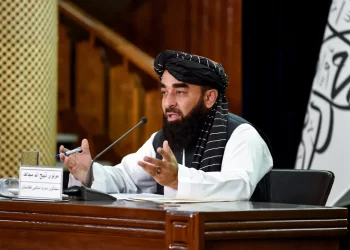
Kabul residents have voiced concern over the Taliban’s increasing drive to establish madrasas across the country. They say the Taliban, in an effort to strengthen the foundations of their regime, expand their base of like-minded recruits, and spread their ideology, have embarked on widespread madrasa-building. According to these residents, if this trend continues, Afghanistan will in the future face a generation even more extreme than the current Taliban. At the same time, some analysts warn that this process could pave the way for the emergence of groups more radical than the Taliban, such as ISIS, in Afghanistan.
Several Kabul citizens, concerned about the growing number of madrasas in the city, say this Taliban policy will only expand extremism and religious fundamentalism. According to them, the promotion of violence, religious radicalism, and even military training are among the major concerns regarding the activities of these schools.
Sher Alam, a resident of Kabul’s District 16, expressed his worries about the proliferation of madrasas in his area: “In Bagrami, madrasas have increased significantly, and children’s minds are being primed for extremism. Families, out of ignorance, send their children there without knowing what is being taught. Even the children who attend these madrasas, when they return home, pressure their families to let them enroll in larger madrasas. This is really worrying.”
Mahmood Khan, another Kabul resident, said the Taliban aim to transfer the extremist ideology they absorbed in Pakistani madrasas to Afghanistan’s children. In his view, the Taliban’s expansion of madrasas is part of their program to solidify and sustain their regime. He added, “If the ideology the Taliban learned is implemented here, they will become even more entrenched in Afghanistan. That is why they have built madrasas everywhere. They are expanding them across the country to raise a new generation molded by their ideology.”
Nilaab, a student deprived of her right to education, called the Taliban’s madrasa-building a blatant violation of human rights, while she herself has been forced to remain at home. She said, “I am stuck at home, yet the Taliban build madrasas every day; how is this compatible with Islam?”
Marzia Hafizi, a journalist, said the Taliban seek to restrict young people’s intellectual development through these madrasas. She added, “Some people who are detached from modern education view the Taliban’s actions as a religious awakening. The media have tried hard to report the realities of these schools, but censorship, restrictions, and limited access to information mean reports are incomplete. In some cases, topics such as jihad, martyrdom, and fighting for ‘the truth’ are directly included in the curriculum, cultivating extremist mindsets.”
Meanwhile, some experts warn that the Taliban’s spread of madrasas across Afghanistan increases the risk of the rise of groups more radical than the Taliban themselves, such as ISIS. They argue that all people of Afghanistan are already Muslims and there is no need for such extremist madrasas.
Nisar Ahmad Shirzoi, a political analyst, said the Taliban are pursuing an extremist Islamist agenda with a jihadist orientation by building madrasas. In his view, the Taliban’s engineering of young minds is laying the groundwork for the rise of groups more radical than themselves, such as ISIS-K.
He added, “In Afghanistan and in the region, we have seen extremist jihadist groups spawn even more radical currents. For example, in the 1990s, the Taliban emerged, and later, ISIS-K branched out of the Taliban. These groups, with their violent practices, have consistently toppled democratic systems.”
Ahmad Khan Andar, another political expert, said: “The Taliban are building schools to produce a new generation of clerics and Taliban for Afghan society. While madrasas are necessary, there is an urgent and vital need for modern sciences, which the Taliban have banned. In our country and region’s history, there are countless examples of Taliban-established madrasas leading to the growth of extremism. It is clear that such an education system pushes people toward radicalism.”
Khalil Ahmad Naadem, a university professor and political analyst, said: “The Taliban’s madrasa-building yields nothing for Afghanistan but clerics and fanatics. If these schools only teach religious studies without modern sciences, students will blindly follow teachings from 1,400 years ago—when there was no electricity, no airplanes, no bicycles. Today’s human being must shape their life according to present-day needs; otherwise, this generation will remain dependent and impoverished.”
Meanwhile, women’s rights activists say the Taliban are using madrasas not as a tool for development and fulfillment of human rights, but as a means to legitimize their ideology. According to them, the Taliban seek to mold a submissive, brainwashed generation through these schools.
Taranum Saeedi, a women’s rights activist, said: “From childhood, students are taught in these schools that the world and its people are evil and you must fight them; that women are bad. The Taliban essentially want to control and regulate society through madrasa-building.”
Nazifa Jalali, another human rights activist, said: “Between 2014 and 2021 in southwest Afghanistan, many families sent their teenage sons—ages 13 to 17—to Pakistani madrasas for religious education. But when these children returned, they often joined the Taliban. The main reason for this shift was the extremist teachings. In fact, these youths sometimes became so radical that they even treated their own families violently.”
Shahla Farid, a political analyst, said: “An entire generation is facing grave risk, losing the opportunities that should secure their future. This trend causes many young people to drop out of school or face serious challenges like poverty, unemployment, and resort to illegal activities. A clear example was the 13-year-old boy who tried to flee the country by clinging to a plane. Yet regional countries looked at this issue superficially, when in fact a child at this age was forced to flee in search of education and work. This shows the profound impact madrasa-building has on the destiny of young people.”
Abdullah Ahmadi, a human rights activist, said the Taliban’s madrasas pose a serious threat to children’s right to education. He added: “The educational system of the Taliban’s schools is entirely one-sided, ideological, and lacking international scientific and modern standards. This deprives children of life skills and contemporary knowledge, raising grave concerns for the future of Afghanistan and its families.”
Earlier, the Taliban’s Ministry of Education had announced that in the past three years, they had built 269 schools and about 23,000 Islamic training centers or madrasas in Afghanistan. The ministry added that during this period, more than 300,000 students had been enrolled in these centers.
Hibatullah Akhundzada, the Taliban Supreme Leader, has issued a decree allocating special facilities for the group’s religious and jihadist schools. According to this decree, each madrasa must have a dormitory accommodating 500 to 1,000 students, and each student must receive a daily stipend of 150 Afghanis.
Under this decree, each madrasa must employ at least 10 teachers, including three “Sheikh-ul-Hadith” with a monthly salary of 25,000 Afghanis, three “Sheikh-Moqoof Alayh” with 20,000 Afghanis, three religious technical instructors with 15,000 Afghanis, and one Quran memorization instructor with 20,000 Afghanis.
Recently, the Taliban removed 51 subjects from Dari, Pashto, and social studies textbooks, including lessons on women’s rights, human rights, patriotism, and unity.
You can read the Persian version of this report here:
گسترش مدرسههای دینی طالبان؛ بستری برای افراطگرایی و خطر آیندهای تاریک برای افغانستان