In the far corner, the manager is scanning everyone’s movement like an owl. She focuses on each one for a while, then turns her head to the next person. She pinpoints her target and flies towards us, counts the plates, then returns to the same corner, and resumes scanning again.
It’s late evening, dinner is served, piles and piles of dishes are stacked on one side, machines are running, workers similar to the magpies in a black uniform with white aprons are working super-fast to catch up with the pace of the machines, and the stopwatch of the manager.
After hours of separating cutlery from bowls and cups from trays, my hands move effortlessly, almost independent of my mind. They work so swiftly that my thoughts struggle to keep pace, and I maintain my distance, not wanting to interrupt the rhythm.
From the solitude of the dish room, my mind wanders, traversing mountains of dishes, returning to Kabul. The image of that green lawn which was surrounded by roses appears before my eyes on the floor of the dish room, reminiscent of the time when I was holding the water pipe while she was washing the dishes. She was Meena Sediq [1], German International Development’s Advisor for Women’s Economic Empowerment at the Ministry of Women Affairs.
After completing my master’s degree, I began working as a research intern with a local research organization. The organization had a contract with the Ministry of Women’s Affairs to help them review the policies of the sectoral ministries. From day one of my internship, the organization placed me in the ministry to carry out this work.
I began my work at the Women’s Policy Center, a small office located at the western corner of the ministry. The first few weeks, I was alone, reading documents, and policies, and familiarizing myself with the work. The cleaner we called ‘Khala’ was in her small room that was made of cardboard right outside the office. In the morning, she cleaned the office, brought my lunch from the canteen, washed the dishes, and made tea. For the rest of the day, she wove jackets to sell for a few dollars and often listened to the city radio on her mobile. When I felt tired or bored, I visited her, discussed her work, and showed her design samples on my mobile.
After a few weeks, one morning when I was preparing materials for a workshop, a woman entered the office. She was Meena Sediq, my coworker from the GIZ, who had just returned from her quarterly vacation in Istanbul.
After a brief greeting with me, Meena began cleaning her space, desk, and chair, took her mug from the top shelf, went outside, and washed it.
After serving her coffee, Meena called Khala and inquired about the toilet key. Khala took the key, disinfectant wipes, and paper towels from the shelves and went outside. A few minutes later, she returned and said “It is ready.”
In the following days, Meena was busy with housekeeping, cleaning her place several times a day, rewashing the dishes that had been washed by Khala earlier, and listening to her talk for hours about her vacation in Istanbul and her cat. She was frequently comparing everything around us to European standards. It appeared that she was completely disengaged from attending meetings or spending time on her computer. When she did turn on her computer, she was regularly asking me to read emails written in English, translating them for her, and writing a response.
Observing her daily activities, against her job title, her lavish lifestyle, and her inability to read and write emails, made me curious to dig deeper and know more about her. In the following few months, I got to know that after leaving Afghanistan at a young age she had spent most of her life in Berlin, where she did only a high school diploma. Besides, earning thousands of dollars every month, she was also provided with a luxury vehicle and personal driver for her transportation use, and above all unlike all the staff of the ministry she had the luxury of having a private toilet.
Like the situation of the rest of the country, Meena’s relationship with Khala, the cleaner, didn’t improve, rather with the passing of each day Meena was becoming stricter and imposing restrictions on her. Khala stopped weaving, listening to the radio, and even spending time in her room. When I asked her, she said that Meena had stopped her from doing anything other than her cleaning duties.
The silence of Khala’s radio was echoing all over the city, deafening ears, but there was no one to interpret its cries, except Meena’s red passport that she loved so dearly and spoke about regularly.
Meena was not the only passport holder in the city, during a few years of working with nonprofit organizations and the government in Afghanistan, I came across so many of them participating in the reconstruction of Afghanistan.
After the U.S. and its allies toppled the Taliban regime in late 2001, they initiated state-building intending to prevent Afghanistan from becoming a “haven” for international terrorism once again. For this, they needed a large amount of human capital which was not available in Afghanistan, as the country was coming out of Taliban rule and decades of violent conflict. The Afghan diaspora, who were brought up and educated in the West sought this opportunity and jumped in. They were skilled and knew the language, culture, and the Westerners’ way of doing things. On the other hand, the international community also preferred working with people who were sharing their work culture and were fluent in local languages.
Very soon the passport holders began playing important roles in the Afghan government, and international organizations and began opening their own organizations and companies. Their pace of success was unmatched as they enjoyed generous financial and diplomatic support from the international community.
The Passport holders’ involvement captured the world’s attention, writers began writing books about them, international media’s doors were always open for them, they won international awards, and were even nominated for the Nobel Peace Prize.
The Passport Holder In-chief
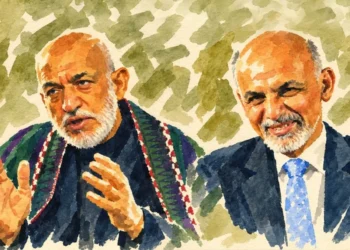
President Ashraf Ghani came to power in late 2014 in a deeply controversial election. Initially, hopes were high among some parts of the Afghan society that with his background as a university professor in the most prestigious universities in the West, and being the author of “Fixing Failed States: A Framework for Rebuilding a Fractured World” he is the right person to fix Afghanistan. That optimist didn’t last long as he began shedding his camouflage and began revealing its true face.
Ashraf Ghani was just another passport holder who had spent most of his life in the West and was married to a Christian woman from Lebanon. Despite spending his childhood in Kabul, he was alien to Afghanistan and its people. His obvious mistakes in performing namaz (Prayer) and reciting Farsi poems became subjects of jokes in people’s gatherings.
During his tenure, Ashraf Ghani placed unconditional trust and support in his fellow passport holders, utilizing various methods to weaken the jihadi leaders who were enjoying the lion’s share of power during Hamid Karzai’s tenure, and replacing them with his own men. In doing so, he systematically weakened state institutions, overcentralizing decision-making authority under his control at the presidential palace. This concentration of power within the palace resulted in a select group of his passport-holding advisors managing all crucial government affairs, including key appointments, elections, security, foreign affairs, and the economy.
This unlimited power without accountability and responsibility led the passport holders to enjoy fancy lifestyles, accumulating large sums of money from the government funds, and indulging in all kinds of immoral activities such as massive financial theft and even sexual harassment.
The second term of Ashraf Ghani’s administration was widely known among the Afghans as the “Government of the three people”, Ghani with two of his passport holders namely Dr. Fazal Mahmood Fazly his Director General of the Administrative Office of the President, and Hamdullah Mohib the National Security Advisor. Dr. Fazly was a young medical doctor, and he had no civil service experience, but with the immense power that he had, in the palace, he was often referred to as “the prime minister”. On the other hand, Mohib was a young computer engineer with no military experience, but he was managing all the security affairs of a country that was fighting for its survival.
During their roles as key managers of the Afghan government, Dr. Fazly and Mohib faced restrictions on attending meetings with Afghanistan’s key allies at certain times. Following reports of sexual harassment in the palace involving senior government officials including Dr. Fazly by a senior advisor of the President and later the BBC report on experiences of sexual abuse suffered by female employees, representatives of some countries stopped meeting with Dr. Fazly.
Dr. Fazly’s ban from attending meetings came to my notice in late 2019 when on behalf of a research organization, I was coordinating a joint program with the German Embassy in Kabul. The program brought together Afghan government senior officials, ambassadors, and other high-level diplomats in Kabul. During this time, I received an email from the Ambassador’s assistant asking for the removal of Dr. Fazly from the list of government participants. The reason cited was “his bad behavior towards women.”
On the other hand, the U.S. officials refused to meet with Hamdullah Mohib for over a year, and on numerous occasions, they walked away from scheduled meetings. This response came after Mohib made critical comments about the role of the U.S. Special Envoy for the Afghanistan Peace Process, Zalmai Khalilzad. This happened at a time when security coordination between the Afghan and international forces was already at a low point, further exacerbating the existing obstacle, particularly when the Taliban’s offensive was at its peak.
During Ashraf Ghani’s government, public opinion on methods of governance reached a low point, while casualties among Afghan forces and civilians soared to a record high. Despite the staggering toll on human lives, Ashraf Ghani appeared disconnected from the plight of the Afghan people, showing no inclination to revise his method of governance. He himself admitted that during his first tenure, 45,000 members of the Afghan forces were killed. This lack of empathy could be attributed to the perception that he and his fellow passport holders lacked any emotional attachment to Afghanistan and its people.
Moreover, the prevailing corruption, incompetence, and abuse of power went unchecked, with none of the passport holders facing questioning or trial, neither in Afghanistan nor in their countries of residence. Knowing they could act with impunity; they mercilessly abused their positions of power.
Despite wide criticism from people from all corners of the country, Ashraf Ghani refused to rethink his governing style. Instead, day after day, he became even shrewder in ignoring the people’s will until his fellow passport holders parked the helicopters on the south lawn of the presidential palace on August 15, 2021, asked him to take the front seat, and he took off. They returned to their homes, leaving the people of Afghanistan to deal with the largest humanitarian crisis with the Taliban in charge of their fate.
[1] To protect the person’s privacy, the name has been replaced with a pseudonym.