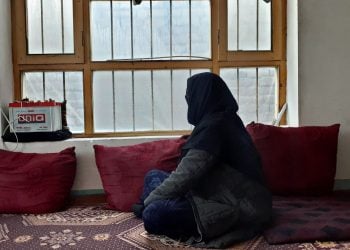
When political Islam gains control over a region, a specific interpretation of religion seeks to monopolize power and resources. If the representative of political Islam in that region is a radical terrorist group like the Taliban, then not only are followers of other religions and sects deprived of national power and resources, but they are also marginalized from all public spheres and subjected to severe pressures. Over the past three years, the Taliban, with their religious-sectarian identity, have persistently sought to pressure followers of other religions and sects, attempting to force them into becoming adherents of the Hanafi school of thought. Followers of the Shia Jafari sect, the Shia Ismaili sect, Salafis, and followers of other Abrahamic and non-Abrahamic religions in Afghanistan are among those under pressure.
Afghanistan, a land of many deliberate and unintended conflicts, has historically not experienced significant religious conflicts as part of its social tolerance. Even when religious disputes have occurred, they have not been deep or widespread enough to become a national issue. Followers of various religions and sects have coexisted throughout history in this land, showing tolerance towards one another. They have shared in each other’s joys and sorrows and have visited each other’s homes. Interfaith marriages have been common in Afghanistan, and aside from a few cases, have not caused significant controversy. In cases where controversy did arise, the main reason was ethnicity, not religion. In this regard, the people of Afghanistan have lived relatively peacefully alongside followers of various sects; any discord that has occurred was not due to religious differences. This religious tolerance is considered part of Afghanistan’s social identity. However, the story is different with the Taliban. This group, which has seized power under the guise of a religious-sectarian organization, has from the outset of its renewed rule—much like during its first reign—instigated religious conflicts. The group has systematically sought to punish and pressure followers of non-Hanafi sects under various pretexts, often without any justification, to force them to change their beliefs.
One of the first actions of the Taliban in their second reign was to deny the recognition of the Shia Jafari sect, which had previously been recognized. Since then, Taliban officials have repeatedly referred to Shia religious texts as sources of discord in official letters and speeches, ordering the removal of such texts from libraries and educational institutions. The Taliban have banned the teaching of Jafari jurisprudence in universities, even in those where the majority of students are Shia. Until three years ago, Afghanistan had a personal status law that governed the legal affairs of Shia Jafari followers. However, after the Taliban took over, they abolished all existing laws, including Afghanistan’s constitution. Afghanistan is now a lawless country, a situation that allows the rulers to exert pressure on the people, extort them, and even issue arbitrary rulings in legal disputes. With the abolition of the Shia personal status law, there are no longer any Shia judges across the country, Jafari jurisprudence holds no validity, and the personal status law no longer exists. As a result, in legal disputes, even in family cases, the Taliban force Shia followers to adhere to Hanafi jurisprudence. Additionally, in legal disputes, the Shia party almost always loses a situation that has become an unwritten rule. It doesn’t matter what the dispute is about or who the plaintiff or defendant is. The Taliban even deny the existence of non-Hanafi sects. Mullah Neda Mohammad Nadeem, the Taliban’s Minister of Higher Education, once stated in a speech that there is only one sect in Afghanistan, and that is Hanafism.
The Taliban do not consider followers of other sects to be Muslims. Although the group’s official policy on this issue is not clear, the Taliban have in several instances in the provinces of Baghlan and Badakhshan forced Shia Ismaili followers to recite the “Shahada” (Islamic declaration of faith) and have filmed their “conversion” to Islam, sharing the videos on social media. Forcing a Muslim to “convert” under the threat of guns and weapons, and doing so in a mass ceremony, indicates that the Taliban are promoting religious intolerance in the country. This situation not only deprives people, especially the Ismailis, of their right to choose their religion but also exposes them to serious security threats because it is conveyed to the public that they are not Muslims, and according to the Taliban’s interpretation of Islam, they must either pay the jizya tax or be killed.
The situation for Sufis and Salafis in Taliban-controlled Afghanistan is also dire. Since the Taliban took power, Salafis have been repeatedly attacked and killed in groups. Sufi ceremonies have been targeted by suicide attacks at least twice during the Taliban’s rule. Similarly, followers of the Shia sect face increasing restrictions on holding their religious ceremonies, and their gatherings have been subjected to numerous suicide attacks. Followers of Hinduism, Christianity, and other religions have also been forced to leave the country.
This situation destroys the religious tolerance that was once a part of Afghanistan’s social identity. Under the Taliban’s extensive propaganda, people are being drawn into religious conflicts and social tolerance, once a valued aspect of Afghan society is losing all its dimensions. As a result, no positive aspect remains in the collective life of the Afghan people.
You can read the Persian version of this analysis here:
طالبان و ترویج نابردباری؛ پیروان مذاهب غیرحنفی تحت فشار قرار دارند | روزنامه ۸صبح