The past month of conflict between Iran, Israel, and the United States has once again shown that the Middle East remains caught in the classical logic of managed crises, hard deterrence, and great-power competition. The recent two-week ceasefire, while temporarily preventing further escalation and easing pressure on energy markets, has not brought peace; it has merely created a tactical pause. When a ceasefire is short-term, its terms remain unclear, and the main actors do not alter their long-term objectives, the region does not move toward stability. Instead, it shifts from an active phase of confrontation to a phase of tense anticipation.
If the ceasefire does not hold, it will have achieved little more than buying time. However, if it develops into a more sustained diplomatic process, the focus of regional and global powers may shift from direct warfare to competition over spheres of influence, strategic corridors, and buffer states. For Afghanistan, this means once again being pushed to the margins of a larger crisis, one that could reshape trade routes, energy flows, migration patterns, and regional political alignments.
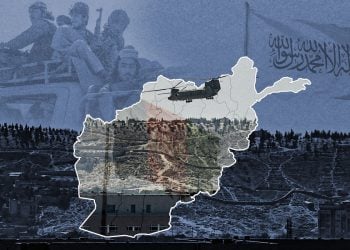
Since 2021, the Taliban have become a geopolitical reality for some external actors, an entity that could be used for containment, balancing, bargaining, or indirect pressure. However, the critical point is that in the recent Iran-U.S. confrontation, the Taliban did not play a decisive role. They neither emerged as an effective anti-Iranian force nor as a clear operational partner for the West. This relative inaction is likely to downgrade their position in Western strategic thinking, from a “potential instrument of leverage” to a “secondary but problematic issue.” At the same time, this sends a clear signal to Iran and China: the Taliban are currently less an independent strategic actor and more a source of regional and border instability. This represents a decline in their geopolitical value, not an increase.
For the West, particularly in the aftermath of this conflict, the primary priority is likely to shift once again, from actively shaping Afghanistan to minimally managing the threats it poses. Evidence of this can be seen in recent discussions at the United Nations regarding a reassessment of engagement with Afghanistan, as well as U.S. pressure on issues such as the detention of its citizens. This suggests that while the West may not fully disengage from the Taliban, its engagement will remain limited, instrumental, and security-driven, rather than serving as a pathway to full legitimacy. Therefore, if the Taliban had hoped that the Iran crisis would restore their value as a geopolitical asset for the West, current evidence does not support such an outcome.
For Pakistan, however, the situation is markedly different. Islamabad has demonstrated during this crisis that it seeks to play a dual role: acting as a diplomatic mediator externally while simultaneously continuing its conflict with the Afghan Taliban. Recent reports indicate that Pakistan and the Taliban are experiencing one of their most severe periods of tension since the Taliban’s return to power, with cross-border attacks and even strikes inside Afghan territory. China has stepped in to mediate to prevent further escalation. This suggests that Pakistan will likely pursue two parallel strategies: projecting a diplomatic and mediating role internationally, while intensifying military and security pressure on the Taliban domestically to contain the TTP, redefine the border balance, and potentially support anti-Taliban forces indirectly. If the Iran ceasefire holds, Pakistan will have greater capacity to focus on the Afghan front.
This situation presents a dual message for the Taliban’s opponents. On one hand, if the Taliban no longer serve an immediate strategic function for the West, there may be renewed international space to highlight their repression, monopolization of power, and destabilizing role. On the other hand, opposition groups, if fragmented, lacking cohesive regional support, and without a coherent political narrative, will not automatically benefit from the Taliban’s relative weakening. In the sociology of power, the erosion of a regime does not inherently strengthen its alternative. An alternative must present itself as a viable and credible order, not merely as a rejection of the existing system.
This will only be possible if resistance takes shape through organized and active fronts within Afghanistan, accompanied by the formation of a unified national political narrative. The future of the opposition depends less on external developments and more on its ability to build political coalitions, articulate a shared national vision, and connect resistance to fundamental societal demands such as livelihood, security, education, and human dignity.
In conclusion, if the two-week ceasefire does not hold, the Middle East will simply enter a temporary armed pause. However, if it evolves into broader negotiations, many secondary actors, including the Taliban, will be forced to redefine their roles. In this emerging reconfiguration, the Taliban, once seen by some powers as a tool of pressure or destabilization, are more likely to be reduced to a manageable source of instability rather than a strategic asset. At the same time, Pakistan will increase pressure, China will expand its role as mediator and stabilizer, and the Taliban’s opponents will only gain traction if they can transform the group’s geopolitical weaknesses into a coherent political alternative.
The most important lesson of this moment is clear: in this region, major wars do not only shake borders; they also redefine the role, value, and function of smaller actors such as the Taliban.
You can read the Persian version of this analysis here: