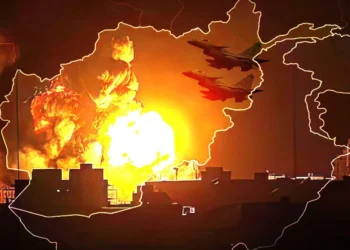
The conflict between the Taliban and Pakistan continues to escalate, marked by intensifying border clashes and Pakistani airstrikes on parts of Afghanistan. The Taliban have claimed that Pakistani military facilities in Islamabad, Abbottabad, and Nowshera were targeted by the group’s drone strikes, describing these actions as a response to Pakistan’s bombardment of Kabul and other provinces. Pakistan, in turn, has claimed that its airstrikes on Kabul and several Afghan provinces killed hundreds of Taliban fighters and destroyed dozens of the group’s outposts. Meanwhile, some mosque imams in Afghanistan’s southern and eastern provinces have declared “jihad” against Pakistan, and the Tehrik-i-Taliban Pakistan (TTP) has issued orders for its fighters to carry out regular attacks and publish video evidence on social media. The United Nations and several countries have warned of the humanitarian and security consequences of the conflict, calling for restraint, protection of civilians, and de-escalation through dialogue. The U.S. President described Pakistan’s conduct in the conflict as “excellent,” while the American Embassy in Qatar urged U.S. citizens to immediately leave Afghanistan. Some former Afghan officials and ambassadors have blamed the Taliban for facilitating the invasion of Afghan territory, stressing that the Taliban’s war with Pakistan is not the war of the people of Afghanistan, and that the Taliban’s policies have exposed Afghanistan to multiple crises.
How did the clashes begin?
Following Pakistan’s overnight airstrikes on parts of Nangarhar and Paktika, the Taliban launched large-scale attacks against Pakistani forces along the Durand Line on Thursday night, February 26, 2026. At the time, the group claimed to have killed 55 Pakistani soldiers, stating that the bodies of some of them had come into Taliban possession. The Taliban also announced that they had retained control of some of their outposts. Pakistan then bombed Kabul, Kandahar, and Paktika on Thursday night following the Taliban attacks.
The beginning of Pakistan’s airstrikes
Following the Taliban attacks, Pakistan announced the launch of “Operation Bunyan ul Marsoos” in response to the border assaults. Attaullah Tarar, Pakistan’s Minister of Information and Broadcasting, said Thursday night that his country had initiated military operations against the Taliban in response to their attacks on Pakistani border guards. He claimed that during the operation, 72 Taliban fighters were killed and more than 120 others were wounded.
The Pakistani official also claimed that 16 Taliban outposts had been destroyed and seven others had been seized by Pakistani forces. According to his claims, an ammunition depot, a battalion, and more than 36 Taliban tanks, artillery pieces, and armored personnel carriers were also destroyed in the operation.
Following the airstrikes, Mushraf Zaidi, the spokesperson for Pakistan’s Prime Minister, stated that Pakistani strikes on various locations in Afghanistan had killed 133 Taliban fighters and wounded more than 200 others.
The Pakistani military also confirmed that following the Taliban border attacks, it launched airstrikes in Kabul, Kandahar, and Paktika, with operations continuing until 3:45 a.m. According to the Pakistani military’s claims, 133 Taliban members were killed in these strikes.
Statements and claims by Pakistani officials on Friday
Pakistani Prime Minister Shehbaz Sharif, during a visit to General Headquarters (GHQ) in Rawalpindi, praised the actions of his country’s armed forces in repelling the Taliban attacks from Afghanistan. He said that a “zero tolerance” policy had been adopted to counter the alliance of “Fitna al-Khawarij” and the Taliban and their subversive activities. Sharif emphasized that the actions of the Afghan Taliban and the group “Fitna al-Khawarij” against Pakistan were unacceptable, and that the armed forces, under the leadership of Chief of Army Staff Asim Munir, were always ready to defend Pakistani territory. He added that Pakistan knows well how to defend itself against any form of aggression, and praised the armed forces for repelling attacks in border areas and for their strong response.
Ahmad Sharif Chaudhry, the Pakistani military’s spokesperson, claimed yesterday that his country’s airstrikes were carried out “with full precision” against Taliban military installations. He claimed that during these strikes, 115 Taliban tanks and military vehicles were destroyed, and military centers were targeted, which he said had been supporting the TTP. Chaudhry added that at least 22 locations in the provinces of Nangarhar, Kabul, Khost, Paktia, and Paktika were targeted by Pakistani military airstrikes. According to his claims, the operation was conducted to counter border threats and militant groups, with the aim of “weakening Taliban military capabilities and preventing terrorist groups from operating in the region.”
Mohsin Naqvi, Pakistan’s Interior Minister, warned that 22 terrorist organizations in Afghanistan are in the process of reorganizing. He said that following Pakistan’s airstrikes on parts of Afghanistan, he had stressed the need for international cooperation to address cross-border threats. Naqvi, who was leading a Pakistani delegation at a meeting of interior ministers of six European countries in Warsaw, the capital of Poland, claimed that his country acts as a “wall between terrorists in Afghanistan and the world.” He urged the interior ministers of these European countries to take further steps to exchange intelligence and effectively cooperate in combating drug trafficking and cross-border threats.
Khawaja Asif, Pakistan’s Defense Minister, declared after the Taliban attacks that Pakistan’s patience with the Taliban had run out, and that the armed forces would respond decisively to what he called “hostile actions by the Afghan Taliban.” He wrote on his X account that after the withdrawal of NATO forces, the Taliban were expected to focus on peace in Afghanistan and regional stability, but Afghanistan had become a haven for terrorist groups, and terrorism was being exported from the country. The Pakistani Defense Minister added that the Taliban would “fail” in its fight against Pakistan, referred to them as an Indian proxy force, and emphasized that the Pakistani military would respond firmly to Taliban attacks, writing: “Defeat is the destiny of the enemy.”
Taliban claims following Pakistan’s airstrikes
Zabihullah Mujahid, the Taliban spokesperson, while confirming the Taliban airstrikes in Kabul, also said yesterday that the Pakistani military had bombed parts of the provinces of Laghman, Paktia, Paktika, and Khost on Friday. Mujahid also claimed yesterday that the group’s air force had targeted Pakistani military centers in Islamabad, Abbottabad, and Nowshera with airstrikes. He said these strikes were carried out in response to Pakistan’s bombing of Kabul and Kandahar. Mujahid stressed that the Taliban had been “forced to target Pakistani military centers” and warned that if strikes continued, the scope of hostilities would expand and Pakistan would face greater consequences.
Fasihuddin Fitrat, the Taliban’s Chief of Army Staff, warned in response to Pakistan’s airstrikes that the group would respond “to a finger with a fist.” He claimed that Taliban forces are capable of defending Afghanistan’s territorial integrity and would never leave any aggression unanswered. Fitrat emphasized that retaliatory strikes had been carried out in border areas, that a large number of Pakistani outposts had been “captured,” and that several Pakistani military personnel had been killed. He added: “Our message to Pakistani military forces is that they will receive an even more decisive response than this.”
The alignment of mosque imams and the TTP with the Taliban
Yesterday, some mosque imams in the provinces of Khost, Paktia, Paktika, Logar, and Kandahar declared “jihad” against Pakistan during Friday prayers. They called on militant groups to attack Pakistani military centers.
The Tehrik-i-Taliban Pakistan yesterday issued a statement in which Noor Wali Mehsud, the group’s leader, instructed his fighters to directly publish video evidence of their attacks on social media without waiting for permission. The letter called on the group’s commanders to accelerate their activities and carry out attacks in a regular and effective manner.
Reactions from some former officials of Afghanistan
Senior officials of the former government and citizens of Afghanistan have had varying reactions to the clashes. Some condemned Pakistan’s airstrikes as an invasion of Afghan territory and stressed that the aggression must be condemned. However, others described the Taliban as having paved the way for this aggression, stating that the Taliban’s war with Pakistan is not the war of the people of Afghanistan, and that the group had, for more than 20 years, fought the former security forces on Pakistan’s orders while sacrificing civilians in suicide attacks.
Rangin Dadfar Spanta, former Foreign Minister and National Security Advisor of the previous Afghan government, wrote on his X page that he “strongly condemns Pakistan’s aggression against our homeland. The patriots of Afghanistan must not tolerate such a blood enemy. This position does not mean alignment with the Taliban and their tyrannical system.”
Spanta added, “This is not a just war. Defending the lives of our civilian compatriots and our land is a national and historical duty. This war is not the war of the people of Afghanistan and will not result in victory, but the losers will be the people of Afghanistan. Expecting Pakistan to do what Israel and India do is a dangerous thing. Pakistan must be held accountable for its wrong policies. We must not view any side with optimism.”
Mohammad Mohaqiq, leader of the People’s Islamic Unity Party of Afghanistan, said that the ongoing war between the Taliban and Pakistan is not the war of the people of Afghanistan. He added that this war is “a confrontation between Pakistan and the ruling regime in Kabul.” According to Mohaqiq, the Taliban, with their expansionist approach, may in the future also become embroiled in conflict with other countries in the region. He expressed concern over the consequences of the border clashes between the Taliban and Pakistan for the people on both sides of the border, and stressed that the Taliban, through their “aggressive policies,” have involuntarily drawn the people of Afghanistan into the war.
Mujeeb Rahman Rahimi, spokesperson of the High Council for National Reconciliation of the former government, wrote: “The Taliban have this time sacrificed our country and our people in the name of supporting the TTP. This story will continue because the Taliban also host dozens of other terrorist groups. One must wait for one of these terrorist groups to attack the territory of another country, and then that country retaliates by attacking our country.”
Rahimi added: “The conflict and war between the Taliban and Pakistan is not a conflict and war between our people and the legitimate government of Afghanistan on one side, and the government and people of Pakistan on the other. This war, as we have stated and declared many times, is a war between Pakistan and a terrorist, usurping, and illegitimate extremist group that hosts dozens of other terrorist organizations on our soil.”
Wahidullah Waissi, Afghanistan’s Ambassador to Australia, said that the Taliban have once again dragged the country into a whirlpool of crises. Waissi wrote on his X page on Friday, February 27, 2026, that the Taliban, through their ideological and security ties and their unbalanced and irresponsible policies, have plunged Afghanistan into crisis. He also stressed that any foreign aggression against Afghan territory is unacceptable, and that “the Taliban’s confrontation with their former supporters and allies will never represent the will of the people of Afghanistan.” The Afghan Ambassador to Australia added that the priorities of the people are the restoration of legitimacy, the revival of the rule of law, the strengthening of internal unity, and the establishment of a system that protects the lives and dignity of citizens.
Reactions from the United Nations and human rights organizations
António Guterres, the United Nations Secretary-General, expressed concern over the escalation of conflict between the Taliban and Pakistan. He called on both sides to refrain from further escalation and to resolve their differences through dialogue and diplomacy. Guterres stressed that the parties must adhere to their international obligations, particularly regarding the protection of civilians. He also, referencing the mediation efforts of Qatar, Türkiye, and Saudi Arabia, emphasized the importance of continuing efforts to resolve differences through diplomatic means.
Richard Bennett, the UN Special Rapporteur on Human Rights, once again called for restraint and adherence to international human rights law and international humanitarian law, particularly the protection of civilians, amid the current tensions between Pakistan and the Taliban.
The International Committee of the Red Cross (ICRC) expressed concern over the escalating clashes between the Taliban and Pakistan, stressing that the protection of civilians and access to humanitarian services are critical under these circumstances. The organization stated that the people of the region have been suffering from war, displacement, and devastation for years, and that the continuation of tensions could further endanger the lives of civilians and the wounded.
The ICRC added that it is, in cooperation with the Afghan and Pakistani Red Crescent Societies, preparing an operational response to humanitarian needs in border areas, with a focus on supporting medical facilities treating those wounded in the conflict. The organization also stressed that no humanitarian action can replace the political will to de-escalate tensions and comply with international laws of war, and that countries in the region are obligated to fulfill their commitments to the protection of civilians.
Reactions from countries supportive of the Taliban
China’s Ministry of Foreign Affairs urged the Taliban and Pakistan to immediately declare a ceasefire and prevent further escalation of hostilities. Mao Ning, spokesperson for China’s Ministry of Foreign Affairs, said on Friday, February 27, 2026, that Beijing is deeply concerned about the rising tensions on the border between the two countries and called on both sides to exercise restraint. She added that China is in contact with both countries through diplomatic channels and is ready to play a mediating role to reduce tensions.
Russia’s Ministry of Foreign Affairs, following the intense clashes between Taliban fighters and Pakistani border guards and the simultaneous Pakistani airstrikes on Kabul and several other provinces, called for the resumption of dialogue between the two sides. Maria Zakharova, spokesperson for Russia’s Ministry of Foreign Affairs, wrote on her X page on Friday, February 27, 2026, that her country is concerned about the escalation of armed clashes between the Taliban and Pakistan. Russia’s Ministry of Foreign Affairs urged Pakistan and the Taliban to set aside the “dangerous confrontation” and resolve their differences through political and diplomatic solutions.
Abbas Araghchi, Iran’s Foreign Minister, urged Pakistan and the Taliban to manage and resolve their differences within the framework of good neighborliness and through dialogue. He wrote on his X page that the Islamic Republic of Iran is ready to provide any assistance in facilitating dialogue and strengthening understanding and cooperation between Pakistan and the Taliban.
Qatar’s Ministry of Foreign Affairs also announced that Doha supports all efforts to resolve differences through peaceful means and is ready to cooperate in strengthening peace and stability at the regional and international levels.
Mohammad bin Abdulaziz bin Saleh Al-Khulaifi, the Deputy Foreign Minister of Qatar, spoke by phone on Friday with Mohammad Ishaq Dar, Pakistan’s Foreign Minister, discussing the conflict with the Taliban and ways to prevent further crisis escalation.
The United States’ reaction
U.S. President Donald Trump, reacting to the recent tensions between Pakistan and the Taliban, said that he “gets along very well with Pakistan” and described the country’s performance as “excellent.” Trump, speaking to reporters on Friday evening, February 27, 2026, added that he could intervene if necessary in the crisis between Islamabad and the Taliban, but that he has a “very good” relationship with Pakistan and described Prime Minister Shehbaz Sharif as “fantastic.” He stressed that his assessment of Pakistan is positive and praised Islamabad’s performance in managing security and countering border threats.
The U.S. Embassy in Afghanistan in Qatar, following the escalation of clashes between the Taliban and Pakistan, urged American citizens to immediately leave the country. The embassy, in a statement on Friday, February 27, 2026, announced that American citizens should distance themselves from border areas with Pakistan and, in the absence of available flights, exit through land routes via the borders of Uzbekistan and Tajikistan. The statement also warned that attempting to exit through Iran is dangerous and not recommended. The U.S. Embassy clarified that Afghanistan remains a high-risk country “due to the danger of civil unrest, crime, terrorism, arbitrary detention, kidnapping, and limited medical facilities.”
Britain, Türkiye, Saudi Arabia, and several other countries have called for de-escalation. Italy also urged its citizens to immediately leave Afghanistan. The Italian Embassy in Qatar called on Italian nationals to take immediate steps to depart Afghanistan via commercial flights. The Taliban also announced last night that 19 civilians had been killed following Pakistan’s airstrikes, and the Emergency Foundation reported that nine people had been wounded in the clashes.
You can read the Persian version of this report here:
جنگ طالبان و پاکستان؛ اعلام جهاد ملا امامان علیه پاکستان و هشدار تیتیپی