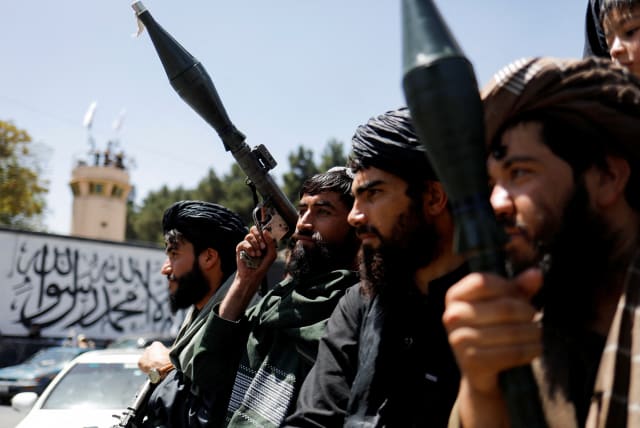
The Hasht-e Subh Daily has published a research report indicating that the Taliban are constructing settlements in Afghanistan for terrorist groups such as Al-Qaeda and Tehrik-i-Taliban Pakistan (TTP), clearly intending to host these groups for years to come. While the Hasht-e Subh Daily report offers more detailed insights compared to other published reports on this matter, previous warnings from research centers monitoring extremist activities have also highlighted Afghanistan under Taliban control becoming a haven for terrorists globally. The recent killing of Ayman Al-Zawahiri, in the Wazir Akbar Khan area of Kabul, and Saif al-Adel’s invitation to his supporters to come to Afghanistan to benefit from Taliban experiences, alongside continuous killings of TTP commanders by Pakistan in southern Afghanistan, all underscore the active presence of terrorist and insurgent groups in the country. Many research centers and journalists around the world are concerned that Afghanistan hosts dozens of terrorist groups with whom the Taliban warmly cooperates. Due to their existential nature and ideologies, these groups pose a serious threat to Afghanistan’s security, stability, and global peace. Due to these issues, Afghanistan will likely remain at the forefront of global headlines in the coming years.
It appears history is repeating itself. In the 1980s and 1990s, Western powers gathered jihadist groups from around the world in Pakistan and Afghanistan to challenge the presence of the Soviet army in Afghanistan. They provided these groups with military aid and logistics, praising their militant activities as beneficial to Western geopolitics, especially those of the United States. Figures like Abdullah Azzam, Osama bin Laden, and Ayman Al-Zawahiri were once celebrated as heroes in Western-leaning media for their roles in fighting “atheism and Soviet aggression”. Later, it became evident that unconditional support from the US and its allies to these terrorist groups yielded outcomes beyond Western control. These very groups and individuals, once adversaries against the Western bloc, transformed into top-tier enemies when the Soviet Union collapsed, international dynamics shifted, and they threatened the interests of Western countries and their regional allies. At that time, Western politicians acknowledged that the challenges posed by terrorist groups were a consequence of the Western powers’ strategies and their alignment with militant groups in the Middle East to undermine Soviet interests in the region.
It seems that a story akin to this, albeit with differences, is repeating itself in Afghanistan once again. This time, the United States and its allies believe that by engaging and appeasing the Taliban, they can secure their geopolitical interests in the region. It is evident that the massive weekly financial injections into Afghanistan, which prevent the collapse of the country’s economy, are not purely humanitarian and result in debts. It is said that the Doha Agreement between the Taliban and the US contains undisclosed clauses. According to these clauses, the Taliban are presumably obligated to safeguard US interests in Afghanistan in exchange for benefits they receive. Currently, the third round of talks in Doha is underway. According to Taliban spokespersons, discussions in this meeting are expected to address banking sanctions against the Taliban. There is a possibility that Western nations may be convinced to lift some banking and economic sanctions against the Taliban and assist them in stabilizing the country’s weak economy.
Americans and Europeans have explicitly stated their reluctance to support armed and military resistance against the Taliban, viewing armed confrontation with the Taliban as an unfavorable option. This stance provides a significant advantage to the Taliban, easing their concerns and allowing them to suppress their armed opposition freely. It is naive to assume that Western powers have taken these actions without gaining concessions from the Taliban. Additionally, Tom West, the US Special Representative for Afghanistan, in several meetings with Taliban representatives and international bodies, has attempted to aid the Taliban in addressing economic challenges. West and others believe that if Afghanistan’s economic system faces serious difficulties, it will undoubtedly have repercussions that will affect Western countries, including a potential mass exodus of people from Afghanistan and a surge of migrants into European countries. The appearance of the situation may be as such, but the reality is that the resurgence of the Taliban is the result of intelligence games.
Russia, China, Iran, and some Central Asian countries are cautiously embracing the Taliban’s return to power, viewing it as a result of the US failure in Afghanistan. Consequently, they perceive the continuity of Taliban rule as detrimental to US interests in the region and seek to politically support the Taliban. Perhaps a correct analysis in this regard is that these countries are attempting to negotiate with the Taliban to minimize potential damages, especially considering that ISIS and similar groups are active in the region with a priority to harm these countries. Russia, China, and Iran interact with the Taliban based on the formula of “the enemy of my enemy is my friend.”
Each country has its compulsions and priorities in engaging with other parties. However, the notion that the Taliban are contrary to Western interests and threaten the interests of the US and other Western powers in Afghanistan appears to ignore blatant realities. The Taliban themselves try to portray themselves as a freedom movement and anti-American, but there is ample evidence to refute these claims.
The unfortunate point amidst all this is the neglect of the natural rights and freedoms of the citizens of Afghanistan. In the interactions of Western and Eastern countries with the Taliban, human rights, rights of women, minorities, and different ethnic and religious groups in Afghanistan are sidelined. For China, Russia, and Iran, human rights and women’s rights have never been of great importance, as the governing regimes in these countries define human rights differently than the prevailing definition, but for Western powers who have always championed human rights and introduced themselves to Afghanistan as promoters of democracy and human rights, sometimes showing such warmth towards the Taliban suggests that this group is the legitimate government in Afghanistan, committed to their humanitarian and human rights obligations, and recognizes political, cultural, and religious diversity in the country.
We acknowledge that the origin of human rights concepts is Western, and Western scholars and thinkers have theorized and shed blood to expand these concepts. However, it cannot be denied that sometimes these Western powers have supported some of the most anti-human rights regimes globally and in some cases have toppled legitimate democratic systems and disrespected the will of the people. Politicians and centers of power in the West have repeatedly shown that they deal instrumentally with human rights and if their interests dictate, they ally with even the most oppressive regimes.
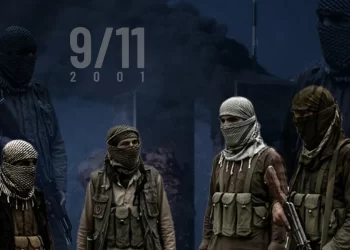
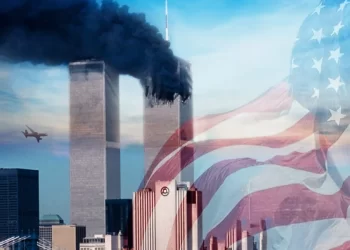
Another factor that has caused Western powers to view the Taliban favorably is the prevailing political realism in the politics of these countries. Observing that the Taliban have gained control over the entire geography of Afghanistan, established a somewhat acceptable order and security in the country, and eliminated all their opponents from the scene, these countries see no solution other than engaging with the Taliban. Western powers seek to secure their interests in Afghanistan, and no other group besides the Taliban is capable of fulfilling these interests. Opposition groups to the Taliban are so scattered and unorganized that they cannot attract the attention of global and regional powers in the short term at least. The absence of political opposition groups to the Taliban and civil society at the Doha talks also made it clear that global and regional powers recognize the Taliban as the sole negotiating and dealing party in Afghanistan. As for the long-term dangers that the Taliban pose to the world and the region, currently, no one pays attention to that. In 2001, during a trip to Europe, Ahmad Shah Massoud sent a message to George W. Bush, who had just become President of the United States, warning that the Taliban were hosting global terrorist groups and that if the US did not think of a solution, America would also face the consequences of terrorist attacks. Just a few months after Massoud’s warning, the events of September 11th took place in the United States, fulfilling his prediction.
You can read the Persian version of this analysis here:
هماغوشی طالبان و تروریستان بینالمللی و استانداردهای دوگانه غرب | روزنامه ۸صبح