Afghanistan’s current crisis cannot be explained by the Taliban alone. The Taliban are not an isolated historical accident; they are the latest and most extreme expression of a much older political pattern in Afghanistan: the concentration of power, the suppression of reformist forces, and the repeated reproduction of authoritarian rule.
Since the reign of Amir Abdur Rahman Khan in the late nineteenth century, the Afghan state has repeatedly been rebuilt around centralization, coercive control, and the marginalization of independent social and political actors. Time and again, efforts to introduce reform, strengthen institutions, or widen political participation have collided with entrenched networks of power and deeply conservative structures. From the collapse of Amanullah Khan’s reform project to the restoration of conservative rule afterward, and later the highly centralized post-2001 political order, Afghanistan’s political history has often shown a stronger tendency to contain change than to absorb it.
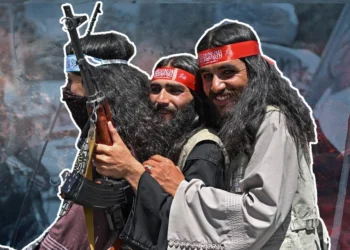
The Taliban belong to this historical continuum, though in a more extreme form. They embody a system in which power rests not on law, institutions, or popular consent, but on monopoly, fear, and exclusion. What makes the current Taliban regime especially dangerous is that this authoritarian model has been fused with a rigid, misogynistic, and totalizing interpretation of religion.
And yet, despite their coercive control, the Taliban’s legitimacy has eroded sharply. Internationally, they remain unrecognized as a lawful government. Domestically, they have failed to generate lasting public consent. Poverty, economic collapse, corruption, discrimination, the exclusion of women, psychological insecurity, and pervasive repression have deepened this legitimacy crisis. The Taliban today are facing a serious decline on three fronts at once: international legitimacy, social acceptance, and governing capacity.
This is where Afghanistan’s central contradiction becomes clear. At the very moment when the country most urgently needs a coherent political alternative, the opponents of the Taliban remain fragmented. The real question is no longer simply why the Taliban persist. It is why their opponents have still failed to unite.
Part of the answer lies in the fact that sections of the anti-Taliban elite have not fully escaped Afghanistan’s older political logic. They oppose the Taliban, but not all have moved beyond a politics shaped by hierarchy, domination, and zero-sum competition. Too often, unity is treated not as a framework for national rescue but as a pathway to securing one’s own future position. As a result, disputes over status, leadership, representation, and political centrality emerge before any genuine agreement is reached on how to save the country.
A second obstacle is the persistence of personal, factional, party, and patronage interests over the public good. In a political environment where institutions remain weak and the culture of compromise is fragile, every actor fears exclusion. Each asks the same question: if the Taliban fall, who will inherit power? Will another narrow circle, ethnic bloc, or political personality once again monopolize the state? This fear is not irrational. It is rooted in Afghanistan’s long experience of exclusionary politics. But it also reinforces mistrust and makes cohesion harder to achieve.
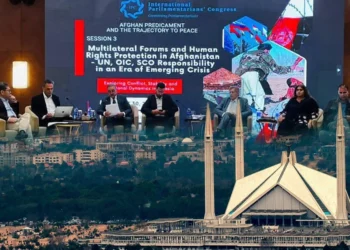
A third factor is the political psychology of exile. The Afghan diaspora has enormous intellectual, professional, and political potential. But exile also intensifies symbolic competition. When real power is inaccessible, visibility becomes a substitute for influence: media presence, invitations to conferences, international contacts, and claims of representation begin to matter more. In such conditions, building a shared platform can become secondary to consolidating one’s own political profile. As I argued in an earlier essay, “A Confused Diaspora and a Forgotten Question,” the diaspora remains caught between concern, rivalry, ambiguity, and an inability to translate discussion into sustained collective action.
A fourth problem is the deep trust deficit among the many strands of the anti-Taliban camp. Former republic figures, jihadi-era leaders, armed resistance groups, technocrats, women activists, civil society actors, and the newer generation in exile each carry a different diagnosis of why the republic collapsed and what should replace the Taliban. Some locate the central problem in Pakistan’s role, others in the corruption of the former republic, others in hyper-centralization, and still others in the militarization of politics by older elites. Unless these competing narratives are translated into a minimal common political platform, every new meeting risks reproducing the same familiar deadlock.
A fifth obstacle is the fear of repeating Afghanistan’s highly centralized political order. Many actors worry that a post-Taliban transition could simply reproduce another exclusionary system concentrated in the hands of a narrow center. This anxiety explains why many groups speak the language of unity while simultaneously trying to secure their own political ground. In practice, competition over the shape of a future transition can become as intense as the struggle against the Taliban themselves.
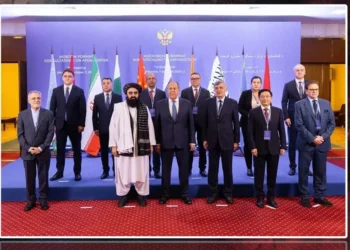
To be fair, recent years have seen serious efforts to address this fragmentation. Several roadmaps and political initiatives have tried to create a common framework for anti-Taliban convergence. Their main strength lies in recognizing a basic truth: unity requires a minimum shared platform, a coordinating structure, and a meaningful connection between actors inside Afghanistan, the region, and the wider international community.
But if these initiatives are to become more effective, they will need to go further. They must pay greater attention to the psychological and political roots of mistrust among elites. They must guard against the danger that “unity” becomes merely symbolic or performative. They must engage more seriously with Afghan society beyond elite circles, especially in rural communities and among economically marginalized populations. And they must confront more directly the anxieties surrounding centralized power, competition over future political shares, and the complicated role of the diaspora.
This is why Afghanistan’s opposition must move from performative politics to constructive unity. The problem is not simply division. It is also the tendency to mistake unity for a parade of familiar faces, conference diplomacy, and public statements. Afghans no longer need declarations alone; they need evidence that a credible alternative can function.
Constructive unity does not require agreement on everything. It requires agreement on essentials: human dignity, basic rights, the right to education and work, non-discrimination, equal citizenship, and acceptance of Afghanistan’s plural social reality. It also requires moving from an alliance of personalities to an alliance of responsibilities. Instead of competing over symbolic leadership, different actors should assume clearly defined tasks: one may focus on documenting Taliban abuses, another on legal and diplomatic advocacy, another on building networks inside the country, another on developing alternative religious and social narratives, and another on designing a viable transition framework. Without that division of labor, unity will once again collapse into political theater.
Just as importantly, the opposition must rebuild its relationship with Afghan society itself. Afghanistan is not reducible to urban elites, media spaces, or exiled networks. Rural communities, local dependency structures, poverty, mosques, fear, and survival remain central to how politics is lived. If unity is not rooted in these layers, it will remain suspended above society rather than anchored within it. Political legitimacy for a future Afghanistan cannot be manufactured only in conference halls; it must be built socially.
The same is true of religion. The Taliban do not rule by force alone; they also rule by monopolizing meaning. If their opponents abandon the religious sphere entirely, they surrender one of the most important arenas of Afghan social life. The answer is not to wage war on religion, but to reclaim it as a language of justice, service, ethics, education, and human dignity.
The problem in Afghanistan today is not only the Taliban. It is also the weakness of the alternative. At the very moment when the Taliban have become more brittle in terms of legitimacy, effectiveness, and public acceptance, the opposition elite has still failed to transform scattered diversity into organized pluralism. If this continues, the Taliban may survive not because of their strength, but because of the opposition’s inability to present a credible, united alternative.
That is now the central question. Not simply how to remove the Taliban, but whether Afghanistan’s anti-Taliban forces can finally learn from the country’s repeated political failures and move from symbolic politics to constructive unity.
You can read the Persian version of this analysis here: