• 8AM.MEDIA
  • ویب‌سایت فارسی
  • پښتو ویب‌پاڼه
  • اۉزبېکچه ویب‌سایت
  • Podcast
Thursday, October 22, 2026
Hasht-e Subh
  • Home
  • News
    • Afghanistan News
    • World News
  • Opinion
    • Editorial
    • Analysis
  • Reports
    • Daily Reports
    • Investigative Reports
  • Society
    • The story of people
  • Women’s Word
  • Columns
    • Three Years After Afghanistan’s Fall: The Taliban’s Resurgence
    • Towards Equality
    • The Resurgence of the Taliban: Two Years Since Afghanistan’s Fall
    • Hebatullah Report Special Edition
    • Resistance for Education Special Edition
    • Special Column on Taliban’s Education Curriculum
    • Nawroz
  • Interviews
  • Contact Us
    • About Us
    • 8AM MEDIA Annual Awards
    • Submit an Article to Hasht-e-Subh
  • 8am.mediaBack
Subscribe
No Result
View All Result
  • Home
  • News
    • Afghanistan News
    • World News
  • Opinion
    • Editorial
    • Analysis
  • Reports
    • Daily Reports
    • Investigative Reports
  • Society
    • The story of people
  • Women’s Word
  • Columns
    • Three Years After Afghanistan’s Fall: The Taliban’s Resurgence
    • Towards Equality
    • The Resurgence of the Taliban: Two Years Since Afghanistan’s Fall
    • Hebatullah Report Special Edition
    • Resistance for Education Special Edition
    • Special Column on Taliban’s Education Curriculum
    • Nawroz
  • Interviews
  • Contact Us
    • About Us
    • 8AM MEDIA Annual Awards
    • Submit an Article to Hasht-e-Subh
  • 8am.mediaBack
No Result
View All Result
Hasht-e Subh
No Result
View All Result

The Third Doha Meeting Under the Shadow of Qatar

Muhammad Ali Nazari Muhammad Ali Nazari
26 May 2024 - Solar Hijri Date: 1403/03/07 [t_time:1716788725]
The Third Doha Meeting Under the Shadow of Qatar

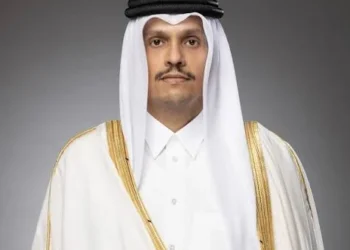
MoFA

In June 2013, the Taliban’s political office was officially opened in Qatar. This office not only provided economic opportunities for the Taliban but also smoothed the group’s path to power, creating many obstacles to Afghanistan’s development along the way. The opening of this office was inappropriate from the outset for a terrorist group, yet many doors were opened for it. Taliban leaders, previously active in various regions of Pakistan, found their way to Doha, seizing diplomatic opportunities and expanding their relations with some countries. Qatar’s hosting of the Taliban proved effective in strengthening the group and posed a threat to the survival of the Afghanistan government. When the government became more vulnerable and faced collapse, talks between the United States and the Taliban began in Doha, Qatar, ultimately resulting in the signing of the Doha Agreement on February 29, 2020. This agreement redirected the Taliban’s guns from foreign forces toward the Afghan people and security forces, compelling the government to release thousands of Taliban prisoners. Subsequently, Qatar hosted peace talks between Afghans (Taliban and the Afghan government), which opened in September 2020 amidst much controversy. These talks, plagued by Taliban aggressions and government unpreparedness, failed to address the power issue in Afghanistan and ended practically fruitless. Although the republic continued until its end, Afghanistan did not take the initiative, which fell into the hands of the Taliban and external actors. With the end of the republican era and the escape of President Ghani, Qatar’s first round of games came to an end.

However, the second round of this game started very quickly, as the Afghan government collapsed, and the process of the withdrawal of foreign forces and their local collaborators from Kabul airport was initiated. Doha assisted US forces and their local allies during the withdrawal process and remained active in Afghan politics practically. After that, it continued to host Taliban officials. Doha remains one of the most important diplomatic centers for the Taliban. Qatar, striving to position itself as a significant mediator in international conflicts while being an important ally of the United States in the region, has maintained close relations with the Taliban. Essentially, Doha’s strategy for mediation involves establishing communication with both sides of the conflict, even if one of those sides is a terrorist group. The country has close relations with Islamist groups and the powerful Al Jazeera network provides opportunities for promoting the ideas of these groups. In the past year, Qatar has hosted negotiations on the release of blocked Iranian funds and American hostages from Iranian prisons, negotiations on the release of Israeli hostages from Hamas, and UN meetings on resolving the issue of Afghanistan. Now, the third Doha meeting, initiated by the United Nations, is scheduled to be held on the first and second of July (next month), and the United Nations has dispatched a high-level delegation to Kabul to persuade Taliban officials to participate in this meeting.

In the second phase of Qatar’s engagements in Afghanistan, the relations between Kandahar and Doha have remained close. Mullah Hibatullah, who keeps himself hidden from the authorities of countries, the people of Afghanistan, and even his fighters, and due to his secrecy, does not accept anyone for meetings, met with Mohammed bin Abdulrahman Al-Thani, the Prime Minister of Qatar, in the same month of last year. He also had a similar meeting with Maulana Fazlur Rehman, the leader of the Jamiat Ulema-e-Islam party (Pakistan), who is famous as the godfather of the Taliban. He does not accept anyone else. Even when representatives of the Afghan Shia community went to Kandahar to resolve the community’s issues and waited, they were not received and returned empty-handed. The visit of the Qatari Prime Minister to Kabul and then Kandahar demonstrates the close relationship between the Taliban and the rulers of Qatar, and the fact that Mullah Hibatullah cannot reject his meeting request means that Qatar has a significant influence on the Taliban.

Now, Mohammed bin Abdulaziz Al-Khulaifi, the Deputy Foreign Minister of Qatar, has traveled to Afghanistan and separately met with Taliban officials. His mission is to persuade the Taliban to participate in the third Doha meeting. To succeed in his mission, he once again offers concessions to the Taliban and argues that their positions are correct and logical. According to a statement released by the Taliban’s Foreign Ministry, Al-Khulaifi has acknowledged the conditions set by the Taliban for participating in the third Doha meeting during his meeting with Amir Khan Muttaqi, the acting Foreign Minister of the Taliban.

In the Doha meetings organized by the United Nations, it seems that Qatar has significant influence. It is not unlikely that Qatar has even influenced the selection of participants. Although the Taliban have close relations with the Qatari authorities, they were invited to the second Doha meeting but did not attend due to conditions set by the group and the UN’s refusal to accept them. However, serious efforts are now underway by the United Nations to persuade the Taliban to attend the third Doha meeting by sending a Deputy Secretary-General to meet with Taliban officials. However, despite calls from anti-Taliban political movements for the United Nations to give them a chance to participate, this opportunity has not been granted. These movements lack the strong ties that the Taliban have with Qatar. There is a possibility that this issue has influenced the selection of participants.

Given that the Taliban are one side of the power issue in Afghanistan, the exclusion of their opponents from the Doha meeting as other parties to the conflict can only provide international legitimacy for the Taliban group and have no impact on the power struggle in Afghanistan. Without a doubt, when one party to a conflict is invited and others are not, it signifies a lack of intention to resolve the conflict. Therefore, Qatar’s heavy shadow over the country remains stable, and the conflict continues. Strangely, the more the Taliban violate human rights and impose restrictions on men and women in the country, the more the United Nations, as the guardian of human rights, falls short in fulfilling its responsibilities and even resorts to appeasing the Taliban. Inviting the Taliban to the Doha meeting and not inviting their opponents, who at least claim to believe in freedom, democracy, and human rights (even if only in rhetoric), amounts to appeasement of the Taliban.

You can read the Persian version of this analysis here:
نشست سوم دوحه زیر سایه قطر | روزنامه ۸صبح 

ShareTweetSendSendShare

Related Posts

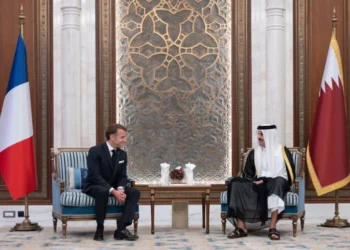
Emmanuel Macron - French President with Sheikh Tamim bin Hamad Al Thani - Qatari Emir during the meeting (Photo: diwan.gov.qa)
World News

French President Meets Qatar’s Emir

21 October 2026 [t_time:1792562201]
Mohammed bin Abdulrahman bin Jassim Al Thani - Qatar’s prime minister and foreign minister (Photo: MOFA.GOV.QA)
World News

Qatar and UAE Foreign Ministers Discuss Regional Issues

19 October 2026 [t_time:1792392175]
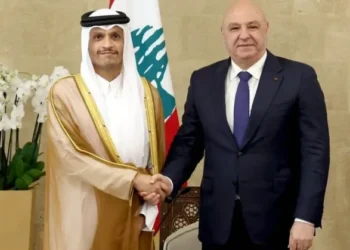
Sheikh Mohammed bin Abdulrahman Al Thani - Qatar’s prime minister and foreign minister and Joseph Aoun - Lebanese President, shaking hands (Photo: AA)
World News

Qatar’s Prime Minister Calls for Israeli Forces to Withdraw from Southern Lebanon

17 October 2026 [t_time:1792231944]

Latest

Loading latest news...

Popular stories

  • Donald Trump – U.S. President with Benjamin Netanyahu – Israeli Prime Minister in a gathering of people (Photo: Getty Images) Donald Trump – U.S. President with Benjamin Netanyahu – Israeli Prime Minister in a gathering of people (Photo: Getty Images)

    US Senator Criticizes Netanyahu’s Remarks Justifying War Against Iran

    Share
    Share Tweet
  • US Defense Secretary Warns Iran of “Destruction”

    Share
    Share Tweet
  • UN Report Reveals Shifts in Family Attitudes and Rise in Domestic Violence in Afghanistan

    Share
    Share Tweet
  • Trump Calls Iran’s Hope of War Lasting Beyond US Midterm Elections a “Dream”

    Share
    Share Tweet
  • Trump Again Says War with Iran Will End “Very Soon”

    Share
    Share Tweet

Podcast

Insights
Insights

Join Lynne O’Donnell for 8AM’s podcast series, Insights.
Lynne talks with generals, diplomats, soldiers, journalists, politicians, activists, people who have front row seats for conflicts around the world, and citizens with a story to tell, happy or sad. For this first series, Afghanistan is the focus. Lynne and her guests talk about the collapse of the republic in August, 2021, and the impact since — for the people of Afghanistan, for the security of the region, for the safety of the world. It’s important, interesting and insightful.

Insights/22: Controlling the Narrative with Mina Sharif
byinsights8am

Controlling the Narrative

Lynne O’Donnell talks with Mina Sharif, author, activist, women’s rights campaigner, educator and mentor. They discuss who controls the narrative and who speaks for Afghanistan’s people when the Taliban appear to have seized control not only of the country but of the message, too.

Have a listen

Insights/22: Controlling the Narrative with Mina Sharif
Episode play icon
Insights/22: Controlling the Narrative with Mina Sharif
Episode Description
Episode play icon
Insights/21: Media Meltdown with Zahra Joya
Episode Description
Episode play icon
Insights/20: Terror Inc with Scott Richards
Episode Description
Episode play icon
Insights/19: Busting Stereotypes with Bushra Gohar
Episode Description
Episode play icon
Insights/18: Media Matters with Waliullah Rahmani
Episode Description
Episode play icon
Insights/17: What Goes Around Comes Around with Sima Samar
Episode Description
Search Results placeholder
Hasht-e Subh

8AM Media, also known as Hasht-e-Subh Daily, stands as Afghanistan's premier independent and non-profit newspaper, resonating as a beacon of journalistic integrity since its establishment in June 2007 by esteemed Afghan journalists and human rights advocates. With a steadfast commitment to citizen journalism and civic education, Hasht-e-Subh Daily has earned its place as the most esteemed publication in the nation.

Publisher: Sanjar Sohail
Email: [email protected]
Executive Director: Parwiz Kawa
Email: [email protected]

Read More

EU Allocates €12 Million for Essential Services in Afghanistan

Faiq: Taliban Restrictions Threaten Afghanistan’s Cultural Identity and Diversity

UN: 551 Health Workers Trained to Address Drug Use Disorders in Afghanistan

IOM to Provide Shelter Assistance to 416 Families in Herat and Nangarhar

WHO Reports 42 Polio Cases in Afghanistan in 2026

Editor’s Choice

Every Saturday morning, 8AM MEDIA English Services Department will guide you through the week’s biggest stories from Afghanistan and the international community.

Subscribe

© 2026 - ©Hasht-e Subh Daily

No Result
View All Result
8am.Media
پښتو ویب‌پاڼه
ویب‌سایت فارسی
اۉزبېکچه ویب‌سایت
  • Home
  • News
    • Afghanistan News
    • World News
  • Opinion
    • Editorial
    • Analysis
  • Reports
    • Daily Reports
    • Investigative Reports
  • Society
    • The story of people
  • Women’s Word
  • Columns
    • Three Years After Afghanistan’s Fall: The Taliban’s Resurgence
    • Towards Equality
    • The Resurgence of the Taliban: Two Years Since Afghanistan’s Fall
    • Hebatullah Report Special Edition
    • Resistance for Education Special Edition
    • Special Column on Taliban’s Education Curriculum
    • Nawroz
  • Interviews
  • Contact Us
    • About Us
    • 8AM MEDIA Annual Awards
    • Submit an Article to Hasht-e-Subh
  • 8am.media

© 2026 - ©Hasht-e Subh Daily